

Iran’s Strategic Relationships with China and Russia Face Challenges: Report
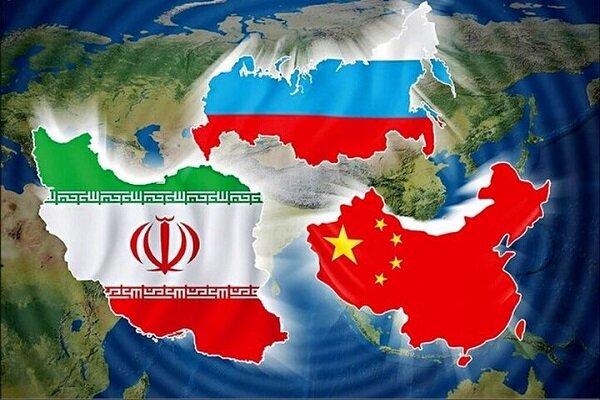
According to the International Desk of Webangah News Agency, a guest analysis by Mohammad-Mehdi Khodabakhshi highlights that Iran’s lack of a robust strategic relationship with the current global powers—China, Russia, and the United States—presents numerous challenges.
Since the Islamic Revolution, the United States has adopted a hostile stance towards Iran, employing various means such as sanctions. Khodabakhshi argues that establishing a strategic relationship with a country exhibiting such animosity is inherently impossible, further complicated by fundamental ideological differences between the two nations.
This situation has narrowed Iran’s options, leading it to consider China and Russia as potential partners. While China has emerged as a leading economic and technological power with extensive global trade relations and significant advancements in sectors like energy and artificial intelligence, Iran’s approach to both countries has been primarily as alternatives when cooperation with the U.S. and Europe falters, rather than as part of a long-term strategy. This perspective, according to the analysis, has caused confusion in discerning Iran’s true interests.
Some political activists, particularly in social media, attempt to justify the necessity of a strategic relationship with the United States while cautioning against deeper collaboration with Russia or China, often citing historical events such as the Qajar era and Russian occupation. While acknowledging the relevance of historical context, Khodabakhshi points out two critical oversights:
- The failure to acknowledge U.S. antagonism towards Iran predating the Islamic Revolution, exemplified by its involvement in the overthrow of Mohammad Mosaddegh.
- The dynamic nature of international relations, where countries’ behaviors and conditions are subject to constant change.
Despite Ayatollah Khomeini’s indication of potential openness to relations with the U.S. should they demonstrate understanding, no U.S. administration has exhibited such a change in behavior in the nearly five decades since the revolution. Conversely, the political systems of Russia and China have undergone significant transformations, fostering closer alignment with Iran, at least in certain domains.
However, Khodabakhshi contends that the core issue might be the lack of trust from China and Russia towards Iran, stemming from the instability in Iran’s foreign policy decision-making. These powers expect strategic partners to exhibit consistency in their overarching positions, yet Iran has repeatedly shifted its policies, alternating between Western-oriented approaches, advocating complete disengagement from the West, and pivoting towards the East, without solidifying any of these orientations into a durable, long-term strategy.
For instance, Iran entrusts the development of Chabahar Port to India, a staunch supporter of Israel and a partner of the United States, only to expect China to swiftly fill the void when India withdraws due to U.S. pressure. Furthermore, frequent changes in government in Iran, factional disputes, and a lack of unified messaging have led China and Russia to believe that any agreement with Iran is susceptible to reversal, suspension, or alteration due to shifts in the domestic political climate. The uncertain fate of the 25-year agreement signed with China serves as an example.
Additionally, Iran has often used China and Russia as leverage to pressure the West, rather than as integral components of a long-term strategic project. These factors have contributed to China and Russia perceiving Iran as an unpredictable actor, lacking the stability required for a genuine strategic partnership.
The prevailing public sentiment in Iran, influenced by foreign-based Persian-language media and even some domestic outlets, poses another challenge. Any agreement with China or Russia is promptly labeled as neo-colonial, with some even falsely claiming that Iran has sold Kish Island to China. Such narratives foster fear, skepticism, and social resistance towards long-term cooperation with Eastern powers, a sentiment not reciprocated in Russia or China.
For example, Russia has granted Iran access to one of its key ports in Astrakhan, yet no Russian media outlet has suggested that Russia has ceded Astrakhan to Iran. This disparity in media management and psychological environment complicates the formation of a national consensus in Iran and portrays the country as susceptible to public opposition against strategic decisions based on minor media incitements, thereby diminishing the confidence of potential Eastern partners in Tehran.
Tehran should avoid repeating the mistakes of the 1990s, when it focused solely on Western engagement. A more realistic approach is needed, balancing relations with both the East and the West, and further solidifying its current relationship with China and Russia to the point where severing ties would be detrimental to all parties. Saudi Arabia, a key U.S. military, political, and economic partner in the region, is signing significant rail and infrastructure development deals with China, signaling that Iran must better understand the rise of Eastern powers and more effectively define and pursue its core interests, concludes Khodabakhshi.
Mohammad-Mehdi Khodabakhshi


