
Bella Hadid’s Appreciation for Iranian Culture Sparks Global Interest in Persian Heritage
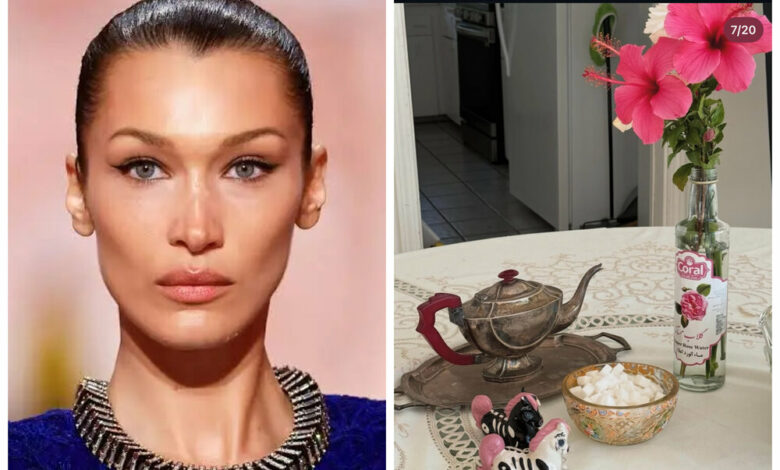
According to the Economic Desk of Webangah News Agency, celebrities like Bella Hadid, with their Middle Eastern heritage, are playing a significant role in showcasing a fresh image of “Eastern heritage and lifestyle.” The inclusion of carpets, rosewater, traditional textures, foods, and small but symbolic elements of regional cultures in their social media posts is often seen as a form of “cultural fashion,” yet it hints at a deeper truth: Cultures, when crossing local borders and finding a place in the lives of global figures, enter a new phase of life and continuity.
But what does this presence truly signify? Does seeing Persian carpets, rosewater, sweets, or Eastern patterns in the homes and lives of figures like Bella Hadid indicate the influence of Iranian culture? More importantly, do these visual cues help preserve and strengthen Iranian cultural heritage and intangible elements across a wider geographical area?
UNESCO defines “intangible heritage” as a collection of customs, skills, traditional arts, rituals, production methods, and narratives passed down from previous generations and still relevant in today’s lives. This heritage, unlike historical monuments, does not have a fixed physical form but is present in behaviors, skills, daily experiences, and handmade objects.
Therefore, a Persian carpet is not just a physical object but the result of dozens of generations of experience in weaving, dyeing, designing, and visual storytelling. The carpet carries memory; a memory stored in its warp and weft, recounting the lives of people who skillfully and patiently created it.
When a Persian carpet appears in the image of a global figure, it indirectly but powerfully introduces Iranian history, culture, and art to the world.
When an international celebrity uses handwoven carpets, traditional dishes, Iranian rosewater, or games like backgammon in their home, it is not just decoration but a continuation of intangible and cultural heritage on a global scale. This visibility brings attention back to skills and traditions that may be fading or facing challenges within the country. It becomes meaningful and attractive to a global audience seeking different and authentic experiences.
Most celebrities choose elements that carry meaning to build their public image. The presence of Iranian or Middle Eastern symbols usually conveys a sense of warmth, authenticity, rootedness, and connection to ancient cultures, even if Iran is not directly mentioned.
It is natural for Iranian users to react with joy, pride, or excitement to such posts. Although these reactions are emotional and short-lived, they stem from a more real need: to be seen globally and to hear the name of Iran in a non-political and non-news context. In a world where Iran’s image in international media is often limited or politicized, seeing beautiful signs of Iran’s rich culture in the life of a global figure creates a more believable sense of being seen and heard.
Symbols like carpets, rosewater, or sweets remind many of old homes, parties, traditional meals, and family memories. When these symbols are seen in the home of a famous person, it creates a sense of cultural pride among Iranians.
In a world where cultures are rapidly blending, any authentic symbol seen from Iran reminds people of their roots and identity, as if a culture that was being eroded has re-emerged on the world stage.
However, the important point is that this momentary excitement, if managed correctly, can become a long-term movement to preserve cultural heritage and strengthen the “Iran brand.” Culture, unlike politics, can emerge from homes and everyday life without aggression or borders and connect people worldwide. This is where intangible heritage shows its greatest power.
However, the economic and commercial reality of these cultural elements is another matter. Just when Iranian symbols are seen in the homes of celebrities and international figures, carpet exports from Iran have decreased domestically, and a large part of the traditional market has been damaged.
Backgammon, as a deeply rooted handicraft, was long on the list of prohibited exports, and this ban has only recently been lifted.
Iranian rosewater, despite its excellent quality and high share in the global market, has been under pressure in recent years from competition with Persian Gulf countries for global registration.
Many handicraft products cannot compete internationally due to sanctions, transportation costs, and a lack of sustainable global marketing policies.
This contradiction means that the most Iranian symbols are seen in the lives of celebrities and global figures, but Iranian producers still face problems leaving the country’s economic borders.
However, these contradictions can turn into opportunities. When carpets, rosewater, or Iranian handicrafts enter the lifestyles of global figures, it means that the “global market” still has high potential for these products, and we are facing a world that seeks authenticity, stories, handicrafts, and lasting heritage, which Iran is full of.
If this reality is understood in the country’s cultural and economic policies, the wave of attention to Iranian culture on social networks can be used to strengthen exports of cultural goods, globalize the Iranian brand, and, most importantly, strengthen people’s relationship with their intangible heritage. Because the more people see that their heritage is valued in the world, the more they will strive to preserve it.
Bella Hadid’s post may seem like just a simple picture, but for a country like Iran, which is full of spiritual heritage, handicrafts, art, and cultural symbols, it can be a symbolic and thought-provoking opportunity.
If this opportunity is properly seen and analyzed, it can be said that the presence of Iranian symbols in the lives of international figures is not just an emotional wave on social networks but a sign of the possibility and necessity of re-reading, preserving, and strengthening Iran’s cultural heritage on a global level.