

Russia, India Prioritize North-South Transport Corridor Amid Global Economic Shifts
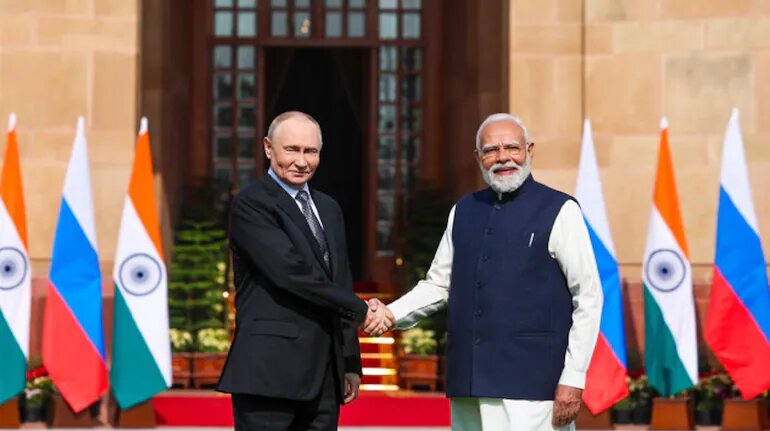
According to the Economic Desk of Webangah News Agency, Russian President Vladimir Putin and Indian Prime Minister Narendra Modi are prioritizing the International North-South Transport Corridor (INSTC) to bolster trade and supply chains amid global economic challenges.
Putin highlighted the expansion of the INSTC, energy cooperation, and a shift towards national currency settlements during discussions with Modi. He stated that Russia is collaborating with India to construct new international transportation routes, including the North-South corridor connecting Russia and Belarus to the Indian Ocean.
The expansion of the INSTC and the Northern Sea Route will provide significant opportunities for bilateral trade, according to Putin.
For Russia, the North-South corridor is increasingly intertwined with efforts to redirect trade from Europe towards Asia, West Asia, and Africa. Alexey Zakharov, a member of the Observer Research Foundation (ORF), notes that the project plays a pivotal role in Moscow’s search for stable export routes.
Zakharov explained that Russia is exploring new avenues and connectivity projects with countries in the Global South. The North-South corridor is envisioned to support the sustainable transport of goods, including agricultural products, raw materials, and resources.
Moscow views the corridor as a strategic complement to existing Eurasian routes, offering a north-south axis to enhance regional connectivity, unlike many east-west projects.
Notably, India is not the sole target market; goods reaching Iran’s Bandar Abbas can be shipped to countries in the Persian Gulf, East Africa, and Southeast Asia.
The North-South corridor, conceived in 2000, has expanded into three primary branches, each at varying stages of development.
Zakharov pointed out that the eastern branch, passing through Kazakhstan and Turkmenistan to Iran, has been the most active route recently. This branch has demonstrated more dynamic transport activity and reduced delivery times.
The western branch, extending through Azerbaijan and Iran, remains incomplete, with Russia funding the construction of a 160-kilometer railway line in Iran. Zakharov described this as part of a broader effort to streamline logistics by avoiding unnecessary transshipments.
Technical bottlenecks continue to slow down deliveries and make them less predictable, prompting Russia to undertake multiple projects simultaneously. Despite these limitations, Zakharov emphasized that the North-South corridor is technically operational, with some cargo movement indicating partial functionality, although numerous issues need resolution.
Addressing assumptions that Russia’s urgency is driven by Western sanctions, Zakharov dismissed such interpretations as exaggerated. The North-South corridor has been consistently referenced in official statements and bilateral documents since 2000, making its revival a traditional and long-standing initiative rather than a reactive measure.
Both countries have long recognized the project as a crucial connectivity initiative. Maritime transport remains a substantial component of India-Russia trade, and sanctions have not impeded these shipments.
India remains Russia’s most important partner in South Asia and a rapidly growing trade destination, incentivizing Moscow to highlight the INSTC in high-level engagements.
Zakharov noted that Russia views India as a central pillar for the long-term stability of the project, being its largest market and a major trade partner. Russian delegations consistently present the INSTC in New Delhi as a cornerstone of future bilateral logistics.
For India, the corridor offers shorter transit times, cheaper logistics, and potential gateways to Central Asian and Eurasian markets. Delhi’s progress on a potential free trade agreement with the Eurasian Economic Union may further integrate it with such corridors.
Zakharov characterized the INSTC as a complementary logistical mechanism that could gradually increase bilateral trade but cautioned against overstating its current significance. While it holds considerable potential, it requires sustained investment and coordination.
According to Money Control, maritime transport will remain dominant in the short term, but improved land corridors could help India and Russia diversify their trade routes while operationalizing their vision for 2030.