

Iran and Afghanistan Trade Relations Face Imbalance After Three Decades
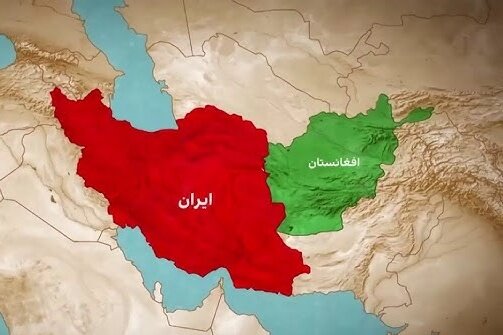
According to the Economic Desk of Webangah News Agency, Afghanistan possesses diverse mineral reserves, along with premium agricultural and horticultural products, presenting opportunities for Iranian industries to secure cheaper raw materials. However, stringent tariff regulations, standardization limitations, and complex commercial licensing processes have hindered the realization of this potential.
Abdul Hakim Rigi, head of the joint Iran-Afghanistan Chamber of Commerce, emphasized in an interview that trade between the two nations has traditionally been one-sided and lacks the necessary equilibrium. According to Rigi, commercial ties between Iran and Afghanistan have grown steadily for at least 30 years, but these relations have primarily focused on exports from Iran to Afghanistan, a dynamic that requires correction.
Rigi noted that while Afghanistan is a vital market for Iranian products, Iran’s import levels from Afghanistan are notably low, jeopardizing the future of trade relations. Trade, he stressed, is a two-way street, and neglecting this principle will disrupt the sustainability of exchanges in the long term.
Rigi pointed out that Afghanistan’s export potential to Iran lies in minerals, agricultural products, livestock, and dried fruits. He advocated for the elimination of tariff barriers and redundant permits to stimulate import growth from Afghanistan.
The Milak border crossing is a critical element in the development of trade between Iran and Afghanistan, offering a route to connect Afghanistan to the Chabahar oceanic port and enabling a major transformation in regional transit. However, according to Rigi, the border still needs to become a fully standardized passage. While functional, the Milak border crossing requires infrastructural improvements. The expansion of terminal and border infrastructure at Milak is essential, and accelerating the construction of a second bridge is on the agenda.
He also emphasized the need to equip the border with X-ray machines, resolve border patrol obstacles, and ensure 24-hour operation of the Milak border.
As a landlocked country, Afghanistan’s best access route to free waters is the Milak-Chabahar route, due to challenges with Pakistan. Developing this route not only increases Iran’s economic benefits but also strengthens the country’s geopolitical position.
Rigi also emphasized the significance of Chabahar Port, deeming it a golden opportunity for Iran to play a role in regional transit. Afghan economic actors are keen to boost relations with Iran, given that Iranian roads and ports are superior to those of other neighbors.
However, like many of Iran’s transit projects, this port is underutilized and requires investment, railway line completion, and the establishment of large logistics centers.
Rigi proposed the creation of a major logistics hub in the Sistan Free Zone. With the support of Chabahar Port, a large cargo handling facility should be established in the Sistan Free Zone to enable warehousing for export shipments from Afghanistan and even other countries. Zabol would then become a transit hub. He also emphasized that extending a branch of the Chabahar-Mashhad railway to Milak would significantly boost the speed and volume of trade between Iran, Afghanistan, and Central Asia.