National Security Strategy 2025: Analysis Points to End of Post-American World
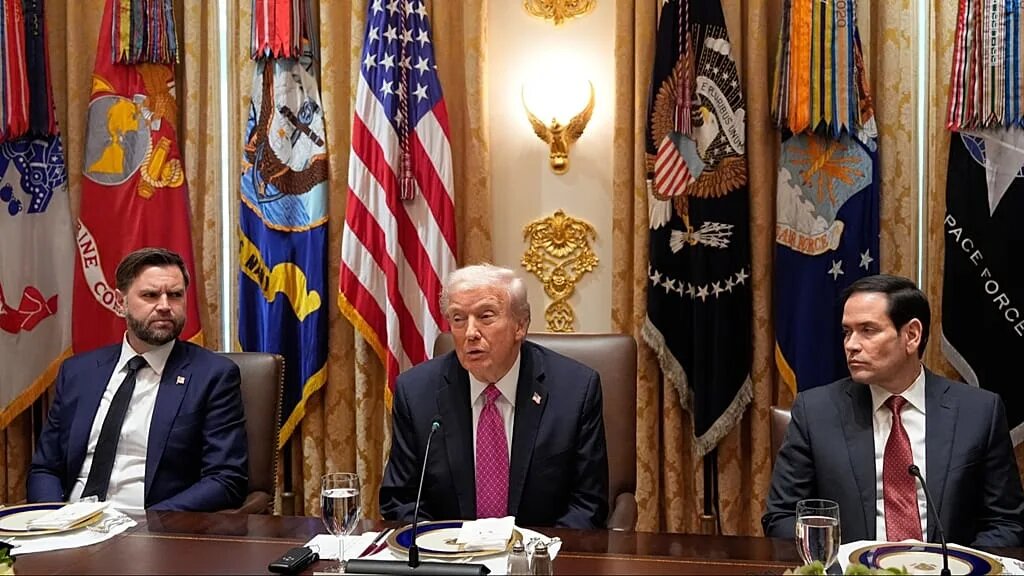
According to the International Desk of Webangah News Agency, the United States’ latest National Security Strategy reflects a candid acknowledgment of declining influence and a retreat from expansive international commitments. The document, released by the Trump administration, outlines a framework for foreign policy, national security, and economic restructuring, but also signals a reassessment of America’s role on the global stage.
The strategy document openly admits that past U.S. foreign policies have been flawed and ineffective, marking an unprecedented acknowledgment that Washington has been unable to engineer its desired global order since the end of the Cold War. It recognizes the decline of the American middle class, the erosion of the industrial base, and miscalculations in globalization, suggesting an end to U.S. economic supremacy.
Facing internal challenges such as social divisions, declining public trust, racial tensions, and political instability, the U.S. is now focused on internal rebuilding rather than global leadership. Following setbacks in Afghanistan, Iraq, Syria, and Libya, and amid difficulties in managing European allies, Washington is scaling back its international ambitions.
A significant aspect of the strategy involves prioritizing domestic security, border control, immigration, and economic reconstruction. With phrases like “the era of mass migration has ended” and “full control of borders,” the document reveals the U.S.’s struggle to cope with the social and economic pressures of immigration. The strategy focuses on revitalizing domestic industry and bringing production chains back to America, acknowledging the failure of U.S.-led globalization.
The U.S. also emphasizes avoiding “endless wars,” reflecting a reduction in its military and financial capacity for extensive interventions. After the Afghanistan debacle and the loss of credibility and political capital in Iraq, the U.S. has shifted its focus from globalism to internal nation-building, signaling the end of its role as the “world police.”
Regionally, the strategy acknowledges declining U.S. influence across continents. In Latin America, it recognizes the expanding influence of non-hemispheric competitors. In Europe, the document highlights the continent’s decline, suggesting a limit to U.S. support and urging increased European defense spending. In the Middle East, the strategy signals a reduction in military and security commitments, acknowledging the rise of independent regional actors. In Asia, the document addresses competition with China but offers limited practical solutions beyond trade balancing, revealing a lack of capacity to contain a rising civilization power.
Ultimately, the Trump administration’s National Security Strategy acknowledges the limits of U.S. power, the need to focus on domestic interests, and the emergence of a multipolar world where no single power can dictate global outcomes. It marks the end of an era of unchallenged American dominance and presents both challenges and opportunities for independent nations and emerging powers.