Pentagon Sets 2027 Deadline for European Military Self-Sufficiency From US
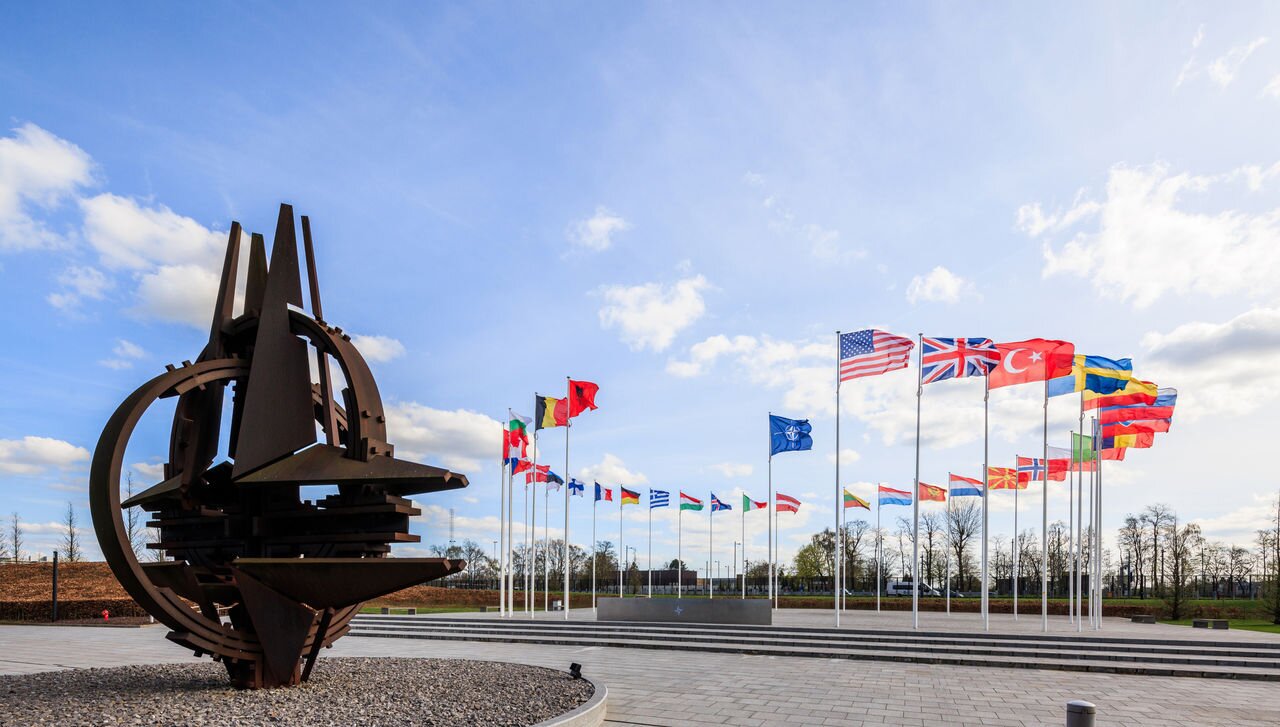
According to the International Desk of Webangah News Agency, the United States is pressing its European allies to rapidly bolster their defense capabilities, setting a 2027 deadline for assuming significant NATO responsibilities. The move, revealed during a sensitive December 5, 2025, meeting in Washington, D.C., could mark a turning point in European security, according to observers.
Pentagon officials informed European diplomats that Europe must take over key conventional defense functions within two years, ranging from military intelligence gathering to missile systems. The message came with a warning: failure to meet the deadline could lead to a reduction in U.S. participation in some NATO defense coordination mechanisms.
The issue of European military independence from the U.S. is not new. French President Emmanuel Macron has long advocated for “strategic autonomy” for Europe. In a September 2017 Sorbonne speech, Macron called for a joint European army. He has maintained that Europe cannot perpetually rely on the United States for its security. However, after eight years, the question remains whether Europe can truly defend itself without the American security umbrella.
The Pentagon’s message, described by Reuters citing five informed sources, indicated Washington’s dissatisfaction with the progress made by Europe in strengthening its defense capabilities since Russia’s full-scale invasion of Ukraine in 2022.
European defense spending has significantly increased over the past three years. According to the European Defence Agency, EU member states’ defense budgets rose from €218 billion in 2021 to €326 billion in 2024, a growth of over 49 percent. Projections for 2025 estimate this figure at €392 billion, equivalent to 2.1 percent of GDP.
At the NATO summit in The Hague in June 2025, member countries pledged to increase defense spending to 5 percent of GDP by 2035, with 3.5 percent allocated to core defense expenditures and 1.5 percent to defense infrastructure, cybersecurity, and related matters. However, the Pentagon has now proposed the 2027 deadline.
The deadline’s significance remains unclear: whether it reflects the official stance of the Trump administration or simply the views of some Pentagon officials. Throughout his 2024 election campaign, Donald Trump criticized European allies. At the June NATO summit, however, Trump praised European leaders for agreeing to increase the annual defense spending target to 5 percent of GDP.
Experts note that Europe lacks essential capabilities in critical areas where it has relied on the U.S. for decades. One such gap lies in military intelligence, surveillance, and reconnaissance (ISR) capabilities. The U.S. possessed 246 military satellites in May 2023, while all European NATO members combined had only 49, with France leading at 15.
Rafael Loss of the European Council on Foreign Relations warns, “Without a significant improvement in space-based ISR capabilities, other European capability development efforts, including a long-range strike approach, will face very long kill chains.”
Air and missile defense is another critical area. The EU launched the Act in Support of Ammunition Production (ASAP) program in 2025 with a budget of over €500 million to expedite ammunition deliveries to Ukraine and help member states replenish their stockpiles, but these efforts will take years to yield results.
Europe’s command and control infrastructure remains based on American personnel and systems. Furthermore, Europe lacks sufficient access to aerial refueling and strategic airlift capacity. According to the European Commissioner for Defence in March 2025, adapting Europe’s air, rail, road, and sea infrastructure for the rapid movement of forces and equipment still requires €70 billion in investment.
Even with enhanced ISR capabilities, operational coordination among European armies would remain challenging. The U.S. currently ensures interoperability among NATO forces through the integration of personnel, systems, and command structure.
Multiple structural barriers exist to achieving military self-sufficiency by 2027. While American officials have encouraged Europe to purchase more U.S.-made equipment, deliveries of some of the most valuable weapons and defense systems take years. European countries ordering Patriot air defense systems or F-35 fighter jets today may not receive them until the 2030s.
According to an August 2025 report by Oliver Wyman, the European defense sector will need over 250,000 additional skilled engineers and technicians over the next five years to meet current and growing market demand; a figure exceeding 25 percent of the sector’s current workforce.
Unlike the U.S., which has concentrated its defense industry into a few large integrated companies, Europe has multiple national players operating mainly in their domestic markets. Joint European programs are often derailed due to differing army-specific requirements.
The joint French-German programs to develop a sixth-generation fighter (SCAF) and main ground combat system (MGCS) are currently facing serious problems and are at risk of failure. Meanwhile, Italy, Britain, and Japan are working on the Global Combat Air Programme (GCAP) to build another stealth fighter.
Even with increased defense spending, many European countries operate within limited financial space. Increasing defense budgets to 3.5 to 5 percent of GDP would mean significant cuts to other public budget sectors. In Germany, adding just 2 percent to defense spending would mean spending nearly €100 billion extra per year.
Countries in Eastern Europe have rapidly increased their defense budgets, whereas countries in Southern Europe have not followed suit. This disparity in threat perception and national priorities makes it difficult to achieve a unified European approach.
European military self-sufficiency from the U.S. is a long-term project with structural, technological, industrial, and political obstacles. Fundamental gaps in areas such as space-based military intelligence, advanced air defense, command and control, and strategic logistics suggest that Europe’s dependence on the U.S. will continue for at least the next decade.
The 2027 deadline is a tool for political pressure. Ultimately, European military independence is a generational process requiring time, sustained investment, deep industrial reforms, and broad political coordination.