Trump Route Project in Armenia Mirrors Panama Canal: Strategic Implications for Iran
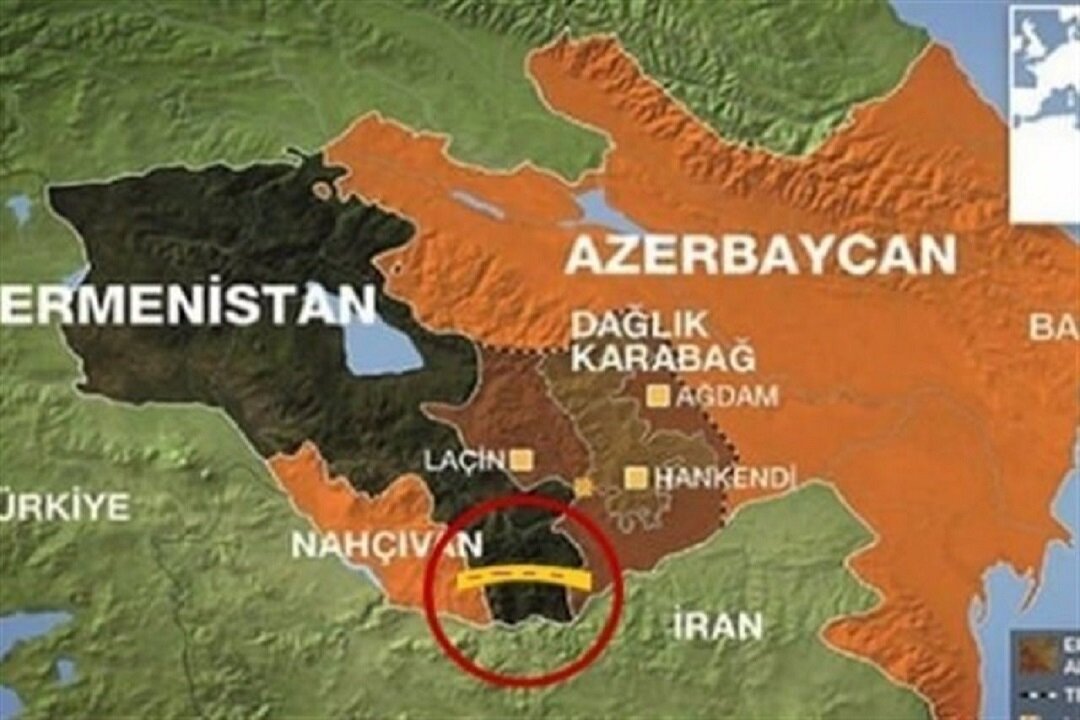
According to the International Desk of Webangah News Agency, speculations are mounting regarding the United States’ interest in establishing a ‘Trump Route for International Peace and Prosperity’ (TRIPP) in southern Armenia, often referred to as the ‘Trump Route’. While the project carries significant geopolitical dimensions, potentially leading to a direct U.S. presence near the borders of Iran and Russia, and opening access to the Caspian Sea, the economic implications for the Syunik province of Armenia warrant close examination.
The proposed Trump Route in the South Caucasus has been likened to a terrestrial Panama Canal, given the similarities between the two transit routes. Both serve as vital corridors for the passage of goods, energy, and transit between critical regions, reducing both distance and time. The Trump Route aims to create a land passage connecting the main part of Azerbaijan to Nakhchivan, and onward to Turkey and Europe, encompassing railways, oil and gas pipelines, fiber optics, and transportation infrastructure. This would offer an alternative to the longer existing route connecting Nakhchivan and Turkey through Georgia.
The Panama Canal, a crucial waterway connecting the Atlantic and Pacific Oceans, drastically shortens maritime trade routes between the East and West. Without it, ships would need to circumnavigate South America, a longer, riskier, and more costly endeavor.
The Trump Route has the potential to play a vital role in the transit of goods and energy, strengthening connections and influence between countries in the Caucasus, Central Asia, Turkey, and Europe, with the U.S. at its center. It aims to establish a stable route that diminishes the transit and geopolitical significance of Iran, Russia, and China. The Panama Canal has long served as one of the world’s most crucial trade waterways under American influence, connecting two oceans and facilitating global trade as envisioned by the U.S.
Management of the Trump Route, along with granting development rights to the U.S. by Armenia, signals an attempt to complete a project that would amplify America’s power and transnational influence. Initially built by the United States, the Panama Canal was long considered a symbol of American power and engineering prowess. The creation and control of the Trump Route, as the U.S. contends with China for global hegemony, would represent a major regional and global influence.
Despite differences such as the Trump Route being land-based and the Panama Canal being maritime, as well as geographical location, ownership, and usage, both schemes exemplify a U.S. strategy focused on building infrastructure to gain power and exert international influence. The Trump Route and Panama Canal are not merely physical routes but geopolitical tools for regional and global influence and control.
Control or access to transit routes, whether maritime or terrestrial, transcends mere economics, becoming a matter of power and influence. The U.S. intends to allocate $150 million to the Trump Route. Though only 42 kilometers long within Armenia, this project allows the U.S. to control a significant amount of natural resources, including vital minerals from Central Asia and the South Caucasus. By establishing the Trump route, leaders in Armenia will relinquish their claim over a region rife with rare and strategic minerals for 99 years.
The U.S. will likely maintain a presence in the region for 99 years to capitalize on the benefits of the Trump Route. The project’s implementation means the complete detachment of the South Caucasus from Russia, diminishing Russian influence in Central Asia. Syunik province in Armenia holds 8% of the world’s molybdenum reserves, twice the total reserves of Russia. The Zangezur copper-molybdenum plant in Kajaran, Syunik province, possesses 7% of global reserves, while the Agarak copper-molybdenum plant nearby accounts for nearly 1%. This raw material plays a crucial role in industries including the military.
The Syunik province also contains 1.5% of the world’s iron reserves, valued at $1 trillion, and holds significant reserves of gold and silver. Over 100,000 tons of uranium reserves, equivalent to 2% of global reserves, are situated in Syunik, Armenia. This is situated within a 4,500 square kilometer area through which the corridor will pass, granting Americans access to these mineral resources. A U.S. private military company, comprising 1,000-1,500 personnel, will likely be stationed near the Trump Route to ensure security and surveillance. The deployment of official U.S. military units is also highly probable, given the route’s proximity to Iran and not far from Russia.
To counter this, Iran must complete its corridor routes from Sarakhs in the east to the spring of Soraya in the west, and from Chabahar and Bandar Abbas to the borders of Armenia and Baku. Iran should prioritize railroad construction along the Aras corridor. By doing so, Azerbaijan, Russia, Turkey, India, Persian Gulf countries, Central Asia, and Europe will view Iran as a secure, fast, and tension-free option. Strengthening ties with Armenia must remain a priority. The creation of the Trump Route runs counter to Armenia’s interests as it endangers the country’s sovereignty over the sensitive Syunik province bordering Iran, potentially leading to identity manipulations and the province’s separation from Armenia.
Deepening cooperation with Russia and China to maintain balance in the Caucasus is crucial. The Trump Route aims to reduce the influence of all three countries in the Caucasus. Iran can enhance security and transit cooperation with Russia and China in the South Caucasus. The Iranian route should be established as Russia’s priority for transit to India and the Persian Gulf. Continuous joint diplomatic pressure on Baku to maintain Armenia’s borders, strengthens the ‘balance of power’ against the Trump project. A more attractive economic model than the Trump Route is important. If the Iranian route is more economically viable, regional countries will prefer using Iranian territory. Reducing transit tariffs, establishing joint free zones, rapidly developing railway lines, and fully digitizing consignment notes and customs affairs should be prioritized.