Tunisia Sees Continued Protests Amid Crackdown on Dissent
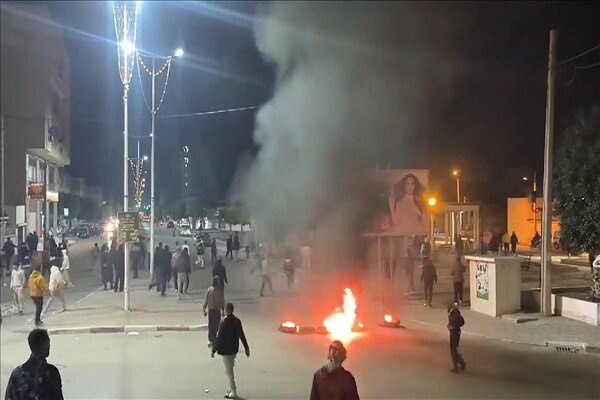
According to the International Desk of Webangah News Agency, demonstrators in Tunisia are voicing strong opposition to President Kais Saied’s intensified security controls, chanting slogans such as “Freedom for prisoners” and “No to a police state.”
The protesters are condemning severe sentences in the “conspiracy against state security” case, including the 12-year prison term for Abir Moussi, leader of the Free Constitutional Party in Tunisia. Lawyers and legal professionals in Tunisia have labeled the sentence as politically motivated, viewing it as an exploitation of the judiciary to eliminate political rivals.
They emphasized that Abir Moussi faces other cases based on controversial laws such as “Decree 54,” which targets the spread of “fake news.” Opponents claim that “Law 54” is being used to restrict freedom of expression, a charge echoed by the protesters.
Participants carried images of imprisoned politicians and activists, asserting that the erosion of freedoms has united various political factions.
In Al-Qairawan province, security forces arrested 21 individuals following overnight protests triggered by the death of a young man named Naim Al-Bariki. His family alleges that he was pursued by police while riding a motorcycle and subsequently died in the hospital from internal bleeding and skull fractures after a collision with a security vehicle and a beating. The Al-Qairawan Public Prosecutor has pledged to investigate the incident.
According to Turkey’s Anatolia News Agency, protesters burned tires and blocked roads. Legal organizations have announced they will defend those arrested.
Since the decisions of July 25, 2021, when Kais Saied dismissed the prime minister, suspended and then dissolved parliament, and subsequently approved a new constitution via referendum, local and international organizations have accused the government of undermining the independence of the judiciary and reversing progress in rights and freedoms in a country previously seen as a democratic exception in the region.
Hamma al-Hammami, head of the Tunisian Workers’ Party, stated that “basic individual and public freedoms are being completely trampled upon,” describing the situation as a “new dictatorship.”
He added that prisons have once again been opened to opponents of the regime, and political trials are underway against them.