West Accused of Double Standards in Condemning Sydney Attack While Ignoring Gaza Crisis
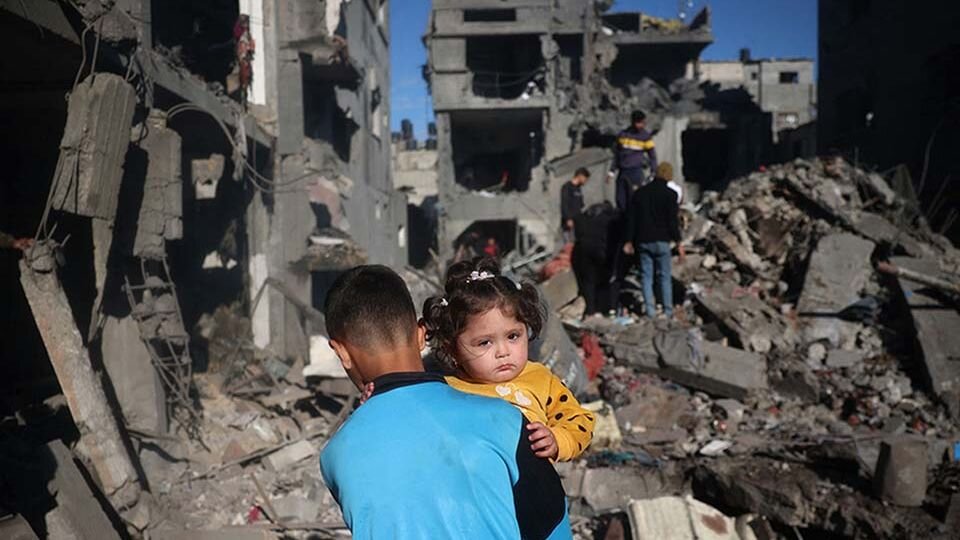
According to the International Desk of Webangah News Agency, the recent armed assault on civilians at Bondi Beach in Sydney, resulting in numerous casualties, has been universally condemned. Targeting innocent individuals anywhere globally, regardless of their faith or background, constitutes a clear violation of humanitarian principles and international law, with no justification whatsoever.
However, the condemnation of this attack should not preclude scrutiny of its portrayal in Western media and a comparison of this reaction with the silence or selective treatment by the same outlets regarding violence against civilians, especially in Palestine. Violence, particularly when directed at ordinary people, is reprehensible in all forms and in every geographic location. No ideology, slogan, or claim can legitimize the killing of civilians, and this principle should be the foundation of all analysis.
In the case of the Sydney attack, it was neither a ‘protest’ nor a ‘political message’ but a blind, destructive act that took the lives of innocent people. Emphasizing this point is crucial because subsequent critiques of Western media and governments should not imply any hesitation in condemning the attack, nor should it be interpreted that way.
Condemning the attack and critiquing its narrative are two parallel tracks. Condemning the act itself does not equate to fully accepting the narrative constructed by Western media about it. In the initial hours following the attack, mainstream Western media framed the story around ‘national shock,’ ‘threat to society,’ and ‘the need for solidarity,’ creating a strong emotional atmosphere. While understandable from the perspective of sympathizing with the victims, this framing becomes problematic when it turns into a selective pattern.
The primary question is whether these same media outlets demonstrate the same level of sensitivity, empathy, and extensive coverage when faced with other human tragedies, particularly in Palestine. The answer to this question forms the basis for legitimate media criticism. One of the most glaring contradictions in Western media coverage is the difference in how it addresses the victims of the Sydney attack compared to the victims of violence in Palestine.
In the Bondi Beach incident, the media quickly introduced the victims, shared personal stories, and published emotional images and narratives, generating a wave of public sympathy. Conversely, in Gaza, thousands of women and children who have fallen victim to bombing, siege, and military attacks are often represented through dry and emotionless statistics, with fewer names and faces introduced to the Western public. This disparity is not accidental and stems from a discriminatory view that values human lives based on political and geographical location rather than on the principle of being human.
This double standard reveals that in Western media discourse, the concept of a ‘victim worthy of sympathy’ has become highly politicized. Victims who align with Western political interests are quickly seen and heard, while victims linked to the policies of Western allies, particularly Israel, are either ignored or excused from the circle of empathy under security justifications. This approach is not only morally indefensible but also severely undermines global public trust in mainstream media, with long-term consequences.
Amid this tense atmosphere, the action of Ahmad al-Ahmad, a Muslim Australian citizen who bravely intervened and disarmed one of the attackers, has rightly garnered attention. This act exemplified human action in the face of blind violence, demonstrating that moral responsibility can emerge in the most critical moments. Ahmad al-Ahmad did not act as a political activist or as a representative of a particular religion but as an ordinary human being who chose to save the lives of others.
The Western media’s focus on Ahmad al-Ahmad’s religious identity, while ostensibly aimed at emphasizing coexistence and multiculturalism, may also serve a hidden function. This type of narrative is sometimes used to separate ‘desirable Islam’ from any political protest against Western and Israeli policies, marginalizing the voices of Muslims protesting the crimes in Gaza. Although seemingly humane, this approach is part of managing public opinion and requires critical scrutiny. Criticizing Western media and political double standards does not justify or diminish the seriousness of the attack in Sydney.
The principled stance is clear: condemnation of any attack on civilians anywhere in the world. From this moral position, we can ask why governments and media outlets that strongly condemn terrorism in Sydney remain silent or justify the extensive killing of Palestinian civilians with terms like ‘legitimate defense.’ This contradiction undermines the moral legitimacy of the West’s counter-terrorism discourse and calls it into question in the eyes of global public opinion. If terrorism is to be condemned, this condemnation must be based on a consistent and universal standard, not on political interests. The attack in Sydney is reprehensible, as is the bombing of homes, hospitals, and refugee camps in Gaza.
Separating the two is neither humanly defensible nor acceptable under international law. This duality is precisely where media and political criticism should focus. The Sydney incident was an attack against ordinary people and is fully condemned without reservation. However, this condemnation only gains true meaning and credibility when applied equally and without discrimination to all victims of violence worldwide. If human life is valuable, this value should not be selective; if violence is condemned, this condemnation should include all its forms, from Australia to Gaza. Only through such an approach can we confront blind violence and avoid falling into the trap of selective and politicized narratives, while upholding human and ethical principles.