

Japan’s Ambassador to Iran Highlights Deep Cultural Ties, Future Cooperation
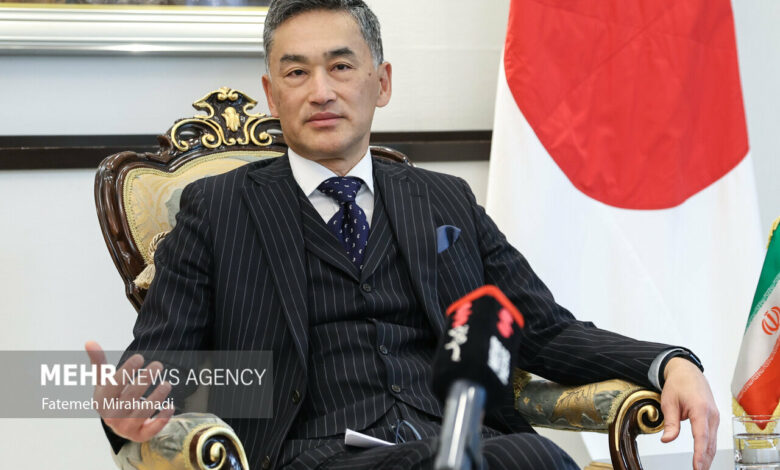
According to the International Desk of Webangah News Agency, Japan and Iran, two ancient civilizations separated by geography, share deep cultural roots that connect them more profoundly than often realized. From hospitality to respect for tradition, both societies have shaped social norms that emphasize courtesy, humility, and connection to the past.
In a comprehensive interview with Webangah News Agency, Japanese Ambassador to Iran Tamaki Tsukada explored the cultural commonalities between the two nations, focusing on shared civilizational values, cultural exchanges, and the future of Iran-Japan relations.
Tsukada expressed his delight in addressing the cultural connections, stating that he has always considered this aspect of the relationship. He noted that these similarities can be observed and interpreted from various perspectives. On a personal level, daily interactions reveal shared customs such as proper greetings and demonstrating respect and humility toward elders and guests. The concept of hospitality, deeply ingrained in Iranian culture, is mirrored in Japanese customs for welcoming guests.
Ambassador Tsukada emphasized that both Japan and Iran have undergone difficult transitions from tradition to modernity over the past 100 to 150 years, navigating the dichotomy of East and West and adapting their histories to the realities of peace and war. This pattern of questioning East versus West and tradition versus modernity has shaped the lifestyles and behaviors in both countries. He noted that Iran celebrates Nowruz and Shab-e Yalda, while Japan has similar rituals and traditions.
The ambassador also acknowledged the increasing interest among young Iranians in Japanese anime and the Japanese language. He expressed pride in serving in a country with such positive sentiments toward Japan and affirmed his commitment to further strengthening these feelings, particularly in Iran. The embassy aims to facilitate cultural exchange by supporting events like film festivals, anime events, and collaborations with Iranian artists and influencers. Ambassador Tsukada also encouraged young art and design students to consider studying in Japan, highlighting the country’s open-door policy for international students and its prestigious art and design schools specializing in anime and cinema.
Regarding the state of the Persian language and Iranian culture in Japan, Tsukada mentioned several prominent higher education institutions, such as the Tokyo University of Foreign Studies and Osaka University, that offer Persian language courses. Many diplomats at the Japanese embassy are graduates of these universities and are proficient in Persian. He noted that many Persian learners and researchers are drawn to ancient Iranian civilization rather than modern Iran, focusing on scholarly pursuits. Despite the difficulty of the language, he expressed hope for greater public interest in learning Persian.
Ambassador Tsukada highlighted the annual “Iran-Japan Culture Week,” which recently concluded with a focus on Japanese film and contemporary cinema. Previous themes included Iranian artists engaging with Japanese culture. Despite its limited duration, the event has been held for at least 17 years and attracts Iranians from all backgrounds. In 2019, the 90th anniversary of Iran-Japan diplomatic relations was celebrated with a month-long cultural event.
Similarly, cultural events are held in Japan nearly every year. Recent exhibitions include “Eternal Iran,” showcasing Iranian art, handicrafts, and artifacts from the Sasanian period onward, and “The Glory of Iran,” focusing on the Silk Road and the exchange of paintings, pottery, and porcelain between Japan and Iran. In 2006, Japan hosted the “Exhibition of the Great Iranian Civilization,” featuring over 200 pieces from Iran’s national treasures, which toured the country for nearly a year. These events demonstrate the significant influence of Iranian culture and civilization in Japan.
Looking ahead, Ambassador Tsukada expressed a desire to hold a major cultural event to commemorate the centennial of diplomatic relations in 2029.
Reflecting on his personal experiences, Tsukada shared that one of the first Iranian dishes he tried was Khoresh Bademjan (eggplant stew) and Keshk Bademjan, which he found delicious. He also enjoyed Jequr Bequr in Zanjan, a dish made with lamb kidneys and liver.
When asked about his favorite places in Iran, Tsukada said that Tehran initially surprised him with its modernity and vibrancy, while Isfahan captivated him with its architectural grandeur and meticulous attention to detail. He found both cities deeply impactful in different ways.
Among his most memorable experiences in Iran, Ambassador Tsukada mentioned visiting the Japanese cemetery in Rey, south of Tehran, where eight Japanese nationals who passed away in Iran are buried, including a young child and a student. He also recalled returning to Tehran during the 12-day war, driving from Baku along the Caspian Sea, an experience that allowed him to connect with the history and lives of Japanese people who lived in Tehran in the past.