

Hakim: Iraqi Unity Can Navigate Regional Geopolitical Shifts
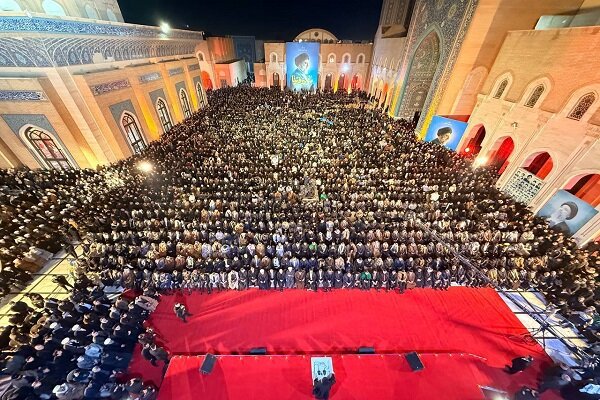
According to the International Desk of Webangah News Agency, Sayyed Ammar Hakim, leader of Iraq’s National Wisdom Movement, addressed attendees on the anniversary of Ayatollah Sayyed Muhammad Baqir Hakim’s martyrdom, emphasizing loyalty to the path and intellectual project of the “Martyr of the Sanctuary.” He described the occasion as an annual opportunity to review positions, determine priorities, and correct the course of building a national government in Iraq.
Hakim stated that the commemoration of Ayatollah Hakim is not merely a historical event but a test of sincerity in adhering to a project founded on the blood of martyrs to build a powerful, independent, just, and unified Iraq.
Referring to current political trends, Hakim noted that Iraq is on the verge of forming a national government based on election results and legal frameworks, with efforts aimed at ensuring this process aligns with the people’s will and the country’s interests.
He stressed the necessity of respecting election results and expediting government formation as a national imperative.
Hakim emphasized the authority of the government as a prerequisite for any reform, asserting that true governance means implementing the law, ensuring security, achieving justice, and administering the country with governmental logic rather than short-term reactions.
He added that the future government should have a capable team, a clear program, and the power to make and implement decisions without retreating in the face of crises.
Hakim characterized the economy as “the real battle for sovereignty,” identifying industry, agriculture, tourism, energy, investment, technology, and digitalization as pillars of Iraq’s national security. He stated that the future government should be evaluated based on real production capacities and sustainable income, not merely nominal budgets.
Hakim called for the implementation of a “hundred-day test” for the future government to assess its commitment to resolving livelihood and service issues.
Addressing rapid regional developments, Hakim described the current conditions as a “geopolitical earthquake.” He emphasized that Iraq is a central player and a bridge between different axes and should use smart foreign policy management to avoid getting entangled in conflicts.
He stated that Iraq will not be a battleground for others, a message box, or a contact line on behalf of others, asserting that the government’s policy should be based on national interests and the country’s stability.
Hakim stressed the interconnected destiny of regional countries, calling for strengthening Iraq’s internal unity while supporting a unified Arab and Islamic position. He framed the Palestinian issue as a “legal, just, and humanitarian” matter.
He insisted on real and fundamental cooperation against regional threats, along with serious efforts to prevent any regional conflict that could threaten the countries of the region and their internal security.
Hakim concluded by warning that the region’s fate is either unity and cohesion or division and dispersion, and that regret would be futile if the latter path is chosen.



