Global Economy Faces Key Risks in 2026: AI Bubble, Record Debt, and Geopolitical Tensions
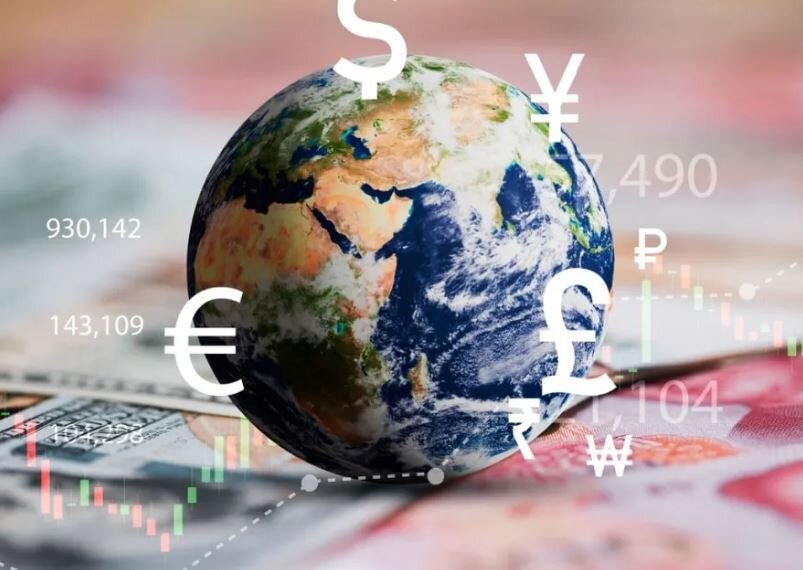
According to the Economic Desk of Webangah News Agency, the global economy is navigating significant challenges as it steps into 2026, with concerns over an “AI bubble,” record-high public and private debt, and ongoing geopolitical tensions. Many economies concluded 2025 amid expansive monetary policies, declining inflation, rising protectionist trade measures, and geopolitical uncertainty. While some dominant risks from the previous year have subsided, others are expected to persist through 2026.
Analysis compiled from research firms Capital Economics, ING Think, and Deloitte indicates that markets anticipate continued inflation reduction in many countries, with downward pressures reflected in policy interest rates. However, stronger-than-expected demand in certain economies could reignite inflationary pressures, though these risks are not projected to dominate the global outlook as prominently as in 2025.
One of the most prominent risks for 2026 is the “AI bubble” concern. While AI’s economic impact becomes more apparent, driving increased investment, analysts warn that monetization remains uncertain. A sudden drop in AI investment—which contributed nearly 1% to U.S. growth in 2025 through construction and capital expenditures—could push the U.S. labor market into a full recession.
Global debt reached approximately $346 trillion in Q3 2025, up by $26.4 trillion in the first three quarters, equivalent to 310% of global GDP, according to the International Institute of Finance. High debt-to-income ratios in developed economies and rising borrowing costs for developing nations heighten default risks.
U.S.-China relations remain strained, particularly affecting rare earth element supplies. A 12-month tariff truce followed recent talks between U.S. President Donald Trump and Chinese President Xi Jinping, but analysts caution that non-tariff barriers could disrupt semiconductor, automotive, and defense industries.
Geopolitical tensions and oil price risks also threaten global growth. Stricter enforcement of Russian oil sanctions or renewed Middle East supply disruptions could challenge assumptions of Brent crude stabilizing near $60 per barrel. Meanwhile, China’s ongoing property market slump continues to weigh on its economy, with falling home prices deepening sectoral challenges.