Epstein Case Underscores Deep Divide Between Power and Accountability in American Justice System
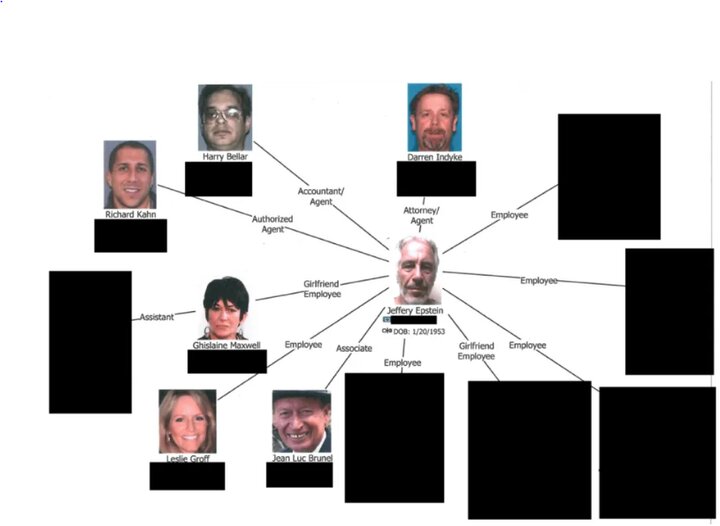
According to the International Desk of Webangah News Agency, the legal case surrounding Jeffrey Epstein, before he became known as the central figure in one of America’s most notorious sexual abuse scandals, was rooted in a mysterious career in global finance. Epstein began his professional life in the 1970s as a mathematics tutor at the prestigious Dalton School in New York, despite not having completed his university studies. He soon transitioned into a financial firm, rapidly ascending to manage the assets of ultra-high-net-worth individuals. The precise origins of his initial capital and extensive network were never fully disclosed, yet by the 1980s and 1990s, he had become a fixture in exclusive elite circles.
His associations with former American presidents, foreign royalty, leading scientists, and prominent university figures cultivated the image of an influential investor. However, behind this public facade, a darker reality was unfolding. Numerous complaints eventually alleged that Epstein exploited his position over many years to lure and abuse underage girls. His residences in New York, Florida, New Mexico, and his private island in the Caribbean became known hubs for powerful visitors, locations later designated as crime scenes in subsequent federal indictments.
The first significant blow to Epstein’s reputation came in 2005 when Palm Beach police initiated an investigation following a complaint filed by the family of a teenage girl. These inquiries led to the testimony of dozens of other young women who presented strikingly similar accounts of abuse. While severe federal charges were anticipated, a highly controversial plea deal was struck between Epstein and state prosecutors in 2008.
Under the terms of this agreement, which drew intense criticism in later years, Epstein pleaded guilty to two state charges and served only thirteen months in a semi-open prison setting instead of facing a lengthy federal sentence. He was permitted to leave the facility during the day to work at his office. This deal was finalized without the full knowledge or consent of the victims, and years later, media outlets widely described it as a prime example of judicial disparity within the American system. Alex Acosta, the prosecutor who signed the agreement, resigned from his position in the administration in 2019 amid massive public pressure.
Ghislaine Maxwell’s name has always been intrinsically linked with Epstein’s. As the daughter of the late British media mogul Robert Maxwell, she played a crucial role in facilitating Epstein’s access to vulnerable teenagers. Prosecutors argued in Maxwell’s trial that she actively participated in grooming, building trust, and managing relationships with the victims. In December 2021, a jury found her guilty of sex trafficking and conspiracy to commit sex abuse, leading to a sentence of twenty years in prison.
Maxwell’s conviction offered a measure of accountability for many survivors, but the fundamental question remained: whether other influential individuals connected to Epstein’s inner circle had undergone complete and thorough investigation. The unsealing of court documents in 2024 and 2025 revealed numerous names, although the mere mention in court filings does not constitute proof of criminal wrongdoing. Nevertheless, this disclosure reignited intense debate regarding the transparency and impartiality of the entire judicial process.
A primary symbol of the Epstein saga was his private Caribbean island, frequently portrayed in media reports as the destination for VIP guests. Records from his private aircraft, dubbed the “Lolita Express,” captured public attention, showing flight manifests that included politicians, businessmen, and artistic figures. Many of these individuals have since denied any awareness of Epstein’s criminal activities, while others claimed their presence on the trips was strictly for business or philanthropic purposes.
In recent years, the release of new emails and documents has once again fueled speculation about the level of awareness among Epstein’s associates. Some correspondence referenced names that had already surfaced in previous media coverage. However, no federal court has yet proven the existence of an organized network with widespread political participation. This gap between public conjecture and official findings continues to compound the complexity of the case.
Amidst the political and media conflict, the primary victims have fought for years simply to have their voices heard. Some were as young as thirteen or fourteen when the crimes occurred. Their legal representatives stress that excessive focus on conspiracy theories or partisan rivalries must not overshadow the central issue: the systematic abuse of children.
Several civil lawsuits have been filed against Epstein’s estate and some of his associates, with some victims securing financial settlements through compensation funds. Yet, many survivors maintain that no amount of compensation can reclaim the lost years. More important to them than financial recompense is the complete revelation of the truth and the acceptance of responsibility by the institutions that failed to take warnings seriously in the initial stages.
Despite the release of millions of pages of documents and judicial rulings against some defendants, the Epstein case remains unresolved in the public consciousness. His death before a full public trial left many questions unanswered. Contradictions surrounding the official account of his final night, security lapses within the detention facility, and the history of the 2008 controversial plea agreement have collectively fueled widespread distrust.
Furthermore, the Epstein case has transcended being merely a case of individual crime. For many Americans, it serves as the ultimate symbol of the chasm between power and accountability. The perception, even if not fully substantiated in every instance, that the wealthy and influential can evade legal scrutiny casts a long shadow over the public sphere.
Jeffrey Epstein’s downfall was not just the collapse of one man; it was a crucial test for America’s judicial and political structures. From the scandalous 2008 settlement to his controversial death in custody and the extensive document releases in recent years, every chapter has generated fresh scrutiny. Ghislaine Maxwell’s conviction and the compensation paid to some victims mark steps toward justice, but they appear insufficient to a large segment of public opinion.
Until all ambiguities concerning Epstein’s network of contacts, the initial handling of complaints, and the precise details of his final night are transparently addressed, this case will endure as one of the most complex and divisive in modern American history. It is a case that demonstrated how profound the distance between claims and reality can be within the corridors of power, making the restoration of public faith a monumental task. Based on data published by Mehr News Agency, this case continues to harbor substantial ambiguities.