US Asian Partners Unsurprised by Tariff Shockwaves Following Supreme Court Ruling
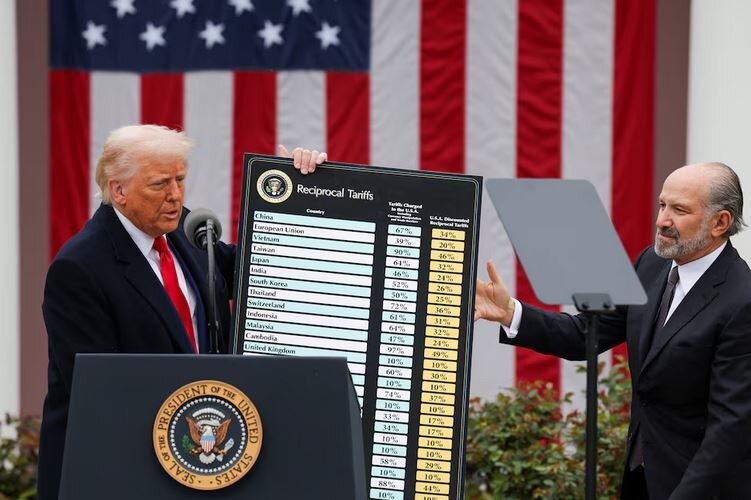
According to the Economic Desk of Webangah News Agency, President Donald Trump’s recent tariff imposition, announced just hours after the US Supreme Court rescinded many of the sweeping tariffs he had used to initiate a global trade war, has been met with measured responses from America’s Asian partners. The Supreme Court’s ruling had invalidated a number of tariffs that the Trump administration had applied to export powerhouses across Asia, including China, South Korea, Japan, and Taiwan.
Within hours of the court’s decision, Trump declared that a new 10% tariff would be imposed on imports from all countries, effective Tuesday. This move prompted analysts to warn that further actions could follow, leading to increased confusion for businesses and investors.
In Japan, a government spokesperson stated that Tokyo would “carefully examine the content of this ruling and the Trump administration’s response to it and will respond appropriately.”
China, which is preparing to host Trump in late March and is still observing its long Lunar New Year holiday, has not yet commented or taken any retaliatory measures. However, a senior financial official in Hong Kong, a special administrative region of China, described the US situation as a “humiliating defeat.”
Christopher Hui, Hong Kong’s Secretary for Financial Services and the Treasury, highlighted Trump’s new tariffs on Hong Kong’s “unique trade advantages.” Speaking at a press conference on Saturday in response to questions about how the new US tariffs would affect the city’s economy, Hui stated, “This shows the stability of Hong Kong’s policies and our confidence. It demonstrates the importance of predictability for global investors.”
While Washington has imposed tariffs on mainland China’s exports, products manufactured in Hong Kong have generally faced lower tariff rates, allowing the city to maintain trade flows even amidst rising tensions between China and the United States.
Prior to the Supreme Court’s ruling, Trump’s tariff pressure had already impacted Washington’s diplomatic relations across Asia, particularly for export-dependent economies integrated into US supply chains.
Friday’s ruling pertained solely to tariffs that Trump had imposed under the International Emergency Economic Powers Act (IEEPA), a statute intended for national emergencies.
Global Trade Alert, a firm that monitors trade policies, estimated that the ruling itself would reduce the weighted average US tariff rate by nearly half, from 15.4% to 8.3%.
For countries facing higher US tariff levels, the change is more significant. For China, Brazil, and India, this would translate to a double-digit percentage reduction, albeit from still high levels.
In Taiwan, the government announced it is closely monitoring the situation, noting that the US administration has yet to specify how it will fully implement its trade agreements with many countries. Taiwan has signed two recent agreements with the United States, including a memorandum of understanding last month committing Taiwan to $250 billion in investments, and a second agreement signed this month to reduce mutual tariffs.
Analysts suggest that the Supreme Court’s ruling against Trump’s more aggressive tariff actions may not provide substantial relief to the global economy. They have cautioned about impending confusion as US trading partners brace for further Trump administration maneuvers to find alternative ways to utilize duties to circumvent the court’s decision.
In corporate disclosures tracked by Reuters, companies across the Asia-Pacific region have reported financial damages, supply chain disruptions, and inventory adjustments due to increased tariffs extending into 2025 and early 2026.