New Documentary Ignites ‘Genocide’ Debate within Israeli Society Over Gaza War
According to the International Desk of Webangah News Agency, a documentary titled ‘Coexistence Never!’, which chronicles the life of Israeli comedian Noam Schuster-Elyasi, has ignited a new discussion within Israeli society concerning the Gaza War and its consequences. Published data from the Mehr News Agency highlights this development.
In the documentary, the Israeli comedian asserts that if ‘occupation’ was the paramount issue in the past, ‘genocide’ has now become the principal concern. This statement reflects the unease felt by many Israelis following the prolonged and devastating war in Gaza.
From a legal standpoint, the concept of ‘genocide’ requires proof. However, some interpret it as a symbolic term for Israel’s alleged war crimes in Gaza, including the killing of civilians, extensive destruction of infrastructure, and the imposition of starvation and water scarcity.
Published statistics indicate that approximately 78 percent of Gaza’s buildings and infrastructure have been destroyed, with water storage capacity reduced by up to 84 percent. A significant portion of the region’s agricultural land has also been devastated.
In an article for the Haaretz newspaper, Nir Hasson posits that the value gap within Israeli Jewish society, which previously existed between proponents of continued occupation and advocates for peaceful solutions, has now widened into a deeper chasm. Consequently, one side accepts military actions, including killings and blockades, as permissible, while the other side deems them unacceptable.
These differing viewpoints are impacting daily social interactions and making discussions about the war increasingly difficult, particularly given the sensitivity surrounding the use of the term ‘genocide’ in the public sphere in Israel.
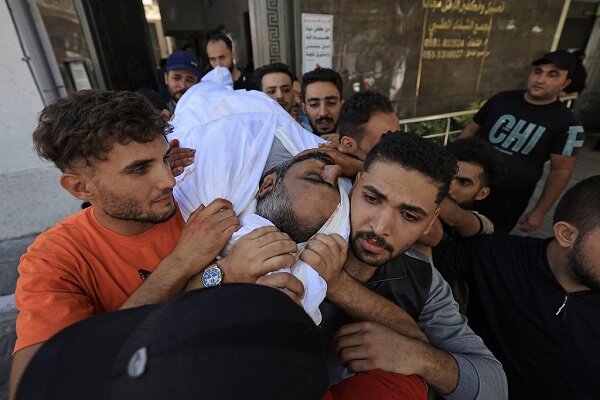
An analysis published in the Hebrew-language newspaper Haaretz reveals that among the more than 72,000 recorded ‘fatalities’ in Gaza, approximately 17,594 were children under 16, including 3,150 infants or children under three years old. Furthermore, at least 47 percent of the casualties comprised women, children, and the elderly who were not involved in the conflict.
These figures have initiated a broad discussion about the nature of the Gaza war and the responsibilities concerning civilian casualties. It is anticipated that the issue of the occupation of Palestinian territories will also be brought back to the forefront of these debates.