US Ammunition Stockpiles Face Scrutiny Amidst Iran Tensions
According to the International Desk of Webangah News Agency, a report by Al Jazeera, citing data from the Mehr News Agency, suggests that the repercussions of a potential conflict between the United States and Iran extend beyond the battlefield, impacting American weapon depots, ammunition production lines, and rare earth mineral supply chains.
As the current conflict persists, questions are surfacing in Washington regarding the quantity of offensive and interceptor missiles expended by the U.S. and whether current reserves are sufficient for a protracted engagement or simultaneous military crises elsewhere in the world.
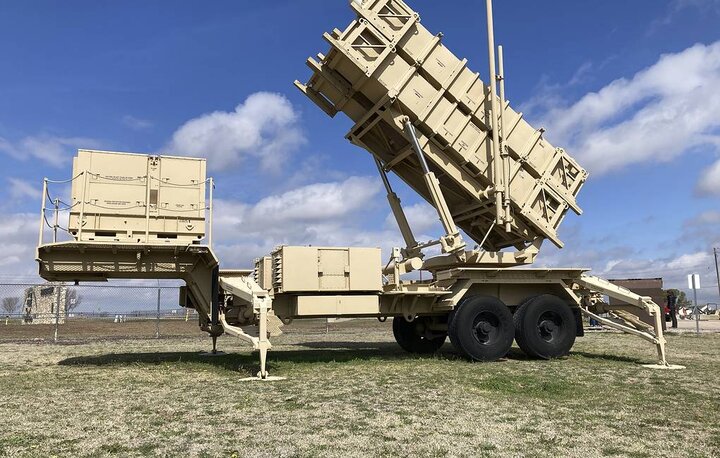
Assessments from American media outlets and research centers indicate a significant reduction in key munitions, including Patriot and THAAD interceptor missiles, as well as Tomahawk, ATACMS, and Prism missiles. While the White House maintains that the U.S. possesses substantial reserves, experts warn that the issue extends beyond nearing depletion; it involves the diminution of strategic reserves and the challenges in replenishing them at a pace matching their consumption.
Estimates from the Center for Strategic and International Studies (CSIS) suggest that approximately 65 percent of Patriot interceptor missiles were consumed within five months, and THAAD missile reserves have decreased by at least 38 percent since the outset of the conflict.
Matthew Kroenig, Deputy Director of the Scowcroft Center for Strategy and Security, stated, “The past six months have seen a high volume of critical munitions, particularly interceptor missiles, consumed at very high rates, especially against Iranian munitions which may be cheaper and easier to produce.” The significance of these missiles is underscored by their cost, with each unit exceeding one million dollars.
Military affairs expert Elias Hana asserts that the U.S. based its war strategy on long-range strikes, or standoff warfare, a strategy now contingent on existing ammunition levels. With heavy consumption, Washington faces the dilemma of how to continue its attacks without depleting reserves needed for other crises. Hana suggests that U.S. reserves may have fallen below a critical 20 percent threshold that needs to be maintained. Iran, he notes, benefits from the factor of time and a war of attrition, aiming not necessarily for traditional military victory but for endurance and prolonged conflict to increase the cost for the United States.
The challenge of depleted reserves becomes more pronounced if Washington opts for a return to extensive military operations. With dwindling long-range missile stockpiles, the U.S. might be forced to rely more heavily on manned aircraft, a riskier option for pilots, or resort to ground operations—scenarios inconsistent with Washington’s initial strategic approach.
This issue is not confined to the United States. Allies in the region, who have consumed substantial quantities of air defense missiles, face similar questions about replenishing their stocks, especially as U.S. production processes can take years.
A less discussed but equally critical challenge involves the reliance of U.S. military and technology industries on rare earth minerals, a sector largely dominated by China’s control over production and processing supply chains.
Economic analyses indicate that the term “rare earth minerals” does not necessarily imply scarcity in the earth’s crust. The primary difficulty lies in the extraction, separation, processing, and conversion of these materials into industrially usable forms, particularly for defense applications.
Over the past four decades, China has invested heavily in building this supply chain, from chemical separation processes to the production of permanent magnets and their integration into advanced and military industries.
Ultimately, the conflict with Iran highlights that for the U.S., the issue transcends the sheer number of missiles in storage. It encompasses the capacity to replace expended munitions, the time required to rebuild reserves, and the ability to fight simultaneously in another conflict. The war has demonstrated that certain reserves can be depleted far faster than the U.S. industrial capacity can replenish them.