Trump Faces Credibility Crisis Amidst Domestic and International Scrutiny
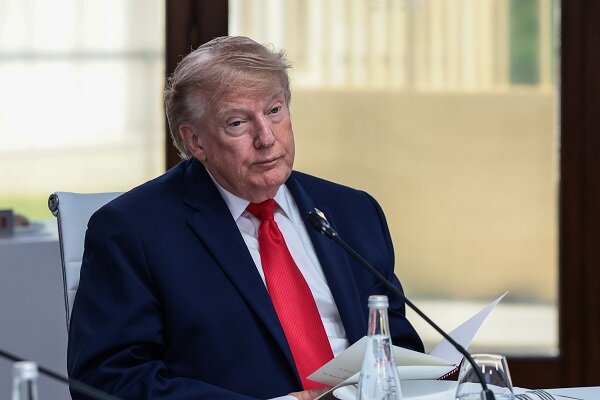
According to the International Desk of Webangah News Agency, in the realms of political science and diplomacy, international prestige or credibility is not merely a ceremonial perk but a practical instrument for national survival and the advancement of interests. A primary reason for this necessity is the enhancement of bargaining power. In an international system devoid of a coercive central government, a nation’s credibility dictates its weight in negotiations. Leaders with high international credibility find their words taken seriously, enabling them to secure concessions without resorting to force. Conversely, a lack of credibility leads to even reasonable proposals being overlooked.
Furthermore, international credibility serves as the foundation for unwritten trust agreements. Foreign investors and multinational corporations prefer to collaborate with countries whose presidents or prime ministers guarantee the stability of laws and adherence to commitments. The erosion of international credibility directly translates to capital flight and the exodus of skilled professionals.
In line with realist theories, international prestige or credibility forms a part of soft power and national will, contributing to national security deterrence. If adversaries or rivals perceive a nation’s leader as weak or lacking popular support, the likelihood of encroachment on that nation’s interests increases. Maintaining prestige raises the cost of aggression for the opposing party.
Another aspect of the necessity of preserving international credibility is domestic legitimacy and national cohesion. Citizens in times of crisis place their hope in leaders who can stand ‘proudly’ on the global stage. This sentiment makes social and economic costs more bearable for the government.
However, the crucial point is that modern prestige is no longer solely built on ostentation or aggressive rhetoric; rather, it is founded on practical efficacy, transparency in actions, and predictability of behavior. Throughout the second term of the U.S. President, precisely this repeated ostentation and aggressive rhetoric has been observed. While such behavior might psychologically instill a sense of grandeur in the individual, it projects a contrary message in international and domestic spheres.
In the age of communication, any disconnect between words and actions rapidly destroys prestige, making its reconstruction exceedingly difficult. On one hand, the repeated claims of victory in a war with Iran, and on the other, fleeing with a food truck out of fear of Iran or an inability to resolve issues in the Strait of Hormuz, are not matters that the world overlooks. In simpler terms, Trump understands the imperative of maintaining international credibility, but he has built this prestige on self-deception or false national pride, not on the genuine interests of his country’s people or intelligent pragmatism.
According to available documentation, the policies of President Trump’s second term have had multifaceted and profound impacts within the United States, classifiable across various domains. Extensive tariff policies were a central tenet of the Trump administration, aimed at reducing trade deficits and restoring jobs, but they yielded entirely opposite results. Studies indicate that the cost of tariffs has been borne almost entirely (nearly 100 percent) by American importers and consumers, with foreigners absorbing only about 4 percent. The Tax Foundation estimated that in 2025, these tariffs would amount to a $1,000 tax increase for every American family. Despite the highest tariff rates since the 1940s, the U.S. goods trade deficit reached an unprecedented $1.24 trillion in 2025. The U.S. manufacturing sector also lost over 80,000 jobs in 2025. An analysis by the Joint Economic Committee of Congress confirmed a net loss of 108,000 manufacturing jobs that year. This led to the U.S. Supreme Court, in February 2026, ruling 6-3 that the administration’s use of the International Emergency Economic Powers Act (IEEPA) to impose broad tariffs was unconstitutional, stating that the power to tax rests exclusively with Congress. Nevertheless, the Trump administration pursued the imposition of new tariffs through other legal avenues to circumvent this ruling.
However, the issues created in the United States are not solely limited to Trump’s tariff policies, affecting other sectors such as immigrants as well. The intensification of immigration arrest and deportation operations, accompanied by images of masked agents in unmarked vehicles, met with negative public reactions. A Pew Center poll in December 2025 indicated that 53% of Americans believed the government had overstepped in deporting immigrants.
Regarding environmental and scientific institutions, the Trump administration pursued a systematic agenda to reduce the role of science in environmental decision-making and to weaken regulatory bodies, including the weakening of the Environmental Protection Agency (EPA). The EPA lost nearly a quarter of its staff (over 3,000 individuals), and its research budget was severely reduced. The EPA’s independent Office of Research and Development was dissolved and converted into a division under the direct control of the administrator, raising concerns about the erosion of scientific independence.
The Trump administration’s revocation of environmental and scientific regulations is another notable behavior. The administration moved to repeal or weaken dozens of key laws and regulations concerning air pollution (including mercury and carbon), water pollution, and climate change. The most significant action was the attempt to overturn the 2009 Endangerment Finding, which serves as the primary legal basis for regulating greenhouse gas emissions. Experts have warned that this approach, while endangering public health and the environment within the United States, has also seriously disrupted international cooperation in areas such as pollution monitoring, flood control, and invasive species management.
The impact of Trump’s unbalanced behaviors, outside the framework of domestic and international laws, is reflected in public opinion polls and institutional challenges. Results from a joint poll by The Washington Post, ABC News, and Ipsos in February 2026 showed that Trump is not widely popular, with 39 percent approving of his job performance and 60 percent rejecting it. According to the poll, Trump’s performance on the economy received more opposition than approval, with 41 percent in favor versus 57 percent against. On tariffs, the figures were 34 percent in favor and 64 percent against. Regarding the overall economic situation since January 2025, 48 percent believe it has worsened, while 29 percent stated it has improved.
This decline in credibility within the United States and the global community serves as a serious alarm bell for the Trump administration and the Republican Party.