
Transatlantic Trust Erodes After Miami Peace Talks
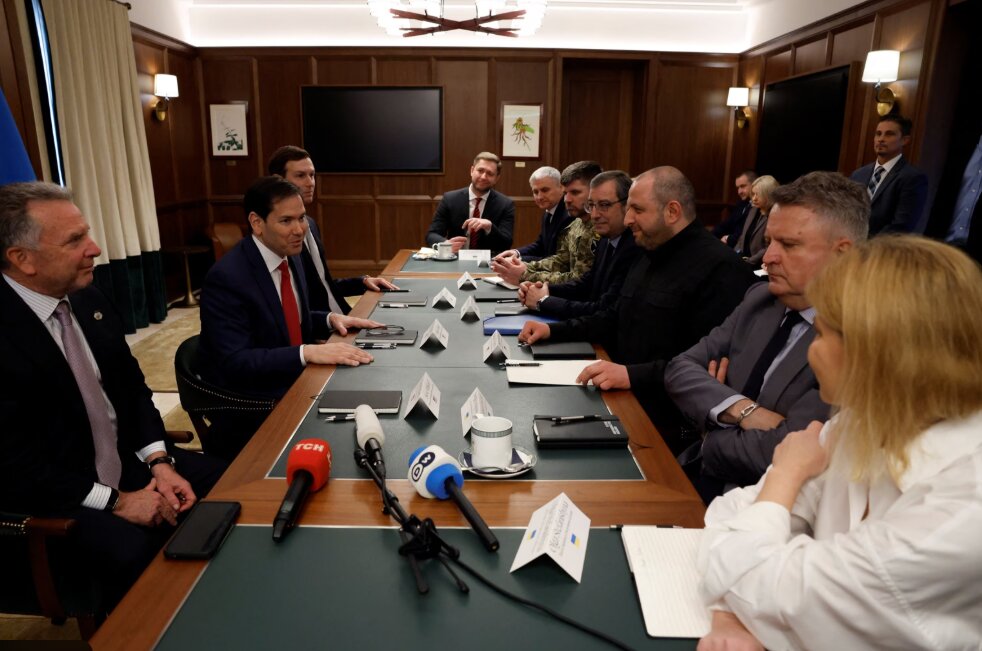
According to the International Desk of Webangah News Agency, a recent political development in Miami has marked a turning point in transatlantic relations. European leaders were confronted with the fact that Washington is prepared to negotiate the security architecture of Europe with Moscow, without significant coordination with them.
The unveiling of a 28-point plan, reportedly devised by figures close to Donald Trump and individuals connected to the Kremlin during meetings in Miami, to resolve the conflict in Ukraine has sent shockwaves through European capitals. The plan is perceived to reflect many of Moscow’s maximalist demands.
The proposed framework reportedly includes the acceptance of Russian control over substantial portions of eastern Ukraine, a considerable reduction in the size of the Ukrainian army, limitations on Kyiv’s access to long-range weaponry, and the abandonment of any prospect of NATO membership.
Beyond the specifics of the plan, the manner in which it was formulated has presented Europe with the reality that it can no longer rely on the American security umbrella as an unquestionable guarantee.
Numerous European capitals are concerned not only by the plan’s content but also by the process through which it emerged. The involvement of a businessman and close associate of Trump in discussions with current and former Russian officials to shape the plan, and the subsequent release of a preliminary version of the document, has suggested that Washington is dealing directly with Moscow and Kyiv on the fate of Europe’s borders and security arrangements, reducing the European Union to a peripheral observer.
This sense of marginalization has been amplified by reports quoting American officials in NATO meetings discussing the possibility of pressuring Volodymyr Zelensky to accept an agreement in the coming days or weeks, with the threat that Ukraine would face an even worse deal later if it refuses. In response, senior European diplomats have stated that Europe is “left alone against Russia” and can no longer take Washington’s security guarantees for granted.
EU foreign policy chief Kaja Kallas and several European foreign ministers have repeatedly asserted that Russia remains an imperialistic threat to the continent’s security, and military assessments suggest a serious possibility of direct conflict between Moscow and NATO by 2029. However, these warnings are being voiced at a time when Europe has limited control over the rules of the game.
Attempts by Ukraine and some European capitals to introduce a revised version of the plan to moderate some of the concessions to Moscow have reportedly been rejected by the Kremlin, which has dismissed the European proposal as a unilateral document. The fact that Europe has been unable to play a significant role in amending a plan concerning its own security future underscores the depth of the current crisis of confidence.
European analysts view these events as indicative of a profound divergence between the American and European perspectives on peace in Ukraine. Washington is seen as prioritizing the closure of the conflict within the context of its domestic considerations, while Europe views the model for ending the war as directly linked to the security architecture of the continent for decades to come. Eastern European countries, including Poland, the Baltic states, and Scandinavia, have long warned about the erosion of American commitments and now assert that recent events merely confirm those concerns, described as the “end of the American century” and the “conditionalization of Washington’s security guarantees.”
While Europe grapples with the shock of being excluded from its own security equation, a new front of confrontation has emerged across the Atlantic. Senior White House officials have stated in media reports that, while European leaders publicly support Trump’s efforts to end the war in Ukraine, they have been working behind the scenes to undermine progress since the Alaska summit.
According to Axios, Trump’s aides believe that European allies, not Trump or Putin, are to blame for the current deadlock in the peace process. These officials argue that the Europeans are encouraging Ukraine to make unrealistic demands of Russia and pressuring Zelensky to pursue a “better deal,” an approach that has exacerbated the war.
One senior White House official critically remarked, “The Europeans cannot prolong the war, raise unreasonable expectations behind closed doors, and simultaneously expect America to pay the costs. If Europe wants to escalate this war, that is their choice.” Trump has also expressed dissatisfaction with the situation in his cabinet meetings, stating, “Everyone is playing games. It’s all nonsense.”
A senior White House official even stated that Trump is seriously considering withdrawing from his diplomatic efforts until one or both sides demonstrate greater flexibility. This comes less than two weeks after Trump held a friendly meeting with European leaders and Zelensky.
However, a different narrative prevails in Europe. European officials have expressed surprise at these accusations, insisting that there is no discrepancy between the public statements and private actions of European leaders. They point out that European countries are drafting a new set of sanctions against Russia, demonstrating a transparent and unified position.
This conflict of narratives suggests that the rift between the two sides of the Atlantic extends beyond disagreements over the details of a peace plan. There are fundamentally different views on the nature of the threat, the acceptable costs, and the timeline for achieving peace. Washington seeks a swift exit from a costly conflict unpopular with the American public, while Europe understands that any agreement signed today could determine the continent’s security for decades to come.
Beyond the security dimension, the economic implications of this divide are also reflected in analytical reports. Some analyses warn that any agreement that results in Ukraine losing significant parts of its industrial and mineral capacity in the east of the country could turn it into an economic black hole for years, with the bulk of reconstruction and financial aid falling on the European Union.
In the scenario of a so-called “imperfect peace,” which Brussels fears, neither foreign investment will easily return to Ukraine, nor will borders be fully stabilized, nor will tensions with Russia end. However, Europe will be forced to bear the costs of security, reconstruction, and financial aid at a time when the continent’s own economy faces profound challenges of weak growth, budget deficits, and social pressures.
Europe’s sense of isolation is not limited to military and security matters, but also extends to financial and legal arenas. A prime example is the internal EU dispute over how to use frozen and blocked Russian assets. While Washington and some European capitals are pushing for the use of profits from these assets as collateral for new loans to Ukraine, some member states are warning of the legal and financial consequences of this decision, viewing it as a move that could undermine the attractiveness of the euro and the European financial system in the long term.
Beyond the war of narratives and mutual accusations, Europe’s main challenge lies elsewhere: the continent is caught in a strategic and structural deadlock, unable to fully distance itself from the United States or provide for its own security independently. This dilemma has become more apparent in recent days than ever before.
Europe is also not united in the face of this challenge. On one hand, countries in the north and east of the continent are vehemently opposed to any territorial concessions to Russia and even advocate for increased defense budgets and the deployment of more troops to NATO borders. On the other hand, segments of society and political systems in Western and Southern Europe are concerned that pursuing a long-term confrontation strategy with Moscow would impose unbearable economic and social costs on citizens.
One European diplomat, quoted in recent reports, emphasized, “What we have understood in recent meetings is that Europe is inevitably forced to stand on its own two feet for its security, even if it does not yet have the necessary tools to do so.” This statement aptly illustrates the core contradiction of Europe today: awareness of the need for independence alongside the inability to achieve it.
European think tanks, including Chatham House, have emphasized in recent notes that European leaders have been too slow and cautious in supporting Kyiv and that, if they fail to adopt an independent stance towards Washington, they may for years be overshadowed by an agreement written elsewhere. But how can an independent position be taken when the necessary tools are not available?
In London, Paris, Berlin, and Brussels, another debate is underway: whether Europe can truly implement a strategy of strategic independence. Plans such as the idea of forming a coalition of the willing to deploy a predominantly European multinational force in Ukraine after any potential agreement, efforts to synergize defense budgets within the framework of joint European defense budgetary mechanisms, and discussions on creating a joint industrial capacity in the field of armaments all indicate that the Old Continent is seeking to reduce its unilateral dependence on Washington.
However, expert reports and official assessments remind us that, without at least minimal logistical and political support from the United States, turning these ideas into reality will not be easy. Europe has become so accustomed to the American security umbrella in recent decades that it has reduced its own independent defense capabilities. The European defense industry is fragmented, military budgets are limited, and a unified military command is absent. Even with increased defense budgets, it will take years to rebuild these capabilities.
Brussels officials are concerned that, if Europe fails to resist the temptation of a quick but unsustainable peace, it may face even greater costs in the future in the areas of defense, deterrence, and repairing its internal divisions. But the question is whether Europe has the political, economic, and social capacity to pay these costs?
The stark reality is that Europe is at a crossroads: on one hand, continued dependence on the United States, which is no longer reliable, and on the other hand, strategic independence, which still seems unattainable. Both options entail heavy costs, and neither provides a guarantee for the continent’s long-term security.


