
Trump’s Venezuela Oil Ambitions Fuel Military Pressure, Claims CNN
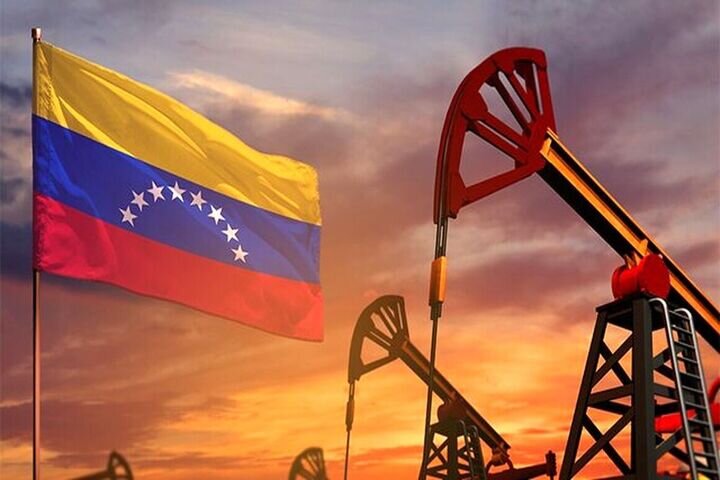
According to the International Desk of Webangah News Agency, the United States’ interest in Venezuela’s oil reserves is a key factor in the Trump administration’s policies towards the South American nation, despite official denials. The U.S. State Department claims that the deployment of over 12 warships and 15,000 American troops to the region is not related to Venezuela’s oil wealth.
Venezuela holds an estimated 303 billion barrels of crude oil reserves, approximately one-fifth of global reserves, making it the largest known crude oil deposit in the world, according to the U.S. Energy Information Administration (EIA).
Venezuela currently produces about one million barrels of oil per day, representing approximately 0.8% of global crude oil production. This figure is less than half of Venezuela’s oil production before President Maduro took office in 2013, and less than one-third of the production levels before the rise of socialists in 1999.
The EIA attributes the decline in Venezuela’s oil industry to international sanctions, the country’s economic crisis, and underinvestment, leading to the deterioration of energy infrastructure and reduced production capacity.
The U.S. has imposed sanctions on Venezuela since 2005. In 2019, the first Trump administration halted all crude oil exports to the U.S. from the state-owned oil company, Petróleos de Venezuela. In 2022, former President Joe Biden authorized Chevron to operate in Venezuela as part of efforts to lower gasoline prices, but Trump revoked this authorization last March. However, he later reissued the license, contingent on no revenue benefiting the Maduro government.
The United States is the largest oil producer in history, but it still needs to import oil, particularly the heavy crude type found in Venezuela. The U.S. primarily produces light crude oil, which is suitable for gasoline production, while heavy crude, such as Venezuelan oil, is essential for producing diesel, asphalt, and fuels for factories and heavy equipment. A global shortage of diesel supply is partly attributed to sanctions on Venezuelan oil.
The EIA reports that the United States has imported 102,000 barrels of oil per day from Venezuela since last September, making Venezuela the tenth-largest oil exporter to the U.S. Washington reportedly needs Venezuelan oil more than it admits.
Phil Flynn, a senior market analyst at Price Futures Group, notes that Venezuela is geographically close to the U.S., and its oil is relatively inexpensive. Furthermore, many American refineries are designed to process Venezuelan heavy oil and are more efficient in using it than American oil.
Some analysts believe that the U.S. seeks to transform Venezuela into a major oil source by potentially overthrowing the Maduro government, which could create opportunities for Western oil companies. The U.S. aims to use Venezuela’s vast oil reserves as leverage to counter rising oil prices.
Russian oil is similar to Venezuelan oil, making India and China heavily reliant on it, despite international sanctions against Russia. Increasing Venezuela’s oil production capacity could provide an alternative for U.S. allies, reducing their dependence on Russian oil and weakening the Russian economy.
Gustavo Petro, the President of Colombia, stated in an interview with CNN, “Oil is the core of the issue. I think that is Trump’s goal.”


