EU’s Role in Sudan Conflict: Aiding Terrorist Groups?
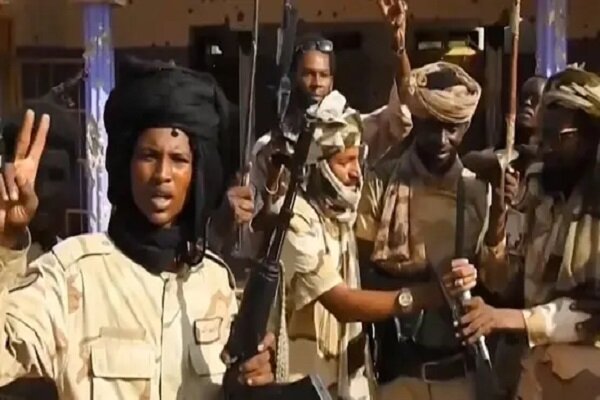
According to the International Desk of Webangah News Agency, Sudan was already facing a prolonged crisis before the outbreak of open warfare in April 2023, marked by decades of autocratic rule under Omar al-Bashir, a fragile economy, fragmented security forces, and deeply entrenched paramilitary structures.
The transitional arrangement between civilians and the military that followed Omar al-Bashir’s ouster in the 2019 coup failed to unite rival factions, leading to political instability, local insurgencies, and fierce competition between the Sudanese Armed Forces (SAF) and the Rapid Support Forces (RSF), ultimately erupting into full-scale conflict.
Despite the geographic distance, the European Union plays a notable role in these developments. For nearly a decade, the EU has pursued a strategy of “internationalizing” migration management, directing aid, training, and equipment to African countries under the guise of curbing illegal migration to Europe.
In Sudan, this approach had unintended and devastating consequences as funds earmarked for “migration management” and “capacity building” became entangled with arms trafficking and weak oversight.
European governments, particularly the United Kingdom, continued their aid practices despite knowing that the funds were being converted into equipment used by the Rapid Support Forces.
Between 2014 and 2018, the EU channeled over €200 million (approximately $232 million) to Sudan through the “European Union Emergency Trust Fund for Africa (EUTF)” and the “Better Migration Management” initiative. These funds effectively strengthened cooperation between the EU and Sudanese security structures, including units that were later integrated into the Rapid Support Forces.
As early as 2017, the Enough Project warned in a report titled “Border Control from Hell” that “the most dangerous aspect of Europe’s role in Sudan is that the Rapid Support Forces may benefit from European financial assistance.
Two years later, the EU was forced to suspend several migration control-related activities in Sudan due to concerns about the potential diversion of resources for repressive purposes, a fact revealed by Deutsche Welle through the release of an official European document.
These contradictions raise a fundamental question: if the EU was aware of the risks of resource diversion, why did it continue to funnel hundreds of millions of euros into Sudan with weak oversight of the spending process?
As the conflict deepened, foreign-made, primarily European, weapons and ammunition were found among the Rapid Support Forces. Credible images, open-source intelligence analysis, and serial number tracking confirmed the presence of European-made weaponry in the Sudan conflict.
In November 2024, Amnesty International released an investigation showing that Nimr Ajban armored personnel carriers were equipped with defense systems manufactured by the French company Galix. The organization released images and videos from several locations in Sudan and concluded that the deployment of these systems in Darfur violated the UN arms embargo that has been in place for years.
Field investigations conducted by France 24 and Reuters last April revealed that 81-mm mortars found among the Rapid Support Forces’ weapons in northern Darfur originated from Bulgaria. Markings on the munitions matched those of mortars manufactured by a Bulgarian company.
Last October, The Guardian revealed that British military equipment, including light weapons targeting systems and armored engines, was in the possession of the Rapid Support Forces.
Collectively, this information indicates that European-made weapons have reached the parties involved in the conflicts in Sudan, despite prohibitions and assurances. However, European governments, particularly the UK, continued to issue new licenses to arms exporters, despite knowing that their equipment had reached the hands of the Rapid Support Forces terrorist groups.