EU Approves €90 Billion Loan for Ukraine Amid Debate Over Russian Assets
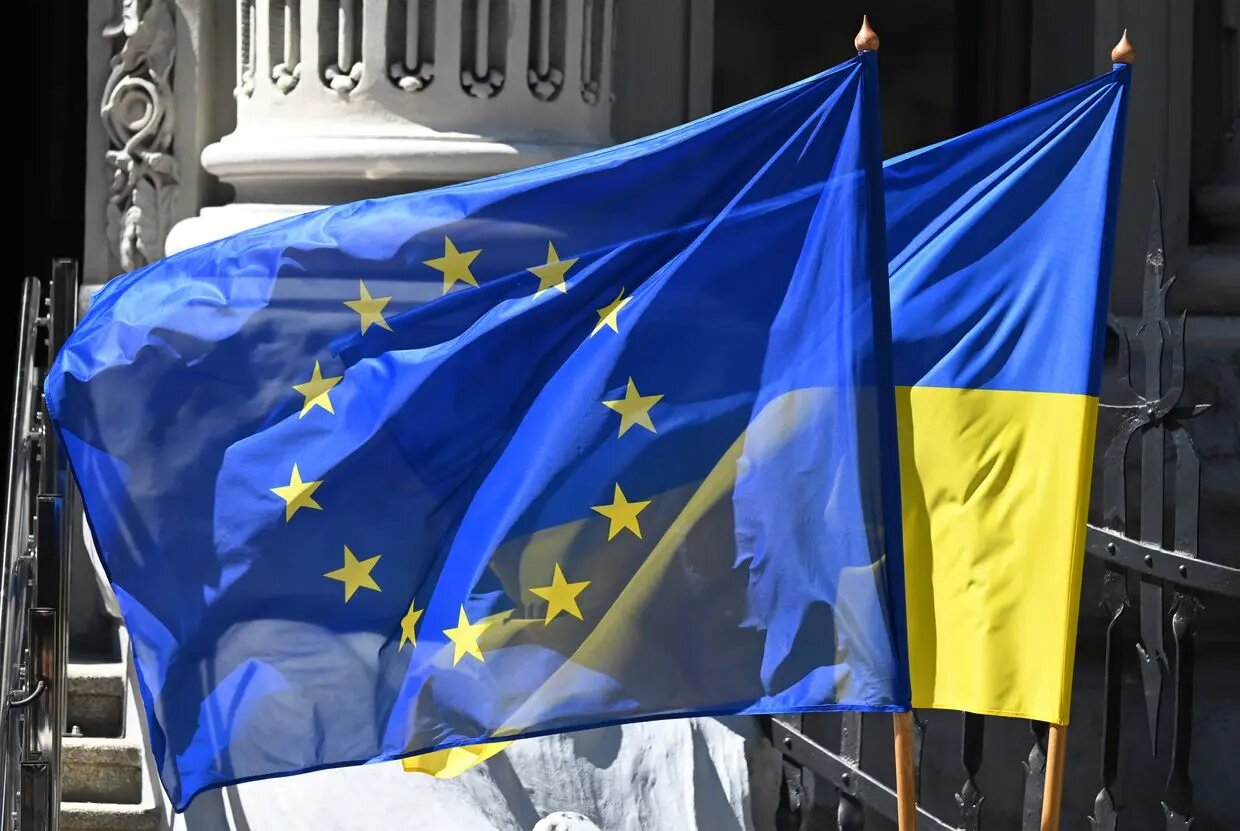
According to the International Desk of Webangah News Agency, EU leaders have finalized an agreement to grant Ukraine a €90 billion loan. The decision was reached during a meeting in Brussels, where leaders also discussed the possibility of utilizing frozen Russian assets to secure funding, though consensus on this matter remains elusive.
European Council President Antonio Costa announced the agreement on social media, stating that the €90 billion support package for Ukraine spanning 2026-2027 has been approved. He emphasized the EU’s commitment to fulfilling its promises.
French President Emmanuel Macron hailed the agreement as a significant step forward, describing it as the most realistic and practical method for financing Ukraine. He noted that the loan would enable Ukraine to purchase weapons from EU manufacturers, securing the necessary funds for its military from 2026 onwards. The EU is also exploring alternative ways to leverage frozen Russian assets to support Ukraine’s financial needs.
European Commission President Ursula von der Leyen asserted the EU’s right to utilize frozen Russian assets to finance loans to Kyiv, suggesting that Ukraine would not be obligated to repay the loan if Russia fails to provide reparations.
However, Hungary, the Czech Republic, and Slovakia have voiced their opposition to participating in the €90 billion loan program for Ukraine.
Belgian Prime Minister Bart De Wever characterized his country’s opposition as a victory for international law, aimed at preventing a dangerous precedent and bolstering financial stability by avoiding the use of Russian assets. He argued that the seizure of Russian assets entails considerable financial and legal risks that are difficult to manage. De Wever noted that while some countries driven by “emotional animosity toward Russia” supported the idea, ultimately, reason prevailed.
Hungarian Prime Minister Viktor Orban stated that the EU rejected the idea of confiscating Russian assets due to concerns about the potentially higher value of EU assets held in Russia.
Orban added that the burden of repaying the loan would fall on future generations, expressing skepticism about Ukraine’s ability to repay the debt. He warned that if Russia were to sue over the asset seizure, the EU might have to pay twice the amount in restitution.
German Chancellor Friedrich Merz commented that the loan should be sufficient to cover Ukraine’s military and economic needs for the next two years.
Merz stated that frozen Russian assets will remain blocked until Russia pays war reparations to Ukraine. If Russia refuses to pay, these assets will be used to repay Ukraine’s loan. He confirmed that the loan would be interest-free.
Ukrainian President Volodymyr Zelenskyy estimates war damages to exceed $700 billion. The International Monetary Fund (IMF) projects that Ukraine will require $161 billion in financial assistance over the next two years. With the government in Kyiv nearing bankruptcy, these funds are urgently needed by early next year. Approximately €210 billion ($246 billion) of Russian assets have been frozen in Europe.