Chinese Firms Seek Refuge in Singapore Amid US Trade Tensions
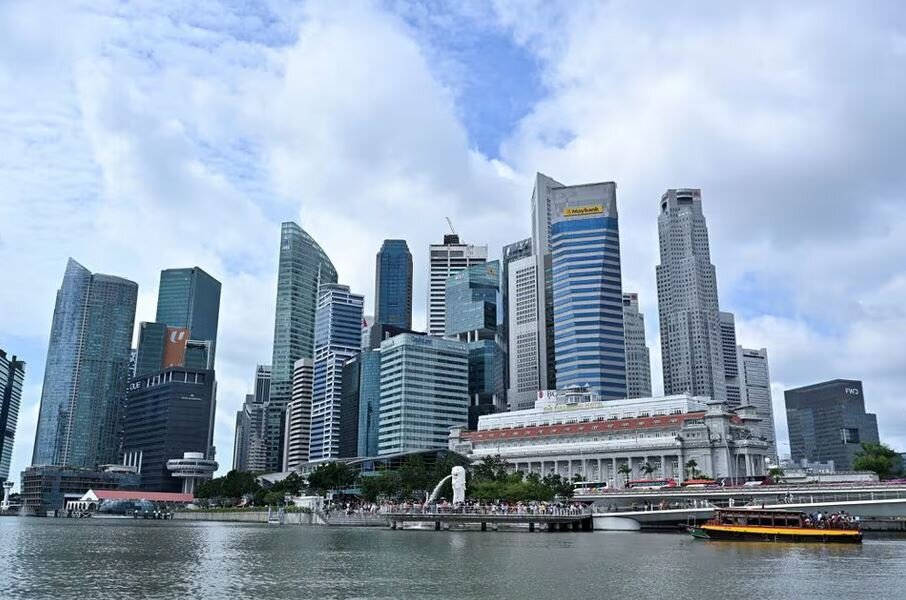
According to the Economic Desk of Webangah News Agency, analysts report a growing trend of Chinese companies seeking refuge in Singapore, a phenomenon some have dubbed “Singapore washing.” This trend accelerated during the first term of Donald Trump’s presidency and has since expanded across sectors from critical minerals to technology and biotechnology.
While no official figures exist on the number of Chinese firms based in Singapore, K.J. Tan, CEO of InCorp Group, notes a significant surge in interest from Chinese businesses looking to relocate or expand in the Asia-Pacific region. According to InCorp, inquiries have increased by approximately 15 to 20 percent compared to the previous year.
Singapore provides an attractive base for companies aiming to circumvent U.S. tariffs and retain access to American technologies restricted for sale in China. The U.S. currently imposes only a 10 percent tariff on goods from Singapore.
Erica Tay, a China economist at Maybank, highlighted Singapore’s trusted brand globally and its valued international flavor and neutrality. She also noted the ease of cultural adaptation for Chinese companies and their expatriates.
With 28 extensive free trade agreements, the country also offers a strong foundation for expansion into markets beyond China. However, this advantage places Singapore in a precarious position as the U.S. intensifies scrutiny of Chinese companies.
Although relocation theoretically provides businesses with greater flexibility in managing tariffs, export controls, and other protectionist trade policies, such measures do not guarantee immunity from political or regulatory pressures. Shein and TikTok were among the first companies to move to Singapore but have not escaped Western oversight.
Reuters reports that experts believe the Singapore relocation strategy is primarily effective for smaller companies, while larger businesses find limited space for operation.