Iran’s Space Industry Advances with Homegrown Satellites and Private Sector Growth
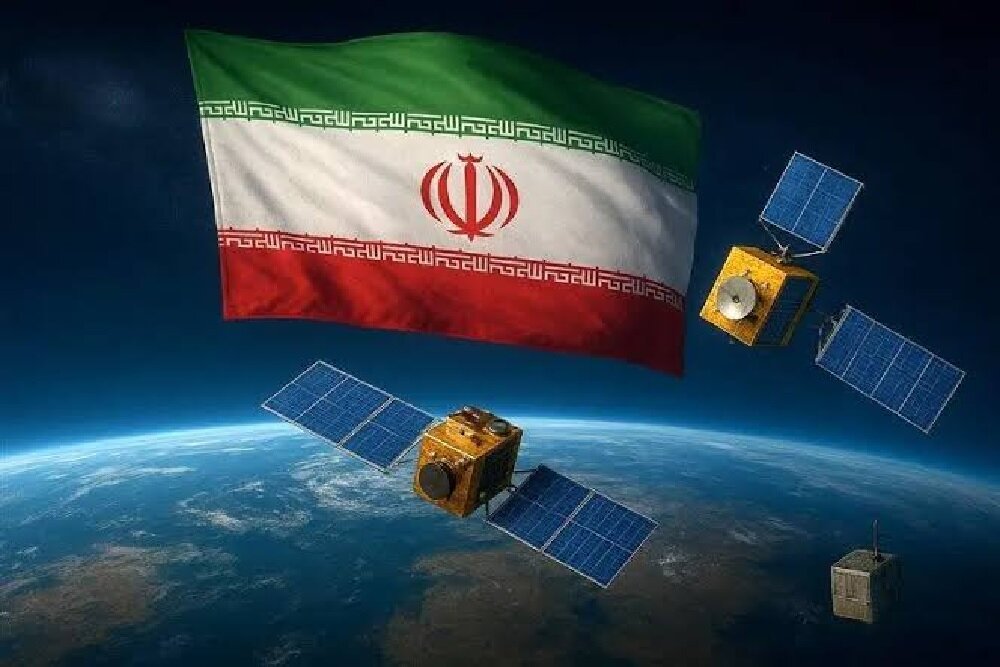
According to the Economic Desk of Webangah News Agency, Iran has achieved notable progress in space technology in recent years, solidifying its position among active spacefaring nations. The country has successfully launched domestically developed satellites, expanded ground stations, and localized launch vehicle production. National Space Technology Day, observed annually on February 3, showcases Iran’s scientific, research, and operational achievements in satellite technology, launch vehicles, and space stations.
Key accomplishments include the development of satellites like Fajr, Omid, Zafar, Noor, Kosar, and Khayyam, as well as launch vehicles such as Safir, Simorgh, and Qaem. These advancements enable Iran to place satellites into low Earth orbit (LEO). The country has also established guidance, control, and orbital stabilization systems for satellites.
Iran has deployed multiple ground stations for data reception and satellite management, including portable and pocket-sized stations, creating a stable communication network for near-real-time data transmission. Subsystem technologies like internal satellite propulsion (OTS/Thruster systems), attitude control, and pointing systems have been developed, along with sensors, cameras, and remote sensing equipment.
Operational applications include precision agriculture, pasture and orchard monitoring, water resource management, environmental studies, geology, natural resource assessments, and climate change tracking. The space technology ecosystem has expanded with knowledge-based companies, university collaborations, and private sector involvement, forming a complete value chain from component production to operational services.
International collaborations, such as the launch of the Khayyam satellite via Russia’s Soyuz rocket and the Pars 1 satellite from Russia’s Vostochny Cosmodrome, highlight Iran’s growing presence in the global space industry. Pars 1, a 134 kg research and sensing satellite, features three imaging cameras for visible, shortwave infrared, and thermal infrared spectral ranges, capable of mapping 95% of Iran’s terrain in under 100 days.
Dr. Hossein Shahrabi, CEO of a knowledge-based space technology company, emphasized the need for private sector expansion in the space industry. He noted that Iran’s experience in space technology development could serve as a model for other sectors, stressing the importance of transitioning to a genuine knowledge-based economy. Shahrabi highlighted the negative impacts of a state-dominated economy, such as multi-tiered currency rates and lower productivity, advocating for private sector-led value creation.
Shahrabi underscored the potential of Iran’s highly educated workforce to drive a knowledge-based economy, calling for greater private sector participation and international engagement. He argued that government should act as a facilitator rather than a barrier, removing obstacles and supporting private sector initiatives. The National Space Technology Day not only celebrates past achievements but also serves as an opportunity to refine policies and envision a future where space technology becomes a key driver of Iran’s knowledge-based economy.