Islamic Revolution’s Resilience: Iran Thrives Amidst Persistent US Hostilities and Sanctions
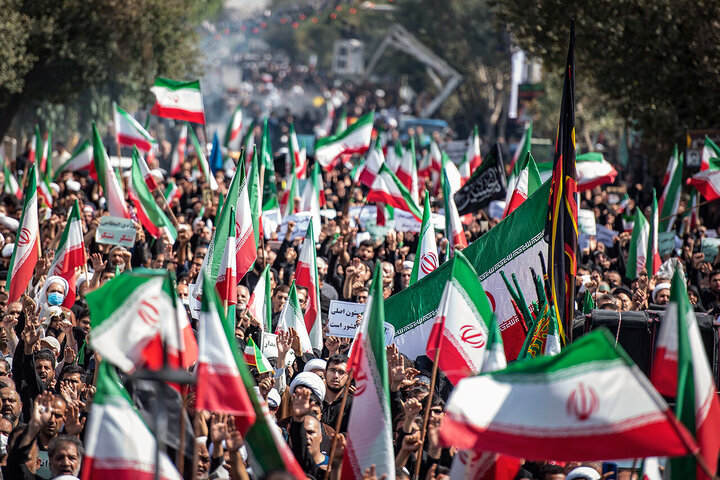
According to the International Desk of Webangah News Agency, the Islamic Revolution of Iran in 1979 marked a historic turning point, signaling the end of American influence and the emergence of an independent Iranian foreign policy opposed to Western hegemony. Following this event, the United States imposed broad sanctions with the objective of hindering Iran’s advancement.
The Islamic Republic of Iran has remained firm on its core principles and national interests despite facing severe threats, stringent sanctions, and alleged acts of insecurity, continuing its progress across multiple domains.
Al-Manar News outlet noted that over the past half-century, Tehran has significantly expanded its regional and international relations, signing key accords with major global actors, including China and Russia, while consistently backing liberation movements in the region. These maneuvers have drawn opposition from the United States and the Zionist regime, resulting in the assassination of Iranian political figures, scientists, and military commanders, in addition to participation in various insurrections.
The US withdrawal from the nuclear deal in 2018, followed by a military strike against Iran in June 2025, which tragically resulted in the martyrdom of thousands of Iranians, underscored the depth of hostility held by the US and the Zionist regime toward Iran. Nevertheless, Iran stood firm against this aggression, responding with missile strikes targeting the heart of the Zionist regime and American bases in Qatar.
The Al-Ittihad Center for Studies and Research, in an analytical report, detailed the sequence of successive conspiracies orchestrated by the US administration and how these plots failed to impact Iranian governance. These failures prompted a shift in American strategy, moving away from maximalist goals such as regime change toward more limited objectives, specifically negotiations over the nuclear file.
The reliance by the US and the Zionist regime on terrorist operations and a military phase, set against a policy of intensified economic siege, was a consequence of repeated failures in formulating an adequate response. Al-Manar further clarified that negotiations between Tehran and the European Troika commenced in 2002, yet the West failed to honor its commitments regarding the lifting of sanctions. In 2013, Iran entered into talks with the P5+1 group, leading to the formation of the Joint Comprehensive Plan of Action, commonly known as the JCPOA.
Under the terms of the JCPOA, Iran agreed to curb aspects of its peaceful nuclear activities, but this agreement was unilaterally violated by then-US President Donald Trump in 2018. Al-Ahed news website commented that Washington views negotiation merely as a temporary tool to achieve its strategic objectives. Iran insists that negotiations must be strictly confined to the nuclear program, refusing to incorporate its missile program or regional alliances into those discussions. Under pressure from the Zionist regime, Washington seeks an agreement that would transform Iran into a compliant state.
Iran considers its missile program its sole available deterrent, viewing any attempt to strip it of this defense capability as an effort to render the country strategically vulnerable. Following the Islamic Revolution, Iran prioritized investment in scientific and technological development as a strategy to counter Western sanctions. This led to the successful construction of a multi-tiered scientific system encompassing nuclear energy, medicine, aerospace, and high technology.
Scientific development in Iran has been an integral part of the government’s strategic planning aimed at serving the people and achieving national self-sufficiency. Iran’s peaceful nuclear program, advancements in medical and biological sciences, and its space program are cited as key scientific achievements since the Revolution. Furthermore, Iran has made significant strides in national nanotechnology and artificial intelligence technologies.