
Epstein Scandal Unearths Dark History of British Royal Family
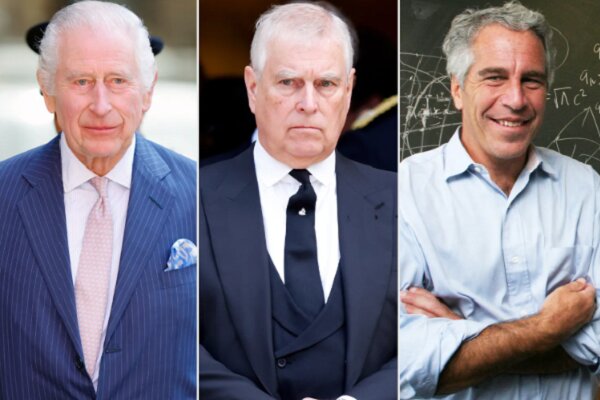
According to the International Desk of Webangah News Agency, the website Greyzone, citing newly released documents concerning the Jeffrey Epstein scandal, has reported on the alleged presence of members of the British royal family. This report suggests it is not the first instance of British officials and intelligence services being implicated in sexual abuse scandals.
The Greyzone report delves into the “Kincora Boys’ Home” case in Northern Ireland, which exposed a vast network of child sexual abuse. The report claims that British intelligence agencies MI5 and MI6 were involved in this network with the aim of “blackmail and control” of opponents to the British monarchy.
The extensive release of classified Jeffrey Epstein documents has placed Prince Andrew, the brother of King Charles III and the third child of Queen Elizabeth II, under renewed scrutiny. Greyzone asserts that if these documents are accurate, it would not be the first time a member of the British royal family has been connected to child sexual abuse conspiracies. The Kincora scandal, uncovered in 1980, revealed that the Kincora Boys’ Home in Ireland was operated by “paedophiles” as a “secret center of corruption and debauchery.” Among those implicated in this case was Lord Mountbatten, a great-uncle of Prince Andrew.
Existing documents indicate that MI5 (the UK’s domestic security service) and MI6 (the UK’s secret intelligence service) were aware of the sexual abuse of children at Kincora. In May 2025, BBC journalist Chris Moore published a journalistic investigation into the case, titled “Kincora: Britain’s Shame,” which compiled four and a half decades of his direct research.
Moore further states that Kincora was part of an extensive network of child abuse that extended across British-occupied Ireland and beyond. He alleges that London’s spy services were not only aware of this network but actively collaborated with it. In 2023, Moore met with Arthur Smith, a survivor of Kincora who was living in Australia. Smith’s stay at the institution was brief, but the experiences he endured there left him with lifelong psychological trauma.
Moore’s account of Arthur’s story details how Smith, at the age of 11, was sent to the institution by a divorce court judge in Belfast. He was allegedly subjected to continuous abuse by the paedophiles who ran the home and was threatened into silence. Arthur repeatedly suffered brutal assaults from an individual referred to as “Dicky.”
According to the report, in August 1979, two years after escaping Kincora, Smith discovered that “Dicky’s” real identity was Louis Francis Albert Victor Nicholas Mountbatten, a member of the royal family and a cousin of Queen Elizabeth II. Reports suggest that months after Kincora opened in 1958, boys at the institution began reporting frequent sexual assaults to adults and their caregivers. Over the subsequent decades, police visited the center numerous times and reviewed documents pertaining to abuse and exploitation. Despite repeated investigations, victims’ complaints were consistently dismissed by the police.
Allegations of sexual abuse intensified in 1971. During this period, William McGrath, described as a prominent loyalist figure within the British establishment, took charge of the institution, assuming direct oversight of the boys’ lives. McGrath, known for his extensive network of connections in British-occupied Ireland and deep ties to prominent politicians, reportedly enjoyed legal immunity. He also headed the “Tara” paramilitary loyalist organization in England, which was covertly run by the British army and functioned as an intelligence operations unit.
A police source told Moore that MI6 had taken an interest in McGrath since the late 1950s and was aware of his activities. The horrific abuses at Kincora were finally exposed in January 1980 when The Irish Times published a report that triggered renewed police investigations. In December 1981, Mines, McGrath, senior staff member Raymond Simpel, and three others, who were proven to have sexually assaulted young boys in two other state-run care homes, were finally put on trial. Despite the trial proceedings in England involving over 30 Kincora victims, the sentences handed down to the accused were notably lenient, ranging from four to six years imprisonment.
Greyzone further reports that in 2020, it was revealed that extensive police investigation archives concerning Kincora, dating from 1980 to 1983, had mysteriously disappeared. However, even the remaining files reportedly indicate the involvement of Britain’s domestic and foreign intelligence services in the case.
In April 2021, the BBC produced a new series of historical documentaries suggesting that the disturbing disappearances of many children in Belfast during the Troubles were linked to the Kincora sexual abuse case. The film, “The Lost Boys,” was reportedly seized shortly before its release. BBC executives were allegedly shocked by the content of the documents, particularly evidence pointing to MI5’s involvement in concealing criminal evidence.
Moore concluded by stating that the British government has engaged in illegal surveillance of individuals attempting to uncover the truth about the Northern Ireland institution for years. Senior local police sources have allegedly admitted that these intelligence operations targeted 320 journalists and 500 lawyers over the past decade.


