
Makkah Defense Pact Launched by Turkey, Saudi Arabia, Pakistan; Iran’s Accession Complex
According to the International Desk of Webangah News Agency, Turkey, Saudi Arabia, and Pakistan have entered a new era of security and defense collaboration with the signing of the “Makkah Joint Defense Pact.” This agreement establishes that an armed assault on any of these three nations will be regarded as an attack against all member states.
The pact’s signing occurs amidst a region grappling with numerous security crises, including heightened tensions between Iran and the United States, increased military activities by Israel, and a significant presence of American forces. Consequently, the Makkah agreement transcends a mere military accord between the three countries and has the potential to reshape regional power dynamics and security calculations in the Middle East.
Hakan Fidan, Turkey’s Foreign Minister, explicitly stated that the treaty poses no threat to Iran’s security and that all regional nations are welcome to join. Concurrently, Ismail Baghaei, spokesperson for Iran’s Ministry of Foreign Affairs, indicated that Tehran harbors no negative stance towards the agreement, citing Iran’s positive relations with all three signatory states. This suggests the Islamic Republic does not view the mechanism unfavorably.
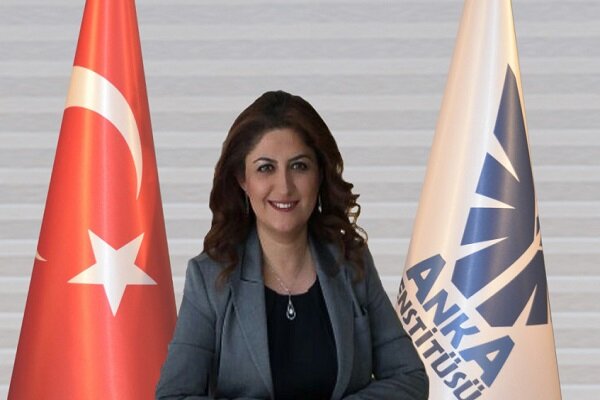
However, considering recent regional developments, the question arises whether Iran might join such an agreement in the future. Dr. Yesim Demirkar, an international relations expert, discussed the motivations behind this pact and the prospects for Iran’s involvement.
Dr. Demirkar explained that while Turkey, Pakistan, and Saudi Arabia share common objectives in signing the “Makkah Joint Defense Pact,” their individual priorities differ. She emphasized that the agreement is not a threat to Iran. All three nations are striving to safeguard their security and economic interests amidst a volatile regional landscape.
From Turkey’s perspective, maintaining economic and security interests is paramount. Turkey has significant economic, trade, and energy ties with Iran. Ankara also played a diplomatic mediating role during the US-Iran conflict, condemning attacks against Iran. Therefore, Turkey’s participation in this pact should not be interpreted as a direct move against Iran. Simultaneously, strengthening economic and defense ties with Persian Gulf states is of great importance to Turkey. Leveraging Turkey’s defense industry capabilities to access new markets in the Persian Gulf and capitalize on regional reconstruction offers a substantial opportunity for Ankara.
For Pakistan, economic needs are as significant as security concerns. Besides sharing a border with Iran, Pakistan has long-standing, extensive political, economic, and security relations with Persian Gulf countries. Historically, Pakistan has not always aligned with Saudi Arabia’s policies in these relationships, notably adopting a neutral stance by not joining the Saudi military operations in Yemen.
Pakistan currently requires new investments, foreign capital, and access to international markets. The Makkah pact presents a vital opportunity for Islamabad to bolster its security relationships and expand economic ties with Persian Gulf nations. For Saudi Arabia, the situation is somewhat different. A primary objective for Riyadh in this agreement is to ensure regional security and protect its economic development trajectory. Under its “Vision 2030,” Saudi Arabia aims to diversify its economy away from oil dependency and foster new investment avenues. Achieving these goals necessitates regional stability. Escalating regional conflicts could jeopardize energy infrastructure, deter foreign investment, and negatively impact Vision 2030 projects. Thus, Saudi Arabia views security and economy as interconnected; enhancing regional security directly supports its economic objectives. Prolonged competition with Iran has also prompted Riyadh to pursue new security collaborations.
Officials from the three nations have indicated that all regional countries are welcome to join the pact. However, given the presence of US bases in Saudi Arabia, Iran’s past attacks on such bases, and existing Tehran-Riyadh disputes over Yemen, the feasibility of Iran’s accession remains questionable.
Dr. Demirkar assessed that Iran’s accession to the Makkah pact appears highly difficult in the short term. A primary reason is the unresolved security issues and regional rivalries between Iran and Saudi Arabia, particularly the presence of US military bases in Saudi Arabia, which Iran views as a significant security concern. Iran’s attacks on US bases in Persian Gulf countries underscore Tehran’s high sensitivity to this matter. Furthermore, Iran and Saudi Arabia hold substantial disagreements on issues like Yemen and the competition for regional influence. Consequently, immediate Iranian participation in a security mechanism that includes Saudi Arabia will not be straightforward. If the pact is perceived as an anti-Iran structure, Tehran’s likelihood of joining diminishes further.
Nevertheless, it cannot be definitively ruled out that Iran may join the agreement at some point. If the pact evolves from a military structure targeting a specific country into a comprehensive framework for regional security, deterrence against attacks, and enhanced economic cooperation, Iran might establish direct or indirect connections with it. In the current climate, however, Iran is not expected to join. Tehran has instead voiced criticism of the pact’s signing, primarily because its current form does not align with Iran’s security and regional interests. Should the pact, in the future, transform into an inclusive structure focused on regional stability, economic cooperation, and mutual security, rather than an anti-Iran or sectarian bloc, Iran’s approach might change.
Regarding the pact’s potential contribution to regional security amidst Israeli threats and US military presence, Dr. Demirkar noted that for the agreement to aid regional security, it must first avoid becoming a military coalition against any specific nation. The strong security cooperation among Turkey, Pakistan, and Saudi Arabia, in light of Israeli military activities and US presence, could empower regional countries to enhance their self-security capabilities. This collaboration could serve as a significant deterrent, particularly in safeguarding energy routes, trade corridors, and vital infrastructure, as the repercussions of a regional conflict extend beyond the immediate participants, affecting the entire region through energy, trade, transport, and investment.
However, the pact faces considerable challenges. Firstly, despite shared interests, the three countries have differing priorities. Turkey’s economic and political relations with Iran persist. Pakistan, a neighbor of Iran, also engages in a long-standing, serious rivalry with India. Saudi Arabia competes with Iran for regional influence. Consequently, expecting all three nations to adopt identical stances on every regional development is unrealistic. The pact’s success hinges on whether common interests outweigh divergent priorities among the member states.
The tension between Pakistan and India is particularly significant within this framework. A substantial portion of Pakistan’s security priorities stems from its rivalry with India. Therefore, it is unrealistic to expect Pakistan to dedicate its entire military and political capacity to Middle Eastern security issues. Moreover, Turkey and Saudi Arabia becoming involved in the Pakistan-India dispute could create new problems rather than foster cooperation. The pact’s success thus depends on establishing a balance where member states are not compelled to assume each other’s bilateral security burdens, and where bilateral rivalries do not undermine collective security.
Another critical challenge is the potential for the agreement to morph into a sectarian coalition. If perceived as a “Sunni coalition” or a bloc against Iran, regional rivalries could intensify. Such a scenario would not only complicate Iran’s potential accession but also reduce the likelihood of other regional countries joining. Conversely, if the pact evolves into an inclusive structure with economic, diplomatic, and security dimensions, the potential for new members to join will increase.
Transforming this agreement into a stable and successful mechanism is feasible, but this requires the pact to move beyond a purely military security focus. Energy security, protection of trade routes, defense industries, investment, economic cooperation, and diplomatic mechanisms must become core elements. Such a comprehensive approach could transition the relationships among the parties towards a more stable and multifaceted foundation.


