
US Military’s Recurring Failures: Strategic Errors, Not Weakness, Drive Defeats
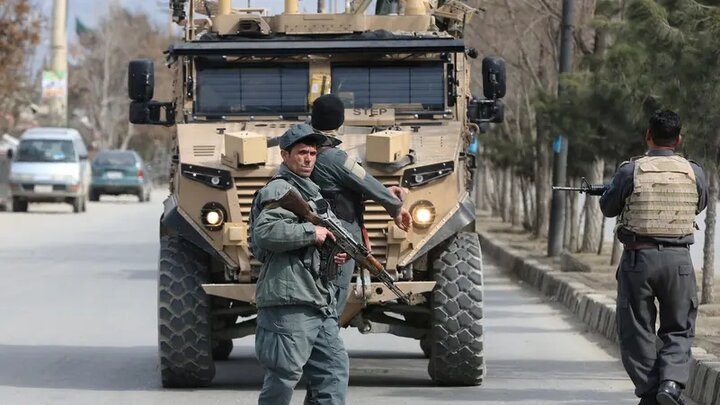
According to the International Desk of Webangah News Agency, the United States’ consistent track record of failures in recent wars, particularly highlighted by its chaotic withdrawal from Afghanistan in August 2021, raises critical questions about the superpower’s inability to achieve its objectives in protracted conflicts.
Five years after the U.S. forces’ departure from Afghanistan and the Taliban’s return to power, the enduring consequences of America’s longest war are once again prompting a re-examination of why the world’s preeminent military power has repeatedly fallen short of its goals in multi-decade conflicts.
On the anniversary of the hasty U.S. exit from Afghanistan in August 2021, this report delves into the underlying reasons for Washington’s defeats in contemporary wars by reviewing the perspectives of Stephen Walt, a prominent international relations theorist at Harvard University, and analyzing The Economist’s account of developments in Afghanistan. These failures, the analysis suggests, stem less from military weakness or resource scarcity and more from strategic miscalculations, ambitious nation-building endeavors, and a failure to account for the adversary’s resolve to resist.
America’s Wars of Choice and Strategic Miscalculation
Stephen Walt, a distinguished international relations theorist and analyst at Harvard University, wrote in an article addressing America’s recurrent war failures: “If you’re American, you’re probably tired of losing wars. So am I. You might ask yourself: Why does this keep happening? It’s a shocking conundrum.”
He added that despite the United States having been the world’s most powerful nation for decades by a vast margin, possessing an unrivaled military in terms of budget and material capabilities, its record in contemporary history’s wars demonstrates repeated failures. This list, he noted, includes the ongoing conflict with Iran, a war that has thus far failed to achieve any of the Trump administration’s objectives and is likely to conclude with a significantly stronger strategic position for Iran.
The author continued by reviewing contemporary wars involving the U.S. military, stating that Washington reached a stalemate in the Korean War, Vietnam was a clear defeat for America, and the 2003 Iraq War and the unending Afghanistan conflict were similarly unsuccessful. The 1999 Kosovo War was by no means a decisive victory, with Serbia ultimately achieving a better position than was offered before the conflict began.
Defeat Beyond the Battlefield
Walt pointed out that the reasons for these consecutive defeats are not due to a lack of budget or the balanced use of a devastating military fleet of advanced missiles. Instead, he argued, the true causes of America’s ongoing war failures are strategic and structural. The country has initiated wars of choice that combine limited American interests with overly ambitious objectives, such as attempting to rebuild foreign societies according to the American model. As a result, enemies have, in most cases, been more determined to fight than Washington, as they have much greater stakes in their victory. They are fighting for their independence and security, while America, in most instances, is fighting to achieve objectives that are not vital.
In such circumstances, it is natural for adversaries to be more willing to make sacrifices than the United States.
Afghanistan: A Failed Nation-Building Project
The report further examined the war in Afghanistan, stating that in Afghanistan, a combination of ignorance, idealism, and limited strategic importance ultimately led to the failure of America’s war effort. Washington had valid reasons to pursue Osama bin Laden and the Taliban movement, which had previously harbored him. However, maintaining U.S. forces in Afghanistan under the pretext of transforming the country into a Western-style democracy provoked strong resistance from a society rightly known as the “graveyard of empires.”
According to Walt, Afghan revolutionaries ultimately possessed greater resolve and motivation to expel America from the country than Washington had to defeat them. Furthermore, he suggested, it was fundamentally impossible to defeat the Afghan people.
The article concluded by asserting that as long as the refusal to admit mistakes and accept responsibility prevails in foreign policy circles, Americans should prepare themselves for greater disappointments and failures.
U.S. Withdrawal from Afghanistan and the Taliban’s Return
The Economist, in its special issue examining Afghanistan since President Joe Biden’s decision for a hasty withdrawal of U.S. forces in 2021, wrote that America’s decision was driven by American public fatigue with the longest war the country had waged against Afghanistan. Consequently, Donald Trump had set a timeline for withdrawal, and then Biden executed the complete withdrawal process.
The publication, referring to the Taliban’s history of resistance against American occupiers during their presence in Afghanistan, noted that Taliban fighters launched a guerrilla war against the U.S.-established democratic order. Biden consequently recognized that the two-decade effort in Afghanistan, under the guise of state-building, had ended in a humiliating defeat.
The Economist adds that the United States and Europe have attempted to isolate the Taliban regime by not officially recognizing them, freezing Afghan central bank reserves held abroad, and imposing sanctions on its officials. However, these efforts have yielded no results. Taliban forces do not prioritize the presence of Western diplomats and investors and will not alter their ideology solely to seize former government assets. Therefore, Western countries must try a new approach.


