Iran Prioritizes Deterrence, Not War or Negotiation, Says IRGC Official
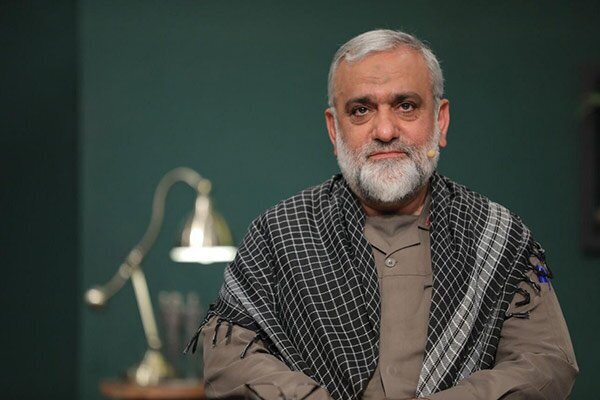
According to the International Desk of Webangah News Agency, Sardar Mohammad Reza Naghdi, a senior advisor to the Commander-in-Chief of the Islamic Revolutionary Guard Corps, told Al Mayadeen that if the Americans intend to make rational decisions in their own interests, they will never enter another war with Tehran. He added that most Iranian officials lean towards and prefer an offensive doctrine because it is operationally very beneficial.
Naghdi further explained that the cessation of conflict was due to American inability and the extensive damage inflicted upon them. “Our priority is neither war nor negotiation, but achieving deterrence,” he stated, expressing confidence in victory and noting that it came about more easily than anticipated. He asserted that even if a concrete wall were built around Iran with guards posted, the country would resist with power.
The IRGC official highlighted that Iran’s indigenous weapons were a defining characteristic in the recent conflict. He elaborated that all facilities have been rebuilt in very secure locations and are operating with modern technologies. Iran possesses hundreds of cities and industrial installations, capable of concealing its production in various ways, both above and below ground.
Naghdi claimed that enemy air defense systems collapsed under the massive wave of Iranian drones and missiles, with adversaries resorting to older weaponry to counter the attacks. He described the American military as hollow, fictitious, and a paper tiger, asserting that its current capabilities are weaker than portrayed. He downplayed the significance of American aircraft carriers and fighter jets, noting that carriers were halted a thousand kilometers from the Strait of Hormuz, unable to advance.
Sardar Naghdi also emphasized the strong and stable relationship between the IRGC and the Iranian government. He warned that any aggression against Iran would result in a heavy price. He contrasted the enemy’s expectation of controlling Iran within three days with the six months that have since passed.
Regarding former President Trump, Naghdi suggested that Trump’s decisions are driven by personal interests and those of his companies, calibrating the intensity of war for stock market gains or benefits to his close associates in the oil sector. He characterized asymmetric warfare as taking place on Wall Street, Manhattan, and everywhere and anytime.
Concerning American support for the Israeli regime, Naghdi stated that its cessation would render Tel Aviv incapable of continuing its path. He interpreted the occupying army’s reliance on bombing as an indication that ground forces are ineffective without it. He also refuted any rift between Iran and the resistance, asserting that their bonds have grown stronger.