US Escalates Economic Warfare Against Iran, Allies Bear Impact
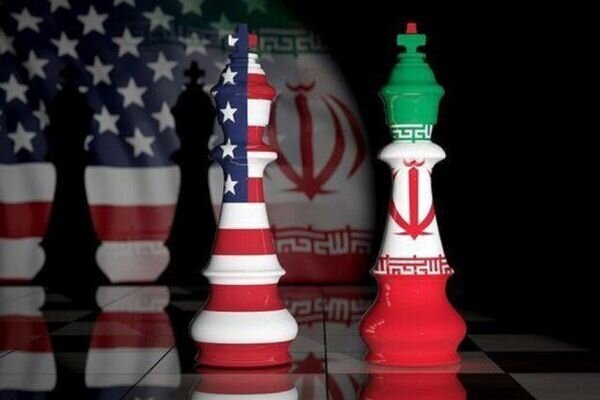
According to the International Desk of Webangah News Agency, The United States has recently reverted to a tactic that has long been a cornerstone of its unsuccessful policy towards Iran. This time, however, the circumstances are different. Following direct involvement in an aggressive military conflict and incurring significant military costs, the U.S. is expanding its economic pressure while Iran’s economy has discovered new avenues for trade and financing over more than four decades of sanctions. Tehran’s economic ties with influential regional and international players have also deepened.
Furthermore, the extension of pressure to countries like Iraq, the United Arab Emirates, and Turkey indicates that a widespread economic blockade is no longer solely a confrontation between Washington and Tehran; it has the potential to involve more actors.
The crucial question now is whether the U.S., by altering the field of pressure, can achieve the objective it failed to attain on the military front, or if the expansion of economic warfare will further expose the limitations of Washington’s power.
Shifting the Battlefield from War to Economy
Approximately six months after aggressive attacks by the United States and the Zionist regime against Iran, Washington is now discussing entry into a new phase of pressure against Tehran. This phase, instead of relying solely on military power, concentrates on economic blockade, restricting Iran’s oil revenues, and cutting off its financial and trade routes. Donald Trump has described this phase as a broad “economic operation,” and Treasury Secretary Scott Bessent has claimed the imposition of the “toughest sanctions in history” against Iran.
This shift occurs amidst rising U.S. military costs in its engagement with Iran. According to assessments from American sources, the U.S. military has nearly depleted its entire stockpile of long-range precision missiles, such as ATACMS and Precision Strike, during months of conflict. A significant portion of its Tomahawk missile reserves and Patriot and THAAD interceptors have also been deployed. Such pressure on its armament reserves makes the continuation of a war of attrition more costly for Washington.
In this context, economic pressure has become a tool with the hope of imposing new costs on Tehran without the need for expanding military operations. The U.S. administration has demanded that countries and companies still trading with Iran distance themselves from Tehran, threatening sanctions and economic penalties against those continuing economic cooperation with Iran. In this manner, Washington seeks to transfer the scope of pressure from the military arena to a broader network of banks, companies, oil exporters, and trade routes.
Kazem Gharibabadi, Iran’s Deputy Foreign Minister, emphasized in this regard that the U.S. has chosen the name “economic warfare” for the next phase of pressure after its military war did not yield the desired results. This perception aligns with the reality observed in Washington’s new policy, meaning the principle of pressure has not been abandoned, but the arena for its application has changed.
Consequently, the main issue is no longer solely the military capability of the United States, but rather the extent to which Washington can utilize its financial and economic capacity to sustain pressure without its costs spiraling out of control.
Economic Warfare Bill Presented to U.S. Allies
The U.S. economic war against Iran is gradually evolving from a bilateral pressure tool into one that transfers its costs to countries with close political and economic ties to Washington. Iraq, the UAE, and Turkey are compelled to calculate the cost of sanctions to preserve their relations with the U.S. Simultaneously, disruptions in Iran’s trade, energy, and export routes directly impact their economic interests.
Iraq serves as a clear example of this paradox. Reports indicate that during the recent visit of Mohammad Bagher Ghalibaf, Speaker of the Islamic Consultative Assembly, to Baghdad, Hibat Al-Halbusi, Speaker of the Iraqi Parliament, requested “special concessions” for his country’s oil exports from the Strait of Hormuz, emphasizing that Iraq has been severely harmed by current regional developments. Baghdad’s request demonstrates that economic pressure and disruptions in energy routes have led a country connected to the U.S. to seek guarantees and concessions to protect its interests.
The significance of this issue for Iraq becomes more apparent when considering its oil-dependent economy. Reports suggest that Iraq’s oil exports, which were around 3.5 million barrels per day before the crisis, fell to approximately 200,000 barrels at one point, and the decline in oil revenues even created difficulties in paying state employee salaries.
Under these circumstances, Baghdad has reached an agreement with Turkey to transfer at least 750,000 barrels of oil per day via Ceyhan. This action highlights how the consequences of the crisis exacerbated by Washington to pressure Iran are now forcing governments close to the U.S. to seek emergency routes.
The UAE faces a similar dilemma. Abu Dhabi halted trade and financial transactions with Iran on August 18 (August 27), but at the same time, disruptions in regional trade and energy routes have pressured the country’s economic interests. Dubai has profited from trade and re-export of goods to Iran for years, and any reduction in these exchanges directly curtails a portion of its economic activity. Furthermore, increased energy prices resulting from disruptions in the Strait of Hormuz impose costs on an economy highly reliant on trade, transportation, and imports.
These costs are not limited to the region; the escalating energy prices affect U.S. allies worldwide. For instance, Brent crude oil reached approximately $93 per barrel on August 21 (August 30), an increase of over 7% in a week, as disruptions in transit through the Strait of Hormuz continue to keep the energy market concerned.
In such a scenario, to increase pressure on Iran, the U.S. must not only bear the direct costs of operations and sanctions but also contend with rising energy prices, damage to allied trade, and regional market instability. Therefore, the economic warfare bill issued by Washington for Tehran is now partially presented on the tables of U.S. allies.
Erosion of Maximum Pressure
The primary issue in the new phase of U.S. pressure is not just the intensity of sanctions but the ratio between pressure and political outcome. Washington claims that by combining blockade with what it terms “the toughest sanctions in history,” it can push Iran’s economy to the brink of collapse and force Tehran to accept its demands.
However, decades of sanctions experience have shown that increased economic costs do not necessarily lead to a change in Iran’s political calculations. Even recent American reports acknowledge that past economic pressure has failed to compel Tehran to accept Washington’s demands, and the Trump administration is now testing a more stringent version of the same failed policy.
The difference today compared to previous campaigns is that to increase the effectiveness of sanctions, the U.S. must also put pressure on the economic network surrounding Iran. Threats to China, the UAE, Turkey, and Iraq indicate that Washington is no longer facing just Iran’s economy but a network of commercial, energy, and financial relationships that have developed over years of sanctions.
According to observers, the broader the scope of secondary sanctions becomes, the more complex their implementation. Washington will be compelled to dedicate more resources to controlling financial routes, shipping, insurance, banks, and third-party companies to maintain the effectiveness of sanctions.
Conversely, Iran has moved towards an economy resilient to pressure over the years of sanctions. Informal trade networks, discounted oil sales, the use of intermediaries, and the development of financial channels outside the Western system are part of this mechanism. Even under current conditions, where naval blockade has severely restricted Iran’s oil exports, Tehran is seeking alternative export routes, new banking arrangements, and diversification of its economic partners. Recent reports mention Iran’s efforts to establish financial corridors independent of Western-controlled systems and an agreement for oil exports to Tajikistan.
Moreover, sanctions are no longer a cost-free tool for the U.S. If Washington wishes to pressure China for buying Iranian oil, it would effectively engage its sanctioning capacity in competition with its largest economic and strategic rival. If it restricts the trade of the UAE, Turkey, and Iraq to maintain pressure, it must accept the political and economic costs of these actions in its relations with regional and global partners.
Simultaneously, energy disruptions stemming from the Iran crisis have contributed to rising fuel prices in the U.S. and Europe, creating inflationary pressure. This means that the U.S.’s economic tool can return some of its costs to Washington’s allied economies.
Ultimately, the issue has become a test of America’s ability to translate economic pressure into political outcomes. To force Iran to change its behavior, Washington has extended the scope of pressure beyond Iran’s economy, targeting oil buyers and trade routes associated with Tehran. This approach indicates that it has broadened the scope and costs of this strategy to achieve its desired results.
A new study published in August 2026 in the “Journal of Economic Behavior and Organization” warns, after examining the effects of sanctions, that in the cases studied, sanctions generally failed to achieve the desired results of sanctioning governments and, in some instances, even had the opposite effect.
From this perspective, while economic warfare can increase Iran’s costs, an increase in costs does not necessarily lead to a change in political calculations. This gap could be decisive in determining the success or failure of Washington’s new pressure campaign.