
Global Media Reflections on the War Against Iran Highlight Strategic Impasse and Aggressors Setbacks
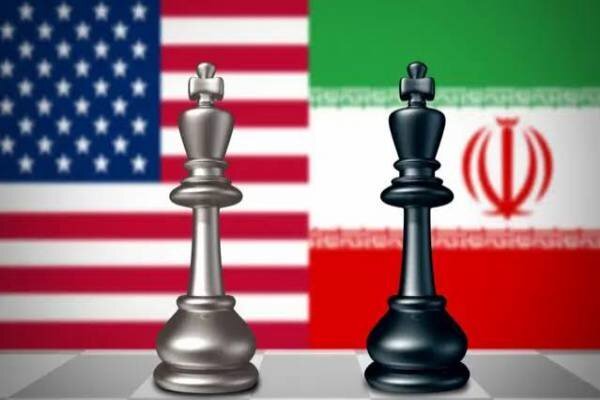
According to the International Desk of Webangah News Agency, since the onset of the military aggression by the United States and the Zionist regime against Iran, the declared objectives of this operation have fallen short, with Western officials and American media outlets acknowledging a strategic deadlock and subsequent field and political failures. This ongoing conflict, which initially erupted with extensive attacks and civilian casualties, has rapidly expanded in its humanitarian, security, and economic dimensions, provoking diverse reactions across international media platforms. Global outlets, each adopting their distinct editorial approaches, have attempted to shape the narrative surrounding this war, while examining these reflections offers a clearer depiction of the actual state of the conflict and its unfolding horizons.
Western Media Perspectives
Writing in Reuters, analyst Andrew Mills noted that backchannel diplomacy aimed at ending the hostilities has failed to pacify tensions across the Persian Gulf, leading to a hardening of rhetoric among the involved parties. United States President Donald Trump has indicated that Washington might launch renewed strikes against Iran, while Iranian security officials have reaffirmed that Tehran maintains comprehensive contingency plans for a robust response. Qatari mediators delivered a draft agreement to Tehran on Sunday, though a senior Iranian official dismissed the initiative as containing unacceptable ideas rather than a viable proposal. On Monday, representatives from the Makkah Pact nations—encompassing Saudi Arabia, Turkey, and Pakistan—met with Iranian leadership in Washington and Tehran alike, agreeing to sustain dialogue, albeit without disclosing specific details.
Simultaneously, military operations originating from Yemen targeting Saudi Arabia persist. Reuters further reported that the financial cost of the United States military engagement against Iran has surpassed 47 billion dollars, exceeding the Pentagon’s July projections by more than 25 percent. This deeply unpopular war has placed mounting political pressure on Republicans ahead of the November 3 elections. Meanwhile, Canada and Jordan, alongside other regional developments, reflect deepening uncertainty across the Persian Gulf, where crude oil prices have transformed into an unconventional metric for gauging regional sentiment—dipping during diplomatic overtures and surging amid renewed attacks. In Israel, following the tally of 77.6 percent of ballots, Benjamin Netanyahu’s political bloc secured 54 seats while the opposition coalition captured 49 seats within the 120-member Knesset, leaving neither faction with a clear governing majority.
In an analytical report published by Le Monde titled Arab Expectations of Israel, journalist Gilles Paris observed that the legislative elections yielded no decisive winner, with Benjamin Netanyahu and Gadi Eisenkot sharing largely overlapping views regarding the regime’s strategic role in the Middle East. The military campaign against Iran, opposed by the vast majority of Arab nations, has further cemented the Zionist regime as a primary catalyst for regional instability. Previously, Israeli elections occasionally served as a platform to articulate its regional positioning, but following the events of October 7, 2023, Netanyahu articulated ambitions to redraw the Middle East in alignment with Israeli interests, anchoring regional objectives on unmatched firepower and unconditional United States military backing.
MSN contributor Steve Bannon reported that the cumulative financial burden of the conflict for American taxpayers reached 47.1 billion dollars by October 16, according to revised Pentagon assessments. Munitions, missiles, and related military hardware constitute over 60 percent of this total, with the Department of Defense appending an additional 3.5 billion dollars roughly six weeks after its previous public estimate. The New York Times noted that this latest figure is almost certainly conservative and omits numerous associated expenditures. Senate Democratic Leader Chuck Schumer remarked that after eight months of conflict, 21 American service members have been killed, hundreds wounded, and domestic prices inflated, while President Trump has propelled the nation into conflict without a coherent map, congressional authorization, or an exit strategy.
Arab Media Insights
The daily newspaper Asharq Al-Awsat, citing a Wall Street Journal report, indicated that the United States and Israel are actively formulating contingency options to resume military strikes against Iran following the United States midterm elections. The prospective objective of such operations centers on degrading Iranian military capabilities and compelling Tehran back to the negotiating table. Washington is concurrently reinforcing missile defense systems, replenishing munition stockpiles, and forward-deploying military personnel within the region, alongside deliberations over dispatching an additional carrier strike group. Nonetheless, a definitive final authorization from Donald Trump remains unconfirmed.
Debate persists regarding the tactical efficacy of prospective strikes; several analysts argue that heightened military pressure will not automatically secure Iranian capitulation and risk provoking a severe counter-escalation. Conversely, the strict enforcement of ongoing economic sanctions and a maritime blockade remain central options under consideration within Washington. Yemen Monitor reported that Qatari mediators presented a novel draft agreement to Tehran aimed at curtailing the American-Israeli offensive, with Iranian authorities reviewing the proposal ahead of an anticipated response. Concurrently, Jordanian Foreign Minister Ayman Safadi and Iranian Foreign Minister Abbas Araghchi engaged in telephonic consultations regarding sustainable pathways toward a durable ceasefire.
Al Jazeera analyzed that despite severe military and economic pressures, Tehran continues to condition any cessation of hostilities on the complete lifting of economic sanctions, the termination of the naval blockade restricting its ports, and binding guarantees preventing future United States aggression. Conversely, Washington demands far-reaching concessions, particularly regarding Iran’s nuclear program, prior to concluding any formal accord. Deep-seated historical mistrust toward Washington remains a central impediment, exacerbated by past American military actions initiated during active diplomatic engagements. The Strait of Hormuz continues to serve as a vital geopolitical lever for Tehran, having historically accommodated approximately one-fifth of global petroleum and liquefied natural gas transit prior to the outbreak of hostilities.
Chinese and Russian Media Coverage
The state-run newspaper China Daily published a report titled Rethinking Persian Gulf Security, asserting that escalating regional friction and direct assaults on critical infrastructure have compelled Persian Gulf monarchies to reassess their security architectures and reduce their singular reliance on United States security guarantees. The October 28 strikes targeting Riyadh’s King Khalid International Airport, compounded by the ongoing conflict in Yemen and direct naval friction in the Persian Gulf, exposed the inherent limitations of Washington’s security umbrella. Regional analysts cited in the report underscored that divergent national interests between Washington and Arab capitals necessitate a diversification of security partnerships and the fortification of indigenous regional mechanisms.
RT published an analysis authored by Murad Sadgzadeh, head of the Middle East Studies Center at Moscow’s Higher School of Economics, arguing that the high voter turnout in the Israeli parliamentary elections mirrors widespread public disillusionment with protracted military campaigns, ongoing security crises, and the leadership of Benjamin Netanyahu. Preliminary figures indicate that the opposition bloc secured 47 seats, Netanyahu’s allies attained 54, and Arab political parties claimed 19, leaving all camps short of the 61-seat threshold required to command a government. The formal final results, slated for release on November 4, threaten to plunge the political establishment into an extended legislative paralysis or force repeat elections.


