
Global Oil Market Rejects Trump’s Claims: Iran Remains Key Energy Security Player
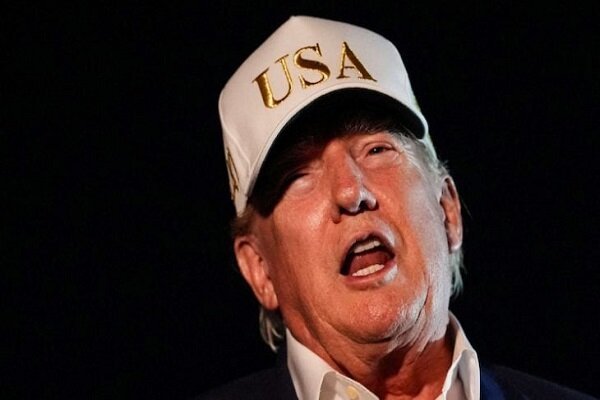
According to the International Desk of Webangah News Agency, recent statements by Donald Trump, the current President of the United States, suggesting that Washington no longer requires an agreement with Iran, have been met with a recalibration in the global oil market. This market response has served as a stark reminder to the White House of the region’s geopolitical realities and Iran’s significance in global energy equations, indicating that Washington cannot afford to disregard the consequences of confrontation with Iran, contrary to the President’s claims.
Donald Trump, the President of the United States, claimed on his Truth Social platform that the U.S. does not need a deal with Tehran, stating, “We don’t need a deal with Iran. Those days are long gone. We have their money, hundreds of billions of dollars, and we have their strait!”
These declarations emerge as global energy market developments paint a different picture than the U.S. President’s assertions. Brent crude oil prices, which were trading around $92.05 per barrel prior to Trump’s remarks, surged to the $100 mark following his statements. Other reports indicate a temporary increase of over one percent in oil prices in the wake of this stance, suggesting the energy market remains sensitive to potential disruptions in oil supply from the Persian Gulf region and future U.S.-Iran tensions.
The oil market has effectively challenged Trump’s claims. A notable aspect of these developments is Trump’s attempt to project American military and economic strength, aiming to create an impression that Washington can pursue a confrontational path with Iran without incurring any costs. However, the oil market’s reaction has demonstrated a disconnect between such claims and the region’s economic and geopolitical realities. The global oil market does not solely react to political statements but also incorporates security developments, energy transit routes, supply statuses, and the potential for escalating conflicts into its calculations. Consequently, when the U.S. President speaks of abandoning the path of a deal with Iran, energy traders and market participants tend to more seriously assess the possibility of continued crises and limitations on oil transport.
Indeed, the rise in oil prices following Trump’s statements can be seen as a manifestation of market concerns regarding the repercussions of Washington’s confrontational policy. Such a policy’s costs are not confined to Iran and could impact the economies of energy-consuming nations, oil-dependent industries, and even the cost of living for American citizens. This is of particular importance to the Trump administration, as increased energy prices directly affect transportation costs, production expenses, and the prices of goods, potentially exacerbating economic and inflationary pressures on American society.
The Strait of Hormuz represents a reality that remains unaltered by White House claims. Another strategically significant part of Trump’s remarks was the assertion of American control over the Strait of Hormuz, a critical artery for global energy transportation. The Strait of Hormuz is more than just a geographical route for commercial vessels; it is a fundamental component of global energy security and a pivotal strategic point in West Asian geopolitical calculations. The strait’s importance is such that any insecurity, restrictions on vessel traffic, or disruptions to oil shipments passing through it can immediately impact global markets.
From this perspective, Trump’s claim regarding possession of the Strait of Hormuz is less an affirmation of an established fact and more an endeavor to project Washington’s power and dominance over one of the world’s most sensitive strategic points. The reality is that sustained security of this waterway cannot be achieved without considering Iran’s role and the security considerations of regional nations. The military presence of the United States has failed to erase the significance of Iran’s geographical position and strategic capabilities from regional calculations. Therefore, any decision-making regarding the future of the Strait of Hormuz and energy transit security will face significant obstacles if Iran’s positions and interests are not taken into account.
The recent statements by Trump can also be examined from another angle. In preceding weeks, the U.S. President had repeatedly spoken of the possibility of ending conflicts and making progress in negotiations, even hinting at positive developments towards reaching an agreement. In recent days, U.S. officials, including Secretary of State Marco Rubio, had emphasized the impact of economic pressure and the potential for utilizing diplomatic channels to manage crises.
However, Trump’s new stance, declaring that the U.S. no longer needs a deal with Iran, raises serious questions about the stability and credibility of Washington’s foreign policy. This shift in position occurs while Iran has also emphasized its own conditions for ending conflicts and reaching an agreement. Mohsen Rezaei, Secretary of Iran’s Supreme National Security Council, had previously dismissed claims of ongoing negotiations, stating that Tehran awaits a clear response from the U.S. to its seven-point conditions. He also stressed that Iran is unwilling to relinquish even a single atom from its enriched uranium reserves.
Such positions indicate that the Islamic Republic of Iran, contrary to the image Washington seeks to project, does not adopt a passive stance against American political and economic pressures and insists on safeguarding its interests and rights for any agreement.
One of the most significant realities overlooked in Trump’s pronouncements is the direct correlation between the security of West Asia and the global economy. The United States may believe that by relying on its military power and economic sanctions, it can alter regional dynamics according to its desires without bearing political and economic costs. However, developments over recent months have demonstrated that any escalation of crises in the Persian Gulf carries consequences extending beyond the region’s geographical borders. Increased oil prices, concerns about shipping security, rising insurance and maritime transport costs, and the potential for disruptions in the energy supply chain are among the impacts that can affect various countries worldwide.
In this context, the increase in oil prices following Trump’s statements is not merely a daily fluctuation in the commodities market but a reflection of concerns about the future of one of the world’s most critical energy supply regions. While oil prices are also influenced by other factors such as production levels of exporting countries, global reserve levels, and demand status, Thursday’s market reaction demonstrated that Washington’s political rhetoric regarding Iran can still alter the expectations of energy market participants.
Ultimately, Trump’s claims of U.S. independence from a deal with Iran should be viewed within the framework of Washington’s efforts to assert superiority and impose its political will – an effort that is detached from the region’s economic and strategic realities. Due to its geographical position, energy capacity, defensive capabilities, and decisive role in West Asian security dynamics, the Islamic Republic of Iran is a primary player in the region, and no external power can alter this reality with a few social media posts. The rise in oil prices following Trump’s stance further indicated that the global market remains concerned about the consequences of confronting Iran, and energy security cannot be separated from the region’s political and security developments.
Therefore, if the U.S. President imagines that by declaring no need for a deal he can sideline Iran from regional equations, the energy market’s reaction serves as a reminder that resolving West Asian crises is impossible without considering the position and interests of the Islamic Republic of Iran. The core issue for Washington is not merely whether a deal is reached or not, but rather accepting the reality that policies of pressure and threat cannot substitute for recognizing the power dynamics in the region.


