
Global Media Echoes Fallout of War on Iran: A Strategic Defeat for Invaders?
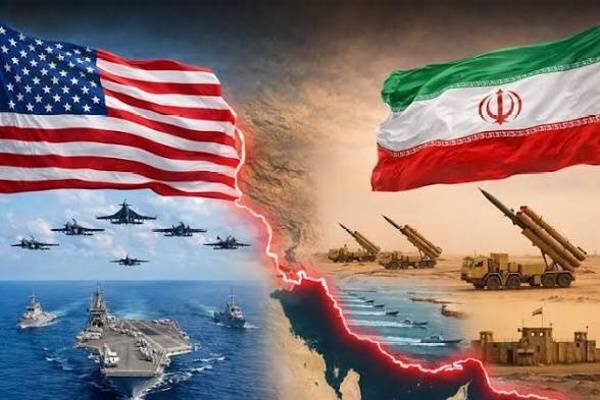
According to the International Desk of Webangah News Agency, the military aggression by the United States and the Zionist regime against Iran has failed to achieve its stated objectives. Western officials and American media acknowledge that invaders are facing strategic deadlock and significant battlefield and political defeats. This conflict, initiated with extensive attacks and the killing of civilians, including innocent students, has rapidly escalated with profound human, security, and economic consequences, eliciting diverse responses across international media.
Global media outlets are shaping narratives of this war with their distinct perspectives, and an examination of these reflections offers a clearer picture of the war’s reality and its potential trajectory.
In the English-language press, ‘The Week’ published an analysis stating that Donald Trump has pursued the ‘strangest and most unsuccessful’ foreign policy in contemporary American history. Even within the Republican party, there is limited support for annexing Greenland, seizing Venezuelan oil, engaging in a cold war with Canada, cutting aid to Ukraine, insulting and imposing tariffs on allies, purchasing diesel from Russia, and initiating a war with Iran. However, most senior Republicans have reportedly been ‘too afraid’ to voice their opposition. The publication notes that following a significant defeat in the recent midterm elections, J.D. Vance stated on X that ‘the reason we lost is the war,’ a sentiment Trump himself acknowledged as ‘largely true.’ Trump recently stated that the war is ‘effectively over,’ negotiations for its conclusion are underway, and further attacks on Iran are ‘highly unlikely.’ While peace may be on the horizon, Trump has a history of changing his mind, and the risk of renewed conflict remains high. He is under ‘immense pressure to prove he is still in control,’ with a third carrier strike group set to deploy to the Middle East by the end of the month, bringing U.S. forces in the region back to their initial wartime strength.
The Week suggests Trump could attack Iran again, but this would be ‘highly unpopular’ due to its potential to drive up oil prices and its likelihood of yielding ‘no better military outcome.’ The alternative is peace negotiations, but the challenge lies in Trump’s substantial demands: the reopening of the Strait of Hormuz and the cessation of Iran’s nuclear program. Iran, however, is reportedly unwilling to concede. According to Marco Rubio, Tehran seeks not only the end of the maritime blockade and sanctions but also the release of billions of dollars in frozen assets and reparations from the United States.
Paul Waldman, writing for ‘MSNBC’, noted that the day after the Republican party’s significant midterm election losses, J.D. Vance posted on X that ‘the reason we lost is the war… and any honest conversation about where we go from here has to start there.’ Reports followed that Vance was seeking to revive talks with Iran. Trump eventually responded on Thursday via his social media platform, stating he had asked Vance to ‘focus his full attention on the rampant corruption and crime in Democrat-run cities and states,’ effectively removing Vance from negotiations with the Iranian government. Trump added, ‘We don’t need a deal with Iran. Those days are long gone. We have their money, hundreds of billions of dollars, and we have the Strait!’ The author interprets Trump’s move, while seemingly a gift to Vance’s 2028 ambitions, as an indication that Vance’s political burden from this war is not easily shed. The piece suggests that for months, Vance and his allies have been circulating narratives of his behind-the-scenes opposition to the war, arguing he was the only one to predict the difficulties of the conflict for America. However, the challenge of overthrowing the Iranian government and its leverage in the Strait of Hormuz were known long before Trump’s first term.
According to the memo, Vance was in contact with elements of the Iranian government until last week. If successful, he could have told voters in 2028 that he was not only the highest-ranking official opposing the war but also the one who ended it. However, the inherent problem was that Vance could only negotiate on terms Trump would accept, and Trump was unwilling to concede anything to Iran in exchange for abandoning its nuclear program, keeping the Strait of Hormuz open, or severing ties with regional groups—terms unacceptable to Iran. The author asserts that Trump claims he doesn’t need a deal, but a deal is effectively the only way to end the war. His statement implies he cannot reach an agreement, making a swift end to the war unlikely. Congressional Democrats are reportedly considering defunding the war, while Trump claims Iran is ‘effectively finished militarily… We are maintaining the status quo.’
The author believes the war will remain in this stalemate for the foreseeable future: minimal active combat but with a U.S. military presence, a blockade of the Strait of Hormuz, and intermittent Iranian attacks on shipping, all while the prices of gasoline, diesel, and fertilizer remain unacceptably high. The author concludes that even if a deal is reached before the 2028 campaign, the war, like the Iraq War, will cast a shadow over Republican primaries leading up to 2016. While some governors might claim no role, no one in Congress, especially within the administration, can escape the stain of involvement. Regardless of how much Vance tries to distance himself from Trump, voters in 2028 and beyond will likely see him as ‘Trump’s man’ and the Iran war as, to some extent, ‘his war.’
‘The Hill’ reported that former U.S. Vice President Mike Pence stated on Sunday that J.D. Vance was ‘mistaken’ in attributing the Republican midterm election losses to the war with Iran. According to the publication, Pence called Vance a ‘good man’ on NBC’s ‘Meet the Press’ but disagreed with his statement, claiming, ‘We didn’t lose these midterm elections because of the war. I think part of the reason voters turned away is because, after our brilliant response in Operation Epic Rage and striking Iran last year, we stopped after five weeks for reasons unknown.’
According to the report, Vance stated in a November 4th statement that many who voted for Trump and Vance in 2024 voted for Democrats in 2026 due to anger over the Iran war, the cost of living, inflation, a lack of focus on ‘America First,’ and the current U.S. relationship with Israel. Based on the report, the Council on Foreign Relations analyzed last week that Democrats gained 44 seats in the House of Representatives, marking their largest margin over Republicans since the 1990 midterms, and flipped eight Senate seats.
Pence concluded, ‘I have to believe that this is in part a reflection of isolationist voices on the right that have gained traction in this administration.’ According to The Hill, the conflict with Iran has lasted over eight months. Trump stated at a press conference last week that the war is ‘effectively over,’ but later, on Veterans Day, said, ‘The question is when we want to finish it. We must have complete victory.’ The cost of the war has risen to approximately $47.1 billion by October since its commencement on February 28th.
In Arab media, ‘Al Jazeera’ published an article stating that a potential power shift in Israel, with Gadi Eisenkot replacing Netanyahu, does not necessarily signify a change in anti-Palestinian strategies. The core issue remains the continued opposition from the United States, Israel, and some Arab countries to holding Palestinian elections that include Hamas and resistance groups. The author criticizes the Palestinian Authority, noting its promises of National Council and Legislative Council elections, only to postpone them until next September under the pretext of dialogue and national reconciliation. The author believes the PA is using this opportunity to evade electoral defeat and maintain power.
The article warns that the victory of Eisenkot’s faction in Israel and the strengthening of Democrats in the U.S. Congress could intensify Hamas’s isolation and weaken Palestinian unity. Therefore, Palestinian groups should utilize the next ten months to form a united front and bolster their political and popular capabilities, rather than engaging in fruitless discussions.
‘Rai Al-Youm’ published an article arguing that recent disruptions to critical U.S. infrastructure are a sign of the country’s power fragility. Following suspicious incidents at energy facilities, water networks, and pipelines, widespread disruptions to Microsoft systems, paralyzed communications and aviation radar, flight cancellations, and the failure of Amtrak’s reservation system have triggered a series of crises. The author posits two scenarios: first, targeted cyberattacks exploiting infrastructural vulnerabilities and Distributed Denial of Service (DDoS) attacks that also disrupt alternative transportation routes. Second, these incidents may genuinely stem from technical failures and software issues.
From the author’s perspective, the second scenario is equally concerning, as it indicates that a power with immense economic and military might is vulnerable to technical disruptions. This weakness could embolden adversaries such as Russia, China, and Iran to pursue further infiltrations.
‘Al Mayadeen’ published an article asserting that Tehran has lost trust in Western diplomacy due to bitter past experiences. The U.S. unilateral withdrawal from the JCPOA in 2018 and the synchronization of negotiations with military attacks in 2025 and 2026 have reinforced the perception in Iran that Washington uses negotiation as a tactic for deception, buying time, and preparing for aggression. The author also points to Tehran’s distrust of mediation by Persian Gulf countries, particularly Qatar and Saudi Arabia, due to their security ties with the United States. According to the author, Iran’s new strategy is shaped by the Supreme Leader’s directive to end the ‘neither war nor peace’ stalemate.
The article emphasizes that Tehran now seeks a genuine agreement that includes the lifting of the maritime blockade, the cancellation of sanctions, and the guarantee of its rights. Otherwise, it will leverage regional pressure points, particularly the Strait of Hormuz and its military capabilities, to increase the cost for the United States to maintain pressure.


