Global Media Analyze Iran War Fallout: Strategic Setbacks and U.S. Internal Divides
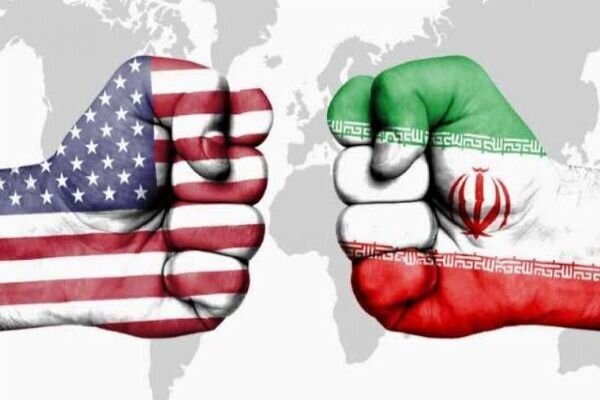
According to the International Desk of Webangah News Agency, global media outlets are extensively covering the repercussions of the war against Iran, with various perspectives shaping the narrative and offering insights into the actual state and future outlook of the conflict.
The Wall Street Journal noted that with two years remaining in his presidency, Donald Trump, the current President of the United States, views the present as an optimal window to conclude the war with Iran on favorable terms, provided he exercises patience and withstands criticism. The newspaper indicated that public sentiment is waning due to unclear objectives, the protracted nature of the war, and the escalating energy costs. However, it suggests Trump has an opportunity to politically justify these expenses by achieving desired outcomes. The Wall Street Journal’s commentary welcomed J.D. Vance’s withdrawal from negotiations and also mentioned a decrease in gasoline prices. Meanwhile, Iran insists on the cessation of the blockade, sanctions, and the release of its assets prior to any nuclear negotiations. The article’s authors contend that Trump needs to articulate his goals and strategy more clearly, emphasizing that his legacy will hinge on either containing Iran or empowering it.
Forbes, in an opinion piece by William Hartung, attributed the significant defeat of Republicans in the midterm elections to the Vice President of the United States. Citing a poll from the Global Affairs Institute, the publication stated that 44 percent of voters were less inclined towards a pro-war candidate, while only 13 percent were more likely to elect such a candidate. The magazine highlighted that the primary concerns for many voters were the prices of gasoline and food, rather than the humanitarian and environmental consequences of the war or the welfare of American soldiers. The U.S. administration has requested $1.5 trillion for the Department of Defense for the upcoming year, a sum thirty times the official estimate for the war with Iran. Forbes pointed out that even with a $300 billion reduction, this proposed budget would still be 20 percent higher than the current year. It attributed a substantial portion of this budget to ill-conceived wars, ineffective weapons systems, and excessive payments to contractors, suggesting that improved management could yield tens of billions of dollars in annual savings.
MSN, in a report by Jack Fitzpatrick, wrote that following their electoral victories, Democrats are divided on how to leverage the budget to end the war with Iran. Senate Minority Leader Chuck Schumer advocates for ending the war and using financial power to achieve this, yet he has refrained from explicitly including a clause to cease hostilities in their budget bill. Conversely, a growing faction of Democrats, including Chris Van Hollen, Michael Bennet, Bernie Sanders, and Tammy Duckworth, are pushing for a provision to prohibit the Trump administration from using allocated funds to continue the war. Van Hollen described this budget dispute as part of the Senate leadership contest. With the government funding deadline on December 11 and the risk of a shutdown, some Democrats are hopeful that the Pentagon will present a plan to conclude combat operations. Richard Blumenthal supports defunding the war but wishes to retain funding for defensive weaponry. Tim Kaine, observing Trump’s disregard for War Powers Resolutions, considers leveraging the budget as the sole remaining option. Nevertheless, Republicans oppose any restrictions, with John Thune calling for an unconditional budget.
Modern Diplomacy, in an analysis, stated that after nearly nine months of conflict, the United States and Iran are ensnared in a stalemate where both sides believe they can outlast the other. Donald Trump has opted to rely on naval blockades and economic sanctions instead of resuming military assaults, reasoning that new attacks would not alter the situation and could provoke Iranian retaliation against Persian Gulf oil infrastructure. In contrast, Iranian leaders are emboldened by the recent political setbacks faced by the Trump administration and Benjamin Netanyahu, hardening their demands and expecting the United States to make the first move. Iran has expressed readiness for negotiations and is meeting with mediators from Oman and Qatar, but it accuses Washington of attempting to force its capitulation. Experts believe that the expectations of both sides are unrealistic; U.S. demands are costly for Iran, and Iran’s conditions are politically unfeasible for Washington. Some European officials have also noted that U.S. military actions have backfired, strengthening Iran and complicating the nuclear issue. It has also been reported that a portion of Iran’s enriched uranium may be hidden deep underground, and Tehran will not allow inspectors to return as long as hostilities continue.
Washington is considering options that include escalating tensions, negotiation, capitulation, or continuing economic pressure, with a current focus on economic pressure. Marco Rubio stated that sustained pressure would continue alongside efforts for a balanced agreement, with the military option remaining on the table if Iran does not concede. Persian Gulf nations have warned that renewed military action could lead to Iranian retaliation against their infrastructure and have opposed such an attack. The primary disagreement lies in the sequence of actions: Iran seeks the immediate lifting of the blockade and the release of frozen assets before serious negotiations, while the United States demands reciprocal commitments. The analysis concludes that if the naval blockade persists, Iran may be compelled to escalate its actions, as enduring endless pressure will be difficult.
U.S. News & World Report, in a dispatch, revealed that Democratic lawmakers accused Hong Kong, the acting Secretary of the Navy, of being a “yes-man” to Trump regarding the war with Iran and downplaying the psychological strain on sailors. These pressures surfaced following eight suicide attempts on an aircraft carrier. Hong Kong failed to provide direct answers to difficult questions about the costs of the naval blockade and damage to naval installations in the Middle East, and her defense of the USS Abraham Lincoln’s situation angered Democrats. Kirsten Gillibrand questioned the case of a sailor who fell overboard, and Hong Kong stated he did not intend to commit suicide and had used a life jacket. Gillibrand retorted, “What was he going to do? Swim to Guam?” Hong Kong’s response was labeled “inhumane” and “insufficient.” Tammy Duckworth further inquired if Hong Kong had ever stood up to Pete Hegseth regarding the war, to which Hong Kong replied, “That is outside of my purview.” However, Duckworth countered, “It is within your purview,” and described the war as a “failure of Trump’s leadership and his unqualified deals.” Hong Kong herself requires a congressional waiver to assume the position permanently, as she retired in 2021 and does not meet the seven-year requirement.
Russia’s Kommersant newspaper, in a report titled “War in Silence; U.S. and Iran Have Been Quietly Exchanging Blows for Two Months,” stated that Washington has attempted to conceal military exchanges with Iran in the Persian Gulf and Strait of Hormuz over the past two months to avoid revealing the continuation of the conflict and the Trump administration’s inability to end the war. According to the newspaper, the scope of attacks increased from November 13, with Iran targeting U.S. radar positions in Bahrain and objectives in Kuwait. The U.S., in turn, bombed a missile launch site on Qeshm Island on November 17.
Kommersant warned of escalating maritime insecurity, referencing Iran’s attacks on four vessels, including an supertanker carrying two million barrels of oil and a gas-carrying ship. The newspaper also highlighted the remarks by the U.S. Deputy Secretary of the Navy regarding the depletion of long-range missile reserves and the reuse of expired ammunition.
China Daily, in an opinion piece by Li Yang titled “The Middle East Needs Independence for Security and Reconciliation,” asserted that escalating military tensions in the region have once again exposed the ineffectiveness of military superiority in ensuring lasting security. The newspaper emphasized that Middle East security must be built upon dialogue, mutual respect, and consideration for the legitimate concerns of all regional nations. The article pointed to the economic consequences of the tensions, particularly the disruption of shipping traffic through the Strait of Hormuz, increased fuel and transportation costs, and escalating inflation in the United States as cross-border effects of the crisis.
China Daily, drawing a connection between developments in Iran and the crises in Gaza, Lebanon, Yemen, and Persian Gulf countries, deemed military solutions inadequate for resolving this complex set of issues. The newspaper cited the 2023 agreement between Iran and Saudi Arabia, brokered by China, as an example of the potential for resolving disputes through diplomacy and referred to Beijing’s recent efforts to de-escalate tensions. In another section, China Daily called for the establishment of a nuclear-weapon-free zone in the Middle East, criticizing double standards and stressing the necessity of Israel joining the Nuclear Non-Proliferation Treaty and allowing IAEA oversight of its nuclear facilities.