Iran’s Strategy for Capturing American Drones Detailed by Al Jazeera
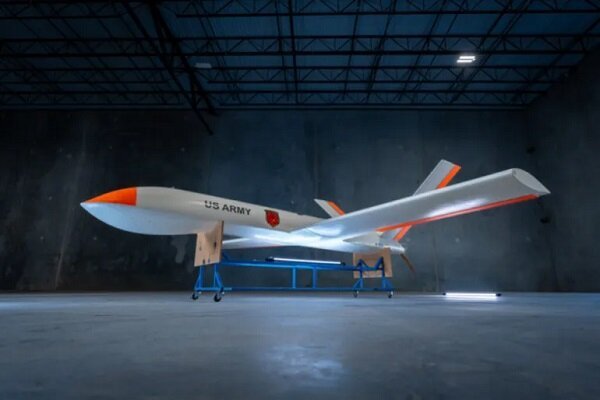
According to the International Desk of Webangah News Agency, an Al Jazeera report details Iran’s strategic approach to capturing American drones, describing these unmanned aerial vehicles as flying computers equipped with sensors for measuring movement and altitude, along with positioning tools capable of exchanging commands and data with ground stations. Some drones operate autonomously based on programming or automated decisions, while others require human intervention.
The initial phase involves identifying and monitoring the drone, a process that simultaneously utilizes tools such as radar, thermal cameras, and wireless signal receivers. This coordinated effort is crucial due to the difficulty in detecting smaller drones and the fact that some do not emit signals.
Once a drone’s position is determined by ground monitoring systems, the simplest method to disable it is by disrupting its communications. This interference degrades communication quality, potentially leading to missed commands or loss of video feeds. In such scenarios, the drone reacts according to its design and programming, which may include returning to its takeoff point, attempting to land, awaiting reconnection, or continuing its mission using automated capabilities.
Another technique involves jamming satellite navigation signals, such as GPS. These weak signals can be rendered inaccessible to the drone through radio interference, causing it to lose one of its primary positioning sources. Navigation spoofing deceives the drone’s navigation system by providing false but seemingly accurate information, creating the illusion that it is in a different location than its actual position, even as the flight software continues its programmed tasks.
Intervention in the control system offers a third pathway. If weaknesses in command authentication or software are exploited, drones can be made to accept commands other than those from their intended operator. This is achieved by simulating control signals and influencing the drone’s behavior.
Potential vulnerabilities can also exist within the operator’s device, the drone fleet management system, or connected software, as drones are integral components of comprehensive information systems. Breaching these systems is not straightforward, as drones are equipped with protective measures like encrypted communications and authentication mechanisms. Technologies such as frequency hopping also increase the difficulty of disrupting communications, though they are not entirely foolproof.
Navigation systems reduce reliance on satellites by combining data from inertial sensors or employing cameras and ground landmarks. However, these alternatives also have limitations, including cumulative errors in inertial navigation and the susceptibility of camera vision to environmental conditions.
Each method carries its own costs and risks, and no drone is entirely immune to integrated electronic warfare systems. Iran’s primary advantage lies in the capability of its air defense and electronic warfare systems to combine surveillance, electronic signal detection, and interference with drone communications or navigation.
A 2020 report from the U.S. Department of Defense Inspector General assessed intelligence indicating Iran possessed capabilities to disrupt GPS and satellite communications. Furthermore, during exercises in 2024, Iran announced its ability to coordinate the use of radar, drones, information processing systems, and electronic warfare capabilities.
Al Jazeera concludes that drone warfare resembles a continuous and unending battle where each side develops its capabilities to adapt to the other. Drones are becoming increasingly stealthy, while electronic warfare equipment is becoming more precise and their eavesdropping capabilities are enhanced.