Global Media Analyze War Against Iran: Strategic Failure Versus Stated Goals
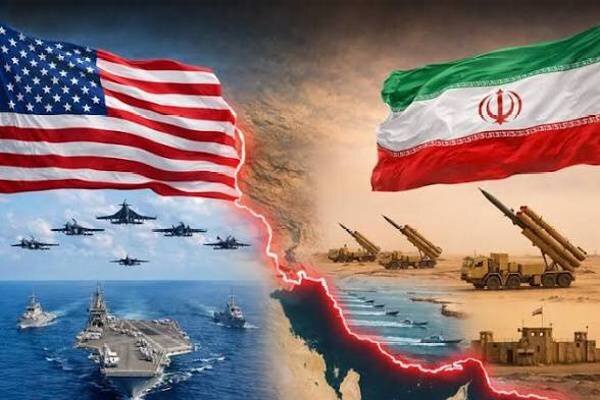
According to the International Desk of Webangah News Agency, the war, which commenced with extensive attacks and civilian deaths, has unfolded with broad human, security, and economic dimensions, eliciting diverse reactions across international media. Each global media outlet, employing its specific approach, has striven to shape the narrative of this conflict, and an analysis of these reflections provides a more lucid depiction of the actual situation and its trajectory.
In Western media, CNN reported that attacks on shipping in the Strait of Hormuz have reached their highest point since the war began. The network, citing the UK’s Maritime Trade Operations Center, stated that attacks in October exceeded 30, with at least 22 reported in November. These figures are likely underestimates, as many vessels have turned off their trackers. Analysts suggest Tehran has intensified attacks by lowering oil prices, potentially to gain leverage with Washington. Reports also indicate that Iran’s oil exports outside the blockade region have ceased, with its oil revenue potentially reaching zero by mid-December. Donald Trump has declared that the United States “does not need” a deal with Iran and will not hesitate to use military force if necessary. Three oil tankers were struck by projectiles in the final days of the past week while exiting the Strait.
The Washington Post examined efforts by Senate Republican leaders to avert a government shutdown through an agreement with Democrats. This agreement reportedly includes new funding for the Pentagon’s ammunition stockpiles in exchange for halting further war funding for Iran. Susan Collins, Chair of the Senate Appropriations Committee, indicated she is exploring language to achieve this, though the extent of Republican support remains uncertain. John Thune, Senate Majority Leader, expressed readiness to negotiate to prevent a shutdown and ensure military and security needs are met. Senator Tim Kaine has proposed legislation to block funds for offensive actions against Iran unless Trump secures formal war authorization from Congress. With the December 11 deadline approaching, a failure to reach an agreement could lead to the fourth government shutdown of Trump’s second term. Democrats are pushing to cut war funding, while Republicans insist on full annual budgets, leaving the fate of the proposal and Trump’s signature uncertain.
Reuters, in an analysis, delved into the economic consequences of the war, noting a surprisingly rapid recovery in the oil market, though a persistent diesel shortage has reshaped the fuel market. Brent crude prices have fallen by over 20%, settling just above $90 per barrel, as Middle Eastern exports recover and fears of war escalation subside. However, diesel prices in Europe are nearly double their levels at the start of the year. The author emphasized that any sustainable recovery hinges on de-escalation in the Middle East, which is not guaranteed. Oil flows through the Strait of Hormuz decreased to approximately 9.5 million barrels per day in the 10 days leading up to November 19, compared to an October average of 12.2 million barrels. The fuel market, particularly diesel, remains tight due to lost refining capacity in the Middle East and Ukraine’s attacks on Russian energy infrastructure. U.S. diesel margins have decreased from their September peak of $118 to around $80, but still remain double their pre-war levels. Refineries face difficult conditions and may be forced to reduce output if gasoline margins decline sharply.
Newsweek, in an analysis, assessed Iran’s missile production capabilities, reporting that despite the U.S. Defense Secretary’s claims of destroying Iran’s defense industrial base, the Islamic Revolutionary Guard Corps has released images of a new underground “missile city.” U.S. officials estimate Iran’s remaining ballistic missile arsenal at 1,500 to 2,500. A Western official stated Iran produces up to 50 missiles monthly, roughly half its pre-war rate. The question of how a country with destroyed factories produces missiles has two answers: stockpiled pre-war components and parts still obtainable from abroad. Iran requires precision instruments, carbon fiber, inertial sensors, electronics, and propellant chemicals, sourced from China, the Persian Gulf, and elsewhere. U.S. and Israeli attacks since 2024 have targeted over 40 Iranian missile industry sites, halting solid fuel production. Experts believe Iran is now primarily assembling stored parts, increasing its reliance on foreign suppliers, which represents Washington’s best remaining leverage. The U.S. naval blockade impedes Chinese chemical imports via sea, but routes through Pakistan and the Caspian Sea are potential alternatives.
In Arabic media, Al Jazeera covered Trump’s efforts to thwart Iran’s “Fereydoun” plan, aimed at dispatching 14 oil tankers to China and breaking the maritime blockade. The outlet reported that Democratic victories in the U.S. midterm elections and Washington’s internal divisions over the continuation of the war have provided Tehran with an opportune moment to increase pressure on the Trump administration. Washington, by exerting pressure on the Philippines, Malaysia, and Singapore and identifying covert oil transport networks, is attempting to block Iran’s oil export routes to China.
Al-Rai Al-Youm asserted that Iran will not back down from its high-enriched uranium reserves or its right to enrichment. The return of the Trump administration to demanding the transfer of Iran’s enriched uranium abroad signals the failure of Washington’s military option and concerns over Iran’s missile and drone capabilities. The outlet, referencing Tehran’s refusal of renewed IAEA inspections and the potential withdrawal from the Non-Proliferation Treaty, stated that Iran is pursuing negotiations from a position of strength, with the end of the war, lifting of the blockade and sanctions, and unfreezing of assets as preconditions for any agreement. Cyberattacks attributed to Iran and threats to sever submarine internet cables in the Strait of Hormuz have also been presented as strategic pressure tools by Tehran.
Al Mayadeen, in an article, discussed the impact of globalization on the United States, arguing that it has led to a decline in industrial jobs, a weakening of the middle class, and an unprecedented concentration of wealth in the hands of a small elite. The article noted that the wealthiest one percent of society owns 31.9% of national wealth, while the poorest half of the population holds only 2.5%. It further stated that factory closures, unemployment, and economic insecurity have paved the way for the rise of extremist nationalism and Donald Trump. According to the author, industrial regions affected by globalization played a decisive role in U.S. electoral outcomes. This internal erosion has diminished Washington’s capacity to bear the costs of prolonged wars and engage in new conflicts. From this perspective, the war with Iran demonstrated that military power alone does not guarantee victory, and America’s internal erosion has become its strategic weakness.
In Chinese and Russian media, Xinhua News Agency, citing Qatari Ministry of Foreign Affairs spokesperson Majid Al-Ansari, reported that diplomatic contacts and consultations are ongoing to reduce differences between the United States and Iran, coordinated by Persian Gulf countries. Al-Ansari stated that Doha is working towards a peaceful resolution of the regional crisis. He emphasized that the details of the negotiations remain confidential but highlighted that the restoration of freedom of navigation in the Strait of Hormuz, the resumption of negotiations, and attention to the security concerns of all parties are prerequisites for reaching a comprehensive agreement. The Qatari MFA spokesperson also addressed the summoning of his country’s charge d’affaires in Tehran in protest of a joint Qatar-Germany statement, stating that the matter is being pursued through diplomatic channels.
The Russian newspaper “Rossiyskaya Gazeta,” in a report by Sergei Tikhonov, cited economic and energy experts who believe that the reopening of the Strait of Hormuz and the return of oil supplies from Persian Gulf countries to the global market could pose a serious challenge to the cohesion of the OPEC+ alliance. Member countries, after 10 months of production cuts, are reluctant to reduce supply further. Meanwhile, increased global supply and a drop in oil prices below $90 per barrel would intensify competition for export markets. The report emphasizes that Russia, unlike Saudi Arabia, has not been significantly harmed by the Strait of Hormuz crisis and has even benefited from rising oil prices. However, Saudi Arabia has faced a nearly 30% reduction in production and exports and damage to its oil infrastructure. Konstantin Simonov, head of Russia’s National Energy Security Fund, believes the return of regional oil to the market will increase the likelihood of oversupply and downward pressure on prices. Valery Andrianov, a professor at the Financial University under the Government of the Russian Federation, considers a formal collapse of OPEC+ unlikely but predicts a decrease in the alliance’s influence on the global oil market. Experts assess that a price war would be detrimental to all exporters, particularly Russia.