Former US Officials Accuse Defense Secretary Hagert of Withholding War Damage Information
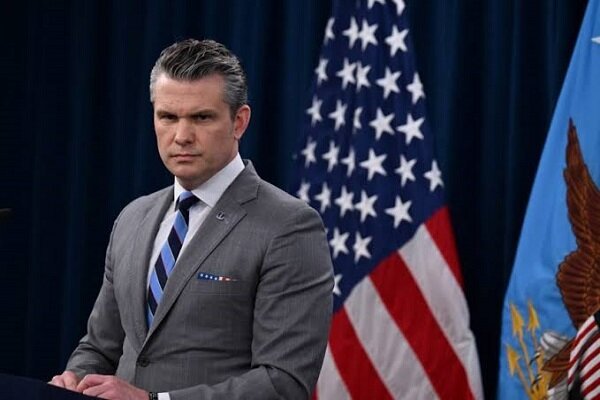
According to the International Desk of Webangah News Agency, the U.S. Department of Defense (Pentagon) is facing criticism from former officials for restricting congressional representatives’ access to its military bases in the Persian Gulf. Critics contend this move has escalated tensions between the executive and legislative branches and created ambiguity surrounding the administration’s efforts to conceal information related to military operations.
Evelyn Farkas, Executive Director of the McCain Institute and former Deputy Assistant Secretary of Defense for Russia, Ukraine, and Eurasia, described the action as a sign of a lack of transparency and an attempt to impede congressional oversight. She suggested that the restrictions might be intended to hide the true costs of recent military engagements or to pave the way for larger budget requests.
Last month, Senator Chris Murphy, a Democrat from Connecticut, stated that the Pentagon prevented him from visiting Al Udeid Air Base in Qatar and meeting with military commanders. He characterized this as part of the Defense Department’s effort to conceal the actual consequences and expenses of recent operations.
The Atlantic magazine also reported that Senator Joni Ernst, a Republican from Iowa, was similarly denied access to a military base during the same period.
Visits by congressional representatives to U.S. military installations are a part of their oversight duties, a practice dating back to World War II. Secretary of Defense Hagert issued a memorandum in March imposing limitations on travel by members of Congress and their staff to areas under the purview of U.S. Central Command. This directive requires personal approval from the Secretary of Defense for such visits. These restrictions have persisted even after the conclusion of U.S. military operations in May, which critics argue has raised questions about the Pentagon’s underlying motivations.
Hagert has also faced criticism for reducing regular press briefings and limiting media access, raising concerns about the Department’s communication practices. Previously, he had declined to provide information to the Congressional Budget Office regarding the expenditures of recent operations before the office’s September update of its estimates.
These developments come as the Pentagon seeks a budget of $1.5 trillion for the fiscal year 2027, which, if approved, would represent the largest defense budget in U.S. history. The funds are earmarked for modernizing military infrastructure and replenishing ammunition reserves depleted during recent conflicts in the Persian Gulf region.
Fortune, citing Farkas, reported that sidelining Congress from the oversight process not only fails to secure the Pentagon’s necessary funding but could also further erode trust between the two branches. According to Farkas, given the increasing sensitivity of representatives to extensive financial requests from the Department of Defense, transparency and the provision of accurate information would be a more effective strategy for securing congressional support, as the costs associated with base reconstruction and military contracts will eventually become evident through tenders and contractor activities.