Iran Rapidly Restores Underground Missile City Entrances After Attacks, Report Reveals
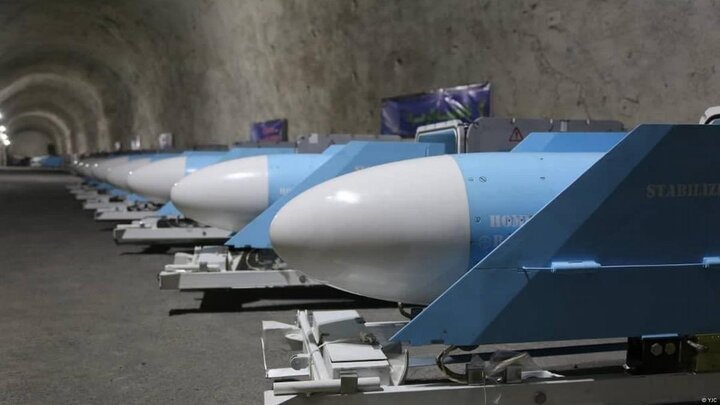
According to the International Desk of Webangah News Agency, the Hebrew-language newspaper Maariv has reported on Iran‘s underground missile facilities, citing new satellite data and intelligence assessments that suggest Tehran has rapidly reactivated a substantial portion of its subterranean missile infrastructure. The report indicates that Iranian engineering and maintenance teams have successfully reopened most tunnel entrances that were previously damaged or obstructed by American operations.
Maariv referenced analyses published by CNN, which found that Iran has managed to reopen 50 out of 69 tunnel entrances across 18 underground missile installations. These sites had previously been targeted, suffering direct damage or blockages from aerial assaults. The restoration effort has reconnected significant parts of these missile cities to road networks and vital operational passageways.
Western intelligence reports suggest that Iranian engineering and maintenance crews have utilized bulldozers, cranes, and standard trucks. This deployment points to pre-planned emergency protocols designed to counter severe attack scenarios and disrupt the missile city infrastructure. The speed of the tunnel entrance reopening not only demonstrates Iran’s engineering capabilities but also underscores its defensive doctrine, which emphasizes sustained operations even under direct attack. Iran’s defense strategy prioritizes the creation of alternative access routes and additional operational paths to ensure freedom of movement within underground facilities, even after certain entrances have been targeted.
The Maariv newspaper highlighted the Dezful base as a key example, where technical teams reportedly reactivated four out of its five damaged entrances. Military experts believe these developments illustrate the limited impact of aerial attacks on Iran’s hardened underground facilities and missile cities.
Arabic 21 reported that, according to these experts, many American and Israeli strikes focused on external entrances, road networks, and surface radars. It is highly probable that the central depots and missile reserves, located deep underground, remained outside the range of direct assault. Retired Major General and military analyst Hashem Ahmad described the American-Israeli attacks on Iran’s missile cities as causing only “temporary tactical disruption.” He explained that these strikes merely slowed the missile launch operations for a limited period, without damaging the missile power deployed within Iran’s fortified missile cities.
Ahmad added that Iran’s strategy of branching tunnels and multiple defensive layers has enabled it to contain the consequences of attacks and reactivate facilities faster than initially estimated. In parallel, retired Major General and military analyst Jalal Al-Khawaldeh stated that the design of Iran’s missile cities is based on an extensive network of tunnels and alternative exits. He noted that this structure reduces the effectiveness of efforts to disrupt facilities by targeting main gateways.
Al-Khawaldeh emphasized that the rapid resumption of activities at many of these bases sends an operational message that Iran’s missile infrastructure is designed to withstand attacks and continue operating even in a prolonged conflict scenario.