Iran Secures Diplomatic Gains in Post-War Deal with the United States
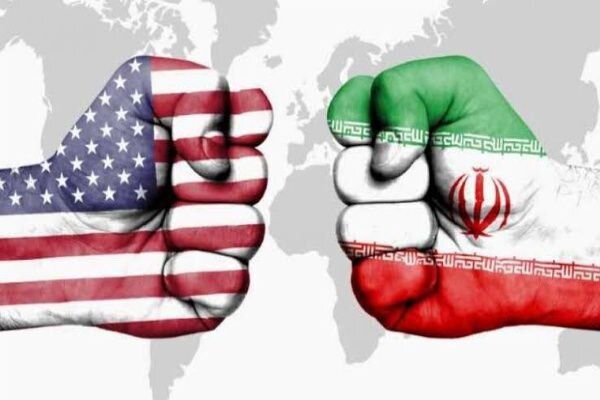
According to the International Desk of Webangah News Agency, a formal 14-point understanding between Iran and the United States has been finalized, diverging significantly from the document Washington and Tel Aviv claimed they entered the conflict to impose. This agreement does not stipulate regime change in Tehran, does not place Iran’s missile program on the negotiating table, has not resulted in the removal of enriched nuclear materials from Iranian soil, and does not demand unconditional surrender from Iran. Instead, the accord establishes a 60-day diplomatic window, during which Iran is set to receive immediate military and economic benefits, while the most sensitive nuclear matters have been postponed for future talks.
This development raises a fundamental question: Has Iran successfully leveraged battlefield pressures into diplomatic leverage following substantial war-related damages?
What Were the Objectives of the United States and Israel?
The political discourse from Washington and Tel Aviv throughout the conflict clearly indicated three primary objectives:
- Firstly, to shatter the strategic self-confidence of the Islamic Republic and potentially compel a change in its political system.
- Secondly, to eliminate Iran’s nuclear capabilities in an overt, irreversible, and externally controlled manner.
- Thirdly, to diminish Iran’s regional influence, particularly in Lebanon and other related fronts.
However, a comparison of these objectives with the outcomes of the interim agreement reveals a distinctly different picture. Iran’s political system remains intact. The country’s missile program is not even mentioned in the agreement’s text. Lebanon has not been defined as an independent security issue for Israel but is instead integrated within the framework of a comprehensive ceasefire across all fronts. The issue of enriched uranium will be addressed through an agreed-upon mechanism under supervision, rather than through confiscation or transfer.
In essence, the war commenced with maximum objectives, but the provisional agreement concluded with negotiated ambiguities.
Did Iran Capitulate on the Nuclear Issue?
No. Iran has reiterated its stance that it does not seek to build or acquire nuclear weapons, but this does not signify a complete abandonment of the nation’s nuclear program. The most critical aspect of the agreement pertains to the handling of enriched materials. Reports indicate that Iran’s uranium reserves will be managed through an agreed mechanism, with the least favorable option suggesting a reduction in the enrichment level of these materials within Iran under international supervision. The significance of this lies in the fact that Iran’s nuclear materials will not be immediately transferred abroad, and the broader issue of enrichment has been deferred to a final agreement.
This outcome cannot be considered a complete victory for the United States. Washington sought a definitive and symbolic result: the destruction of stockpiles, their removal from Iran, or their complete external control. Instead, it has achieved a technical process within Iran, under international observation, with the final determination pending in the future.
For Tehran, this represents a significant diplomatic achievement, as it has avoided the image of “surrender,” preserved its negotiating space, and transferred the most challenging issue from the battlefield to the technical negotiation table.
In Which Areas Did Iran Achieve Immediate Concessions?
Iran’s immediate gains are clearly evident in the structure of the agreement. Following the accord’s signing, the United States is expected to initiate the process of lifting maritime blockades and related impediments. Washington is also anticipated to issue waivers for Iran’s crude oil and petroleum product exports, banking, insurance, and transportation services. The agreement’s text also paves the way for Iran to access its frozen or restricted assets and financial resources.
This is particularly important given Iran’s severe economic constraints prior to the conflict. Sanctions had limited oil sales, banking access, insurance services, maritime transport, and foreign investment. Now, despite the war’s damages, Iran has succeeded in formalizing openings in these areas within the official negotiation framework. Iran’s primary achievement is not the immediate lifting of all sanctions, which is unlikely, but rather making sanctions relief, oil waivers, asset liberations, and financing for reconstruction official agenda items for negotiation. Iran has successfully moved the issue of sanctions from the periphery to the center of diplomatic discourse.
What Is the Significance of the $300 Billion Plan?
The mentioned $300 billion economic and reconstruction plan is one of the most crucial political dimensions of the interim agreement. While former President Trump might emphasize that these funds are not directly from the U.S. Treasury and that this is significant for domestic American consumption, for Iran, the source of funding is less important than the removal of American obstacles. If regional countries, sovereign wealth funds, private investors, or international financial mechanisms are to participate in Iran’s reconstruction, they will still require a conducive legal, financial, and sanctions-free environment. Therefore, the agreement’s reference to permits, waivers, and legal facilities is of paramount importance. Iran does not need the United States to issue a large check; rather, it requires Washington to cease obstructing the pathways through which capital, oil revenues, insurance, transportation, and reconstruction finances flow.
Before the war, Iran faced an economic blockade. Post-war, the interim agreement has propelled Iran into a dialogue about reconstruction and economic normalization, marking a significant and noteworthy shift.
Did Iran Retain Its Leverage Over the Strait of Hormuz?
Yes, and this may be Tehran’s most significant card. The Strait of Hormuz is more than just a waterway; it is the primary artery for energy trade in the Persian Gulf. By influencing passage through this strait, Iran transformed its geographical position into bargaining power during the conflict. In the interim agreement, the reopening of the Strait of Hormuz is not an action the United States can unilaterally impose. This process is contingent upon Iran’s cooperation and future consultations with Oman and the Persian Gulf littoral states regarding maritime services and management. This language is highly significant, as Iran is not merely tasked with opening shipping lanes but is recognized as an essential player in their management, thereby enhancing its political standing and bargaining power.
The reopening of Hormuz is an urgent necessity for global markets. Maritime stability is vital for the Persian Gulf states, and stable energy markets hold considerable political value for former President Trump. Iran has successfully linked these three needs to its negotiating position.
Why Was Lebanon Included in the Agreement?
The inclusion of Lebanon in the agreement text signifies Washington’s acknowledgment of the conflict’s regional dimensions. If the objective of the United States and Israel was to isolate Iran, this agreement has achieved the opposite. The current document acknowledges that ending the conflict was not solely achievable through an agreement between Tehran and Washington, and that related fronts must also be considered. The inclusion of Lebanon and other fronts in the ceasefire text implicitly signifies acceptance of Iran’s regional influence. This does not imply Iran’s complete control over all regional actors but demonstrates that any serious resolution must take into account Tehran’s regional standing. This is another indicator that Iran has not been treated as a defeated nation.
What Happened to the Missile Issue?
The missile issue is one of the clearest indicators of Washington’s departure from its initial positions. For years, Western and Israeli officials have argued that Iran’s ballistic missiles and drones are at the center of regional security threats. However, based on released information, Iran’s missile program does not hold a central position in the text of the provisional agreement. The significance of this is amplified by former President Donald Trump’s statements in Paris. In a conversation with reporters, Trump stated that if countries like Saudi Arabia and Qatar possess ballistic missiles, Iran should also have a reasonable number of such missiles. These remarks were noteworthy as they undermined one of the key arguments of the United States and Israel before and during the war—an argument that deemed Iran’s missile capabilities inherently unacceptable. This shift was not merely a verbal change; it indicated Washington’s move away from demanding the rollback of Iran’s strategic capabilities towards accepting a form of regional deterrence balance. Consequently, the exclusion of the missile issue from the interim agreement is not coincidental. It demonstrates that the United States has prioritized ending the war, reopening the Strait of Hormuz, stabilizing markets, and transitioning the nuclear file to a supervised process, while Iran has successfully kept its conventional deterrence capabilities outside the scope of negotiations.
This is one of the clearest signs that Tehran has protected one of its most important strategic assets. The war may have damaged Iran’s infrastructure, but the resulting diplomatic text has not dismantled Iran’s missile deterrence.
Did the United States Achieve Anything?
Yes, but not everything it desired. Washington has secured a ceasefire, the reopening of the Strait of Hormuz, a halt to escalating tensions, and a supervised nuclear process. It can also claim that Iran has once again committed to not pursuing nuclear weapons. However, these achievements do not equate to regime change, disarmament, or Iran’s surrender. The United States achieved de-escalation; Iran, in turn, gained breathing room, economic opening, and recognition of its leverage. Therefore, this agreement resembles a damage management deal more than a victory document.
Did Iran Defeat the United States at the Negotiation Table?
If victory is defined as compelling the United States to abandon all its demands, the answer is no. A final agreement has not yet been reached, and Iran remains under international scrutiny and pressure. However, if victory means overcoming the war, preventing surrender, preserving strategic assets, introducing sanctions relief into the official negotiation text, keeping the missile program out of the agreement, maintaining space for nuclear negotiations, opening oil and financial channels, and transforming the Strait of Hormuz into a bargaining point, then Iran has achieved significant success in the diplomatic arena. The strongest evidence for this claim is the sequence of agreement implementation: immediate economic and military concessions followed by the final determination of the nuclear file. This was not the sequence Washington and Tel Aviv desired, but it was the sequence Tehran needed.
Iran began the war under sanctions, economic pressure, and military attack, but it has emerged from the provisional phase of the agreement with blocked assets on the agenda, oil waivers being implemented, a reconstruction plan on the table, the Strait of Hormuz recognized as bargaining leverage, and its political system intact. This cannot be called surrender; rather, it is an example of pressure being converted into negotiation. In diplomacy, sometimes the most tranquil form of victory is the most profound.
The author is a Pakistani journalist, documentary filmmaker, and foreign policy analyst. He heads RightNow Media, a digital media platform.