
Ayatollah Khamenei Defended Iran’s Sovereignty and Independence
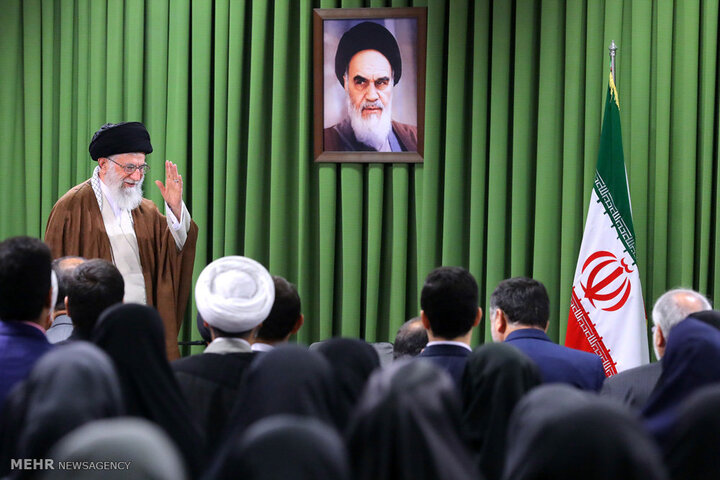
According to the International Desk of Webangah News Agency, Russian expert on religions and ethnicities Maxim Shevchenko has discussed the late leader of the Islamic Revolution in an interview. The following is a summary of his remarks, as reported by Mehr News Agency:
Ayatollah Khamenei possessed profound faith in God and a deep love for the people, dedicating his entire life to serving God and the Iranian nation. Throughout his life, he combatted forces of evil, destruction, and oppression. His certainty, steadfastness, and resilience in this struggle reflected the light and conduct of the infallible Imams (peace be upon them).
The spirit of Karbala was alive within him. His readiness to confront an enemy perceived as vastly superior in military power demonstrated his profound faith. He believed that life is not confined to this world but continues eternally after death, and that individuals must fulfill their duties until their final moments.
These qualities are truly remarkable. The spirit of Karbala and the spirit of the infallible Imams, particularly Imam Hussein (peace be upon him), guided him throughout his life. He fulfilled his duties until his last breath and serves as a valuable role model for anyone aspiring to live a meaningful life with a noble purpose.
Ayatollah Khamenei championed the principle of Iran’s sovereignty and independence. He believed that Iran could maintain logical and reasonable relations with all nations, but decisions should be based exclusively on the interests of the Iranian people, not on the interests of Wall Street, the City of London, the World Bank, or any other foreign power.
This approach incited the anger of the Islamic Republic’s opponents and Iran’s enemies. Consequently, the author believes they sought his removal because his will, especially regarding national sovereignty and independence, was firm and unyielding. He consistently emphasized that Iran should not become an appendage to the Western economy. From his perspective, Iran is an ancient country with self-sufficiency potential, possessing an aware populace cognizant of its historical standing, a deep-rooted religious tradition, and a capable economy.
If sanctions were lifted, Iran could become one of the world’s wealthiest and most advanced nations, envied by many Western countries. Nevertheless, Iran has been systematically subjected to pressure. It is also important to recall that he led the country during a period of severe sanctions and numerous restrictions. Under such circumstances, many nations might have collapsed, but Iran endured thanks to its will, his love for the country, and the spirit of national dignity and pride among its people.
This is the lesson that can be learned from Iran: for every nation to preserve its true identity. While individuals may hold differing views, the country belongs to everyone, and the author believes he consistently underscored this point.
The attack that coincided with Iran-US negotiations was a result of the arrogance of Donald Trump and Benjamin Netanyahu. They consider themselves above the law and any rule, much like Yazid and Muawiyah are perceived to have thought. They believe they can do whatever they wish, with neither ethics nor the meaning of peace negotiations holding any importance for them.
Trump even takes pride in the deaths of individuals. He believes that others also lost their lives during the negotiations, and while these talks were being pursued through Jared Kushner and Steve Witkoff, the decision to assassinate Iran’s leader had already been made.


