Smart Farming Revolutionizes Agriculture with Data-Driven Insights
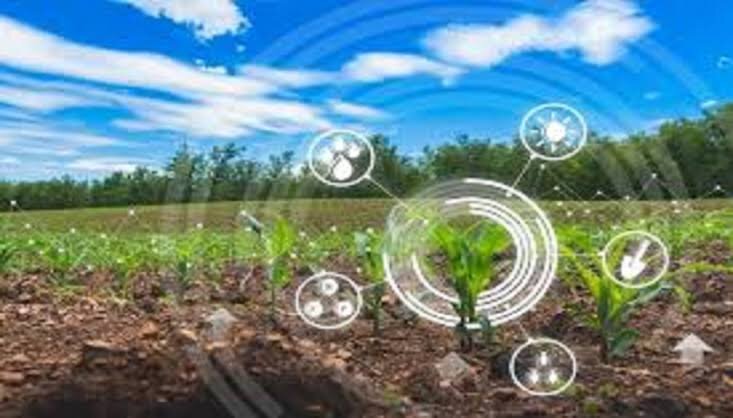
According to the Economic Desk of Webangah News Agency, the agricultural landscape is rapidly evolving, embracing innovative solutions that leverage data and technology to optimize crop production. This shift towards smart farming is characterized by the use of sensors, IoT devices, and artificial intelligence to monitor environmental conditions, soil health, and plant growth in unprecedented detail.
Farmers are increasingly adopting digital tools that provide actionable insights, allowing for precise irrigation, targeted fertilization, and proactive pest and disease management. These technologies empower agricultural professionals to make informed decisions, leading to increased efficiency and sustainability in food production. The integration of these smart solutions not only boosts crop yields but also helps in conserving valuable resources such as water and reducing the reliance on chemical inputs.
The visual representation of smart farming showcases a field with young crops, overlaid with digital interfaces displaying various agricultural metrics. These include icons for water droplet analysis, sunlight intensity, soil nutrient levels, and planting depth, all connected by a network of data streams. Such visualizations highlight the intricate monitoring and control systems that define modern agricultural practices.
Experts anticipate that the continued adoption of smart farming technologies will play a crucial role in addressing global food security challenges and promoting environmentally responsible agriculture in the years to come. The ongoing advancements in precision agriculture are set to redefine the future of farming, making it more resilient, productive, and sustainable.