
Iran Conflict Exposes Limits of U.S. Military Might, Reveals Strategic Gaps
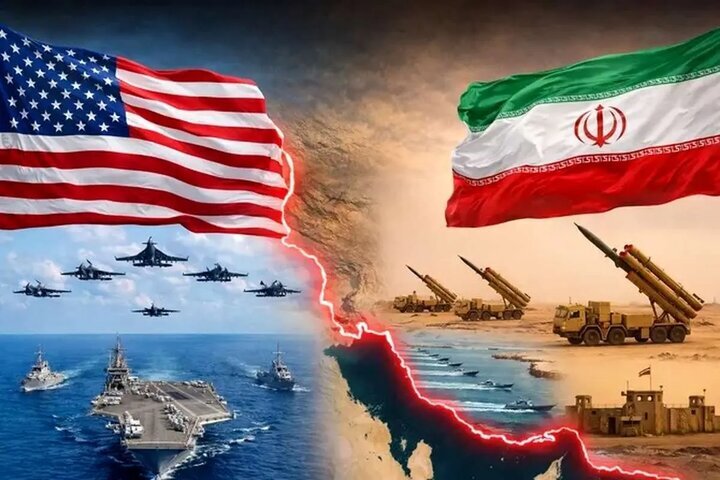
According to the International Desk of Webangah News Agency, the military aggression against Iran during the second term of President Donald Trump’s administration cannot be solely characterized as a military confrontation between Washington and Tehran. This aggressive war has become a test of the limits of U.S. power.
Following Washington’s perceived success in Venezuela with the apprehension of Nicolás Maduro, which suggested an ability to reshape political structures through military might, the aggression against Iran presented a greater test for this calculation. Iran’s resistance, sustained response capabilities, escalating U.S. military costs, and Washington’s inability to convert military strikes into favorable political results have exposed a rift that transcends simple battlefield victory or defeat. This gap lies between America’s military strength and its capacity to impose its political will, a situation that could alter the foundations of U.S. dominance and the calculations of international actors.
The illusion of absolute power, from the demonstration of apprehending Maduro to miscalculation in Iran, marks a significant aspect of this period. The U.S. military operation against Venezuela and the apprehension of Maduro on January 3, 2026, can be seen as a key indicator of the second Trump administration’s aggressive approach. U.S. forces invaded Venezuelan territory, apprehended Maduro and his wife, and transferred them to the United States. This action elevated Washington from a policy of pressure, sanctions, and threats to direct intervention and the physical removal of a country’s head of state. Trump subsequently announced that the U.S. would temporarily assume administration of Venezuela.
The significance of this event for Iran became more apparent as Washington could have drawn the lesson from Caracas that a swift strike, elimination of the leadership, and creation of political shockwaves could steer a country toward U.S.-preferred change. In such a calculation, Maduro was not just a target but an example of the Trump administration’s new capability, demonstrating that Washington was no longer necessarily bound by sanctions and political pressure, and would act directly to alter power dynamics if conditions allowed.
From this perspective, drawing parallels between Caracas and Tehran might have seemed attractive to the architects of a war against Iran. However, this comparison was fundamentally flawed from the outset. Iran, in terms of territorial expanse, political and security structures, missile and drone capabilities, strategic depth, geographical position, and regional influence, was incomparable to Venezuela. Therefore, the assumption that apprehending or eliminating a few key figures could replicate the political shock experienced in Venezuela meant overlooking the difference between the vulnerability of a government and the vulnerability of a political system.
The aggressive attacks by the United States, with the accompaniment of the Zionist regime, against Iran demonstrated that transferring the Caracas model to Tehran faced significantly larger obstacles. Iran’s political and security structures did not collapse following targeted attacks and assassinations, nor did the country enter a power vacuum. Instead, decision-making processes and military responses continued. This very outcome represented the first failure in a calculation that equated U.S. military power with the ability to engineer political collapse, presuming that striking the head of the structure would automatically dismantle the entire system.
In this light, Maduro served as the starting point for a concept, and Iran became the testing ground for that concept. The idea was that Washington, relying on its military and intelligence power, could directly transform the sovereignty of nations and raise the cost of resistance to a point where the opposing side would have no choice but to surrender. However, what became evident in the confrontation with Iran was the gap between the ‘ability to execute operations’ and the ‘ability to change the political equation.’ This gap, rather than being bridged by further military strikes during the conflict, widened with escalating U.S. costs and continued Iranian resistance.
How Iran disrupted the war calculations: In the view of the U.S. and its Zionist allies, the war against Iran was intended to bridge the gap between military superiority and political collapse. However, their aggressive attacks, even targeting sensitive centers and senior figures, failed to paralyze Iran’s decision-making structure. Consequently, the governing structure in Iran continued its operations, its military response capabilities were maintained, and Tehran, instead of accepting Washington’s terms, increased the cost of continued conflict for the adversary. This reality thwarted the initial assumption that a heavy blow would precede collapse.
According to observers, this failure was not solely political; at the military level, the war’s costs for the U.S. reached a point that directly impacted its ability to sustain the conflict. As reported by Reuters on August 5th (August 14th), the U.S. military consumed nearly all its reserves of Army Tactical Missile System (ATACMS) and Precision Strike Missile (PrSM) during the war, and approximately half of the global stock of Tomahawk missiles were deployed. Simultaneously, published estimates indicate the consumption of about 65 percent of Patriot interceptors.
While these figures do not signify an end to U.S. military capacity, they illustrate that continuing the war has led to rapid depletion of strategic reserves for Washington and increased costs for their replacement. Meanwhile, the Strait of Hormuz emerged as Iran’s most significant counter-leverage. This waterway, which previously carried about one-fifth of the world’s oil, has now effectively seen a severe halt in shipping traffic due to illegal U.S. aggressions, turning its reopening into a primary focus of negotiations for President Trump. Trump, continuing his rhetoric, even spoke on August 14th (August 23rd) of potentially declaring Hormuz “U.S. territory,” a stance that itself indicates the issue has transformed from a military operation against Iran into a dispute over America’s ability to restore its desired state.
From this viewpoint, Hormuz is not merely a maritime passage but a symbol of the war’s shifting dynamics. Washington initiated the war with the expectation that heavy strikes would alter Tehran’s behavior. However, the reopening of a vital global economic route has now become an issue for which the U.S. resorts to pressure, negotiation, and mediation. Therefore, the U.S. miscalculation should not be sought solely in the extent of damage inflicted or the number of targets destroyed. The principal failure occurred when firepower could not be translated into the power to impose will. Iran not only surpassed the expected collapse but, by maintaining its response capabilities and imposing military, economic, and geopolitical costs on the U.S., transformed the war from a one-sided attack into an equation where Washington is compelled to bargain for its conclusion. This shift targets the material and psychological foundations of U.S. hegemony simultaneously.
Collapse of hollow hegemony: The war against Iran did not confine its consequences to the battlefield; it extended to the calculations of countries that had long based their behavior on U.S. power and threats. Today, what has changed is not just the assessment of Washington’s military capabilities, but the credibility of U.S. threats – the notion that whenever the U.S. engages in a conflict, the adversary will eventually be forced to accept its demands. The erosion of this perception could be more significant for Washington than a military defeat, as deterrence is formed not by firing missiles, but by the adversary’s belief in the consequences of resistance.
This development has direct implications for U.S. allies. European nations and regional governments that have largely tied their security to Washington’s presence and guarantees over recent decades now face the question: if the U.S. cannot quickly impose its desired outcome in a large-scale confrontation, while simultaneously facing the depletion of its arsenal and increasing war costs, to what extent can they rely on its guarantees for future crises? In such circumstances, diversifying security relationships and strengthening independent capabilities can transition from a political choice to a strategic necessity.
China and Russia can also use this experience to re-evaluate their calculations regarding U.S. intervention capabilities and the cost of prolonged wars. In West Asia, governments that previously considered the U.S. military presence as the primary guarantor of their security will find greater motivation to expand relations simultaneously with Eastern powers. The Strait of Hormuz has more concretely illustrated this shift in calculation. The global economy’s dependence on this passage and the U.S.’s inability to quickly restore pre-war conditions have demonstrated the cost Washington must bear to manage the consequences of direct confrontation. Disruptions in energy exports, increased transportation costs, pressure on global markets, and the depletion of U.S. military reserves have shown that the war against Iran does not only create costs for Tehran but also transfers the cost of Washington’s power projection to the economies and security of its allies. This, in turn, complicates countries’ calculations regarding reliance on the U.S.
Ultimately, what has been presented to the world is not necessarily an image of a powerless America, but an image of an America whose power limits have become more evident. It is a power that can attack but can no longer assume the outcome of a war is predetermined solely by its image of invincibility. If, prior to this, many countries began their calculations with the question, ‘What does America want?’, the Iranian experience has shifted this question to ‘How far can America go to achieve its desires, and what cost must it bear?’ This change in question is a sign of the collapse of a hegemony that for years was built on the fear of American dominance and the belief in its invincibility.


