Western Media Investigations Point to US Responsibility in Deadly Kohstak Wedding Attack
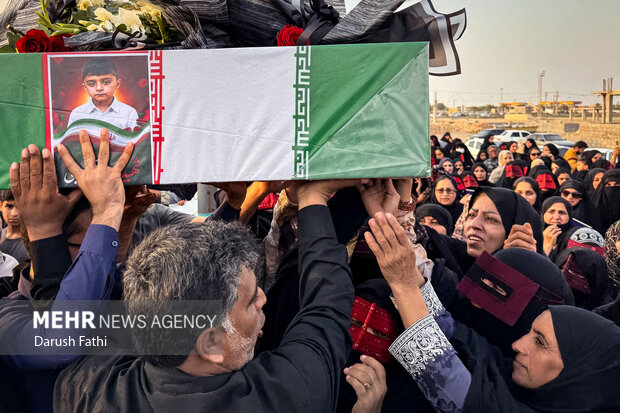
According to the International Desk of Webangah News Agency, a brutal attack on a wedding ceremony in the port of Kohstak has become one of the most controversial incidents of the U.S.-led war against Iran in recent days. U.S. officials, instead of offering a clear explanation for the target of the attack, continue to state that the incident is “under investigation.” This stance has raised further questions about America’s responsibility for civilian victims.
However, the ambiguity surrounding the attack is not limited to Washington’s positions. Concurrently, some hostile and anti-revolution elements abroad, by highlighting claims about the proximity of the incident’s location to a telecommunications tower, military facilities, or even similar narratives about a school in Minab, are attempting to alter the nature of the issue and cast doubt on the responsibility for the attack amidst the presence of potential targets in the vicinity of the incident.
This narrative construction is unfolding while reports from Western media and analyses by independent experts have presented evidence of the use of American munitions and their impact on civilian gathering sites. This evidence suggests that the narrative of the incident cannot be solely shaped by the claims of the involved parties and re-emphasizes the necessity of accountability regarding the perpetrator and the method of the attack.
Wedding Under American Fire
The recent U.S. attack on the port of Kohstak turned a family wedding ceremony into a bloody scene. In this attack, at least four civilians, including a child, were killed, and at least 68 others were injured. Images published from the site show the destruction of the ceremony venue and the scattering of wedding items amidst the debris.
In contrast, U.S. officials, instead of providing a clear explanation about the target in the area, have spoken of an investigation. U.S. Vice President JD Vance, while claiming that the United States does not deliberately target civilians, announced that the matter is under investigation. This position has left the question of why the attack hit a site where families were gathered unanswered.
Meanwhile, the Iranian Red Crescent has called for an independent investigation into the dimensions of the incident. Reports from the scene also indicate that alongside the ceremony venue, a telecommunications tower was in the area targeted by the attack. This proximity has become a primary focus of the narrative construction regarding the cause of the incident.
However, the presence of a military or communication target near a civilian area does not, in itself, explain the strike on the wedding venue. The core question remains: what was the actual objective of the operation, and how did an attack allegedly carried out to strike military infrastructure end up hitting a civilian site?
Western Sources Confirming the Crime: From Field Reports to Independent Analyses
Contrary to what some hostile elements attempt to imply, the narrative of the U.S. attack on the Kohstak wedding is not solely based on the accounts of Iranian officials. The New York Times, Reuters, and Associated Press have each published evidence, by examining images, videos, and munition remnants, that strengthens the attribution of the attack to U.S. forces.
In its investigation, The New York Times identified the U.S. attack as the cause of the strike on the ceremony venue. This American newspaper, analyzing images and weapon remnants, cited the assessment of “Tristan Ball,” an independent weapons expert and former U.S. Army ordnance disposal technician. He identified parts of the debris recovered from the scene as belonging to U.S.-made guided munitions, linking them to weaponry not in the possession of Iranian forces.
Reuters went a step further, submitting the issue to four weapons experts. According to their findings, three experts deemed American munitions likely and assessed the damage pattern as more consistent with a direct hit from an airborne munition than the hypothesis of an Iranian air defense missile ricocheting. According to the report by this English news agency, two American officials confirmed that the U.S. military conducted operations in the Kohstak area that night and targeted the telecommunications tower near the wedding venue.
Associated Press, in its field report from Kohstak, described the attack as a U.S. airstrike and wrote that U.S.-made guided munitions, including types like “JSOW” (Joint Standoff Weapon) and “GBU-39” (Small Diameter Bomb), have been suspected by experts based on the remnants discovered at the site. This report also documented separate impacts on the telecommunications tower near the ceremony venue, indicating that the tower’s presence does not necessarily explain the strike on the residential building.
Other media outlets have followed a similar framework. Time, in its report, wrote about “an attack on a wedding in southern Iran” and emphasized that Washington was investigating the possibility of U.S. forces’ involvement. The Guardian, in its field report, also spoke of “America’s attack on a wedding in Kohstak.”
In addition to the aforementioned cases, U.S. military personnel recently stated in an interview with the American network “MSNBC” that the Pentagon had ordered them to target civilian facilities in Iran as well. This revelation comes at a time when, prior to the attack on the wedding ceremony, numerous civilian targets, including the Minab girls’ school, a hospital, a bank, and residential areas in Iran, had been attacked during previous U.S.-Israeli aggressions.
The sum of these reports clarifies a crucial point: attributing the attack to the United States is no longer merely an Iranian media claim that can be dismissed with the label “Tehran’s narrative.” From technical munition analysis in The New York Times and Reuters to the field reporting of Associated Press and coverage by outlets like Time and The Guardian, a body of independent evidence has emerged that strengthens the narrative of direct hits by American munitions on civilian gathering sites. Nevertheless, Washington continues to refuse final responsibility, claiming the incident is under investigation.
Narrative Construction After the Crime
After every aggressive attack and crime, a battle over the narrative begins, and the same has happened in the Kohstak incident. While media reports and technical evidence have intensified questions about the U.S. role in the attack, attempts to alter the framing of the issue continue, including Washington’s emphasis on the incident being under investigation and the highlighting of potential targets near the impact site.
On the other hand, some hostile elements, before the outcome of any investigation is clear, present narratives to explain and justify the incident. These two trends, although starting from different points, converge on one goal: reducing the pressure for accountability from the perpetrator of the attack.
A clear example of this approach is the narrative related to the telecommunications tower. The presence of this tower and its targeting are investigable matters, but its proximity to the wedding venue alone cannot justify the strike on the building where civilians were present, especially since expert analyses have considered a direct munition hit on the building more likely.
The same pattern was observed concerning the Minab school, where the school’s proximity to a military facility became a pretext to shift the discussion from the attacker’s responsibility to the victims’ geographical location. However, in humanitarian law, the proximity of a civilian location to a military target does not automatically turn that location into a military target.
The significance of this narrative construction lies in transforming a crime from an “issue of responsibility” into an “issue of justification.” In this framework, it is sufficient to state that the attack was carried out for another purpose, the incident resulted from an intelligence error, or the victim was located adjacent to a military installation. Then, the core issue – how a military operation led to civilian deaths – is marginalized. Such a narrative can even serve its political purpose and distance public opinion from demanding specific answers, without proving any of these claims.
Therefore, the issue is not just what America will ultimately say about this attack; the more important issue is what narrative will become established in public opinion before the truth is revealed. If justifying narratives can repeatedly diminish responsibility by finding a potential target, a dangerous mechanism is effectively formed where the aggressor does not need to prove their innocence and can instead accuse the victim. This mechanism neither aids in fact-finding nor allows responsibility for the attack to remain with its perpetrator.
Human Rights Under the Rubble of Claimants
The Kohstak tragedy is not just a wartime incident and a few civilian casualties; it is a test for the West’s human rights claims. If the protection of civilians is a universal principle, this principle should not change based on the nationality of the victim or the identity of the attacker.
The experience of U.S. wars in Iraq and Afghanistan has shown that civilian deaths have repeatedly been explained in Washington’s official discourse with terms such as “collateral damage,” “operational error,” or “unintended consequence.” These terms may describe the reality of an operation but should not replace accountability for how the attack occurred.
From this perspective, the demand for an independent investigation into Kohstak gains importance. If Washington claims it does not deliberately target civilians and that the incident is under investigation, the findings of this investigation should provide clear answers regarding the operation’s target, the type of munitions used, and the reason for hitting a civilian gathering site.
The Iranian Red Crescent, in a considered move, has requested the International Criminal Court to investigate this incident, seeking to elevate the case from a political dispute between Tehran and Washington to a legal demand.
Ultimately, Kohstak can become a benchmark for the credibility of Western human rights claims – a benchmark not for who speaks more about human rights, but for whether the same standard demanded for other victims will be applied to Iranian victims as well.