
Lebanon’s Debt to Resistance: Legacy of Sayyed Hassan Nasrallah
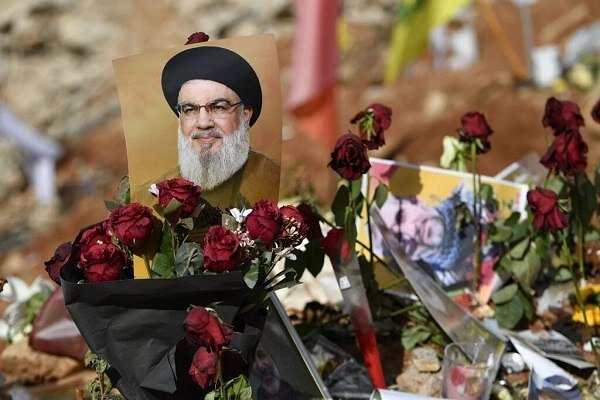
According to the International Desk of Webangah News Agency, contemporary Lebanon‘s history has been a nexus of fundamental geopolitical contradictions, scars of colonialism, and extreme national sovereignty fragility. This nation, characterized by unparalleled sectarian and religious diversity, has repeatedly fallen prey to foreign influence in the absence of cohesive internal consensus. The protracted civil war, commencing in 1975, exacerbated its structural divisions to their deepest point. Within this unstable environment, the full-scale military invasion by the Zionist regime in 1982, which occupied vast swathes of the country including Beirut, starkly exposed the inadequacy of traditional state structures in safeguarding borders. It practically demonstrated that passive measures, devoid of an objective deterrent force, were insufficient to preserve the nation’s integrity.
At the nadir of this historical humiliation and despair, the nascent seeds of popular resistance took root. This phenomenon was not merely a transient reaction to direct occupation but the genesis of a fundamental movement to redefine independence and defend the trampled dignity of the Lebanese people. With the ascension of Sayyed Hassan Nasrallah to the Secretary-Generalship in 1992, following the assassination of Sayyed Abbas Mousavi, this movement entered a new era. He assumed leadership of this movement at a time when West Asia was burning amidst imposed geopolitical equations. However, with unparalleled wisdom and foresight, he managed to shatter the balance of passivity, transforming Lebanon’s destiny from a vulnerable territory into a nucleus of stability, steadfastness, and active deterrence.
A Leader Emerged from the People, Guided by Strategic Rationality
A profound examination of the dimensions of the martyred Sayyed Hassan Nasrallah’s personality reveals that his influential speech and unparalleled charisma stemmed from a confluence of individual talents, an authentic popular origin, and a precise strategic understanding. His upbringing in the working-class, impoverished neighborhood of Al-Karantina in Beirut, alongside a diverse population of Sunnis, Christians, and Kurds, instilled in him an open-minded, peace-seeking spirit and a deep understanding of the demands of the deprived masses. This attribute, profoundly influenced by the worldview of Imam Moussa Sadr and his companionship with Sayyed Abbas Mousavi, evolved into a synthesis of authentic piety and social responsibility.
Nasrallah possessed an immense appetite for continuous study and learning. His study regimen was not confined to jurisprudence and its principles but encompassed the history of nations, the psychology of leadership decision-making, sociological analysis, and crucially, the meticulous monitoring of the press, military documents, and the productions of enemy think tanks. This enabled him to decipher the adversary’s thoughts and vulnerabilities from within their own structures. This profound insight, combined with unparalleled eloquence and praiseworthy sincerity, granted him a distinct ability in psychological warfare and crisis management. The combination of decisiveness, strategic ambiguity, and commitment to his promises transformed his speeches into focal points for media and international think tanks. He exemplified the fusion of religious idealism and calculated realism, and unlike some excitable leaders, he based his actions on rationality, field calculations, and tactical patience.
Resistance: From Restoring National Pride to Reshaping Regional Equations
In the social sphere and collective life of Lebanon, the presence of the resistance created a concept far beyond purely military tools, playing a fundamental role in the society’s identity formation and civil cohesion. Lebanon, long suffering from a lack of shared national belonging due to sectarian fragmentation and traditional rivalries, was able to experience a redefinition of pride and collective solidarity through the achievements of the resistance. According to sociological theories, great leaders possess the ability to foster a collective sense of ‘us’ in place of individual and sectarian self-interest. This was concretized through the historic liberation of southern Lebanese territories in 2000 and the epic stand during the 33-day war in July 2006. For decades, the general public’s spirit had been weakened by the humiliation of occupation, but the successive victories of the resistance infused the nation with عزت (dignity) and national self-confidence, irrespective of any sectarian affiliation.
Nasrallah, through his continuous honoring of the people and his description of society as “the most honorable of people,” demonstrated that the ideal of resistance is inseparably linked to human values and the alleviation of deprivation. Simultaneously, the organized expansion of service, educational, and healthcare institutions, and his constant emphasis on the principle that existing divisions are rooted in political arrangements and should not lead to religious discord, made the resistance’s popular base a stabilizing weight and a guarantor of solidarity within Lebanon’s diverse geography.
On the transnational and regional levels, the Lebanese resistance, under this intelligent leadership, rewrote the traditional patterns of power balance in West Asia and shattered the illusion of the occupying army’s invincibility in the eyes of global public opinion. Before Hezbollah’s active entry into the conflict arena, the Arab world’s confrontation with occupation was largely confined to military defeats or compromising peace treaties. However, by forcing the first unconditional withdrawal of the Zionist regime’s army in 2000, the resistance drew a line through previous equations, demonstrating that popular resistance could compel the largest war machines to retreat.
This approach found particular expression in the comprehensive, courageous, and continuous support for the Palestinian cause. Nasrallah transcended sectarian boundaries, deploying his logistical, political, and media capabilities to aid his Sunni brethren in Gaza and other fighting factions, thus proving the idea of Islamic world unity in practice. Beyond this, the decisive entry into pivotal regional battles, such as averting the grave dangers of Takfiri terrorism in Syria and authoritatively consolidating Lebanon’s maritime rights and borders in 2022, transformed the resistance into a powerful and balancing actor. It became a steadfast front that imposed heavy costs on repeated foreign aggressions and challenged colonial calculations.
Conclusion
Considering these undeniable historical facts, it is clear why Lebanon’s national sovereignty, honorable identity, and territorial survival are genuinely indebted to the resistance movement and the sincere endeavors of Sayyed Hassan Nasrallah. A land once considered the most vulnerable point to expansionist ambitions and external aggressions has, thanks to the pure blood of martyrs, the sacrifices of fighters, and the wise leadership of the resistance, become a steadfast fortress that reclaimed its territorial integrity and imposed lasting deterrence equations on aggressors.
Without the organized steadfastness, strategic foresight, and sacrifices of this movement against the destructive machinery of Zionism and the divisive plots of Takfiri groups, Lebanon’s independent sovereignty and geographical integrity might not exist today. The resistance not only returned vast occupied territories in the south to the homeland but also reminded the Lebanese that sustainable security and social dignity are not privileges granted by foreigners but the fruit of adherence to principles. Therefore, the legacy of this enduring path will remain an eternal symbol of the honorable defense of national land and identity for current and future generations.


