
Saudi Arabia’s Yemen War Futility Evident as Financial and Military Stalemate Deepens
According to the International Desk of Webangah News Agency, Saudi Arabia’s prolonged war in Yemen, now in its eleventh year, has seen regional and international coalitions fail to achieve swift victory as initially envisioned. The conflict, initiated by Saudi Arabia, has led to a deepening political and military stalemate, draining significant financial resources without realizing the declared goals.
The outcomes of the war have been largely counterproductive for Saudi Arabia, exacerbating its financial expenditures on military operations. These costs are in addition to the devastating humanitarian, political, and security ramifications, particularly under the sustained Saudi-American naval and air blockade impacting large parts of Yemen. The ongoing siege has imposed severe burdens on living conditions, healthcare, and contributed to the collapse of the national currency.
Remarkably, some Saudi media outlets, traditionally staunch defenders of the Kingdom’s policies in Yemen, are now expressing disillusionment. They attribute the war’s failure to the perceived inadequacy of the Aden government’s performance, while conspicuously overlooking Saudi Arabia’s direct role and management failures in the conflict.
A comparison between the vast resources expended by Saudi Arabia and the catastrophic political and military results underscores the depth of the predicament Riyadh faces. Engaging in an unending crisis without a realistic exit strategy transforms the war into an increasing burden—human, economic, political, and security—while diminishing opportunities for a favorable resolution.
While precise figures on Yemen war spending are obscured by the opacity of Saudi financial reporting, the costs are undeniably immense. Foreign Policy reported in a 2019 analysis that expenditures had reached approximately $725 billion by the end of that year. The Times of London, meanwhile, estimated the daily cost of the war at around $200 million.
The article also referenced the six wars previously launched by the former Yemeni regime against the Houthi movement between 2004 and 2010. These earlier conflicts inadvertently strengthened and seasoned Houthi forces. Capitalizing on the popular uprising against Ali Abdullah Saleh in 2011, these forces expanded their presence in northern provinces, culminating in their advance into and control of Sanaa in September 2014.
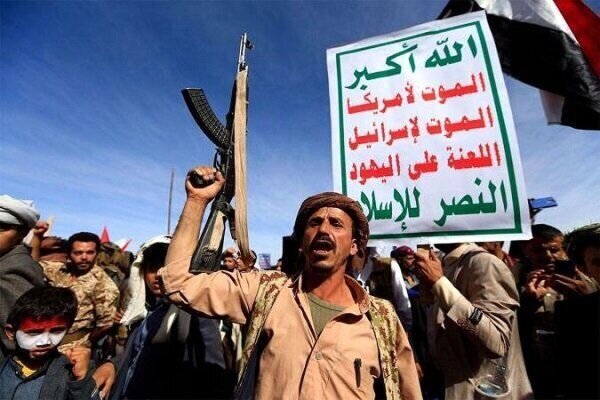
Consequently, a movement that military force was intended to eradicate has evolved into a principal player in Yemen’s complex equation. It has transformed into a regional power that, following Operation Al-Aqsa Flood, has supported Gaza and, in 2025, engaged significantly with the U.S. naval fleet in the Red Sea.
Perhaps the most crucial lesson derived is that Saudi influence in Yemen cannot be sustained through military intervention. The continuation of the war risks ultimately becoming a threat to the intervening state’s own interests. Therefore, a comprehensive review of Saudi policies concerning Yemen appears urgently necessary, prioritizing respect for Yemen’s sovereignty and the pursuit of a political solution to the ongoing crisis.


