Global Media Assess US-Israel War Failure Against Iran, Highlighting Stalemate and Green Energy
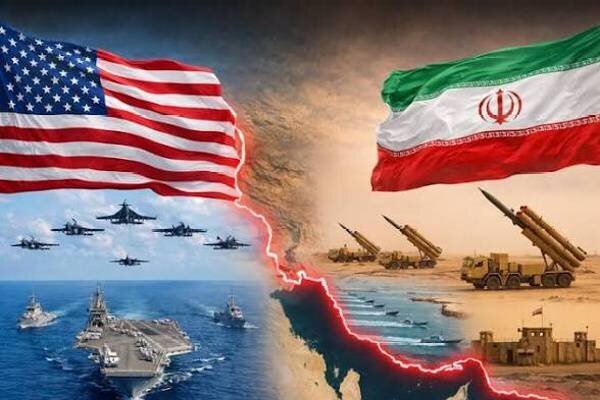
According to the International Desk of Webangah News Agency, following the military actions by the United States and the Zionist regime against Iran, not only were the stated objectives of the operations unmet, but Western officials and American media have acknowledged that the aggressors faced a strategic impasse and experienced field and political setbacks. This war, which commenced with widespread attacks and civilian casualties, has had extensive human, security, and economic ramifications, eliciting diverse reactions across international media. Global news outlets have each, with their distinct approaches, sought to shape the narrative of this war, and an examination of these reflections can offer a clearer picture of the actual situation and its prospects.
English Media
The New York Times, in an analysis by David E. Sanger and Eric Schmidt, discussed the divergence between J.D. Vance and Pete Hegseth regarding the cost-effectiveness of the Iran war. The central question for the Trump administration, according to the report, is how to exit this situation. Vance harbored doubts about a full-scale military operation from the outset, while Hegseth was a proponent. Following significant Republican defeats, Vance attributed the losses to the war, whereas Hegseth defended its continuation. Options presented for Trump include resuming the war intensely and briefly, conducting more limited military strikes, delegating negotiations to Vance with Mohsen Rezaei (currently stalled in the concession exchange phase), or maintaining the status quo with a naval blockade and the transit of 11 to 18 million barrels of non-Iranian oil daily, without a final decision. The New York Times reported that Trump has agreed to a major attack multiple times only to withdraw his decision. He has also stated that a resumption of attacks would be “highly unlikely” if negotiations succeed. The primary issue, as reported, is that Trump and his advisors remain divided on the objectives.
In another analysis, Lisa Friedman writing for the New York Times posited that the Iran war has significantly benefited renewable energy. Over forty countries have initiated or accelerated projects in wind, solar, electric vehicles, and low-carbon technologies. South Korea unveiled a plan worth approximately $747 billion to develop at least 100 gigawatts of wind and solar power by 2030. Rooftop solar panel installations surged in the UK and the Philippines. Thailand presented a plan to source at least 60% of its data center electricity from clean energy, and Vietnam accelerated battery deployment. Demand for electric vehicles also increased across Europe, Australia, and India.
However, the New York Times cautioned that disruptions to Middle East oil and gas trade have pushed many nations towards increased reliance on fossil fuels. Countries are consuming more coal, and oil-producing nations are investing in new infrastructure and trade routes. Governments have also spent billions to shield consumers from high energy costs. COP31 in Antalya is taking place against this backdrop of contradiction: the Iran war has both underscored the necessity of transitioning to clean energy and driven countries closer to fossil fuels. The International Energy Agency has projected growth in oil and gas demand until 2050 and expects coal consumption to reach a record high in 2026. Nevertheless, energy security concerns are accelerating the deployment of renewables, with global capacity expected to grow by nearly 4800 gigawatts in the next five years.
Fox News, in an opinion piece by retired Colonel Robert Maginnis, wrote that twenty years ago, American voters punished Republicans over an unpopular Middle East war, and they did so again on November 3rd: in 2006 it was Iraq, and this time it was Iran. Democrats took both houses, flipping at least seven Senate seats in Texas, Ohio, Kansas, and Iowa. J.D. Vance stated, “The war is why we lost.” Trump also conceded that the war played a role in the defeat, but added, “I wouldn’t have done anything differently.”
The Fox News author raised a question that the Trump administration has not answered: What lasting and durable achievement has eight months of war yielded? Referencing his own Pentagon experience before the 2003 invasion of Iraq, he spoke of Washington’s hesitation in having a realistic post-invasion plan and expressed the same concern now. According to a Fox News poll, over one-third of voters considered the Iran war critical to their vote, and about six in ten said the attack on Iran was the wrong decision. Another poll showed nearly twice as many preferred ending military intervention to lower gas prices rather than engaging in fresh attacks. The estimated cost of the war as of October 16th is $47.1 billion, not including base repairs, which The Wall Street Journal estimates at $5 to $15 billion. The author also noted the opportunity cost: relocating the USS George Washington from the Pacific to the Middle East reduced America’s presence in a region where China poses its greatest long-term challenge.
He stated that instead of the short campaign he promised, Trump has been caught in an eight-month cycle of attacks, ceasefires, and negotiations. In conclusion, the author urged Trump to define victory clearly, select experienced advisors who challenge his assumptions, honestly calculate the war’s costs, and not equate American and Israeli interests.
USA Today, in an opinion piece by Deece Otten, wrote that Republicans suffered a historic defeat in the midterm elections and are now seeking explanations. J.D. Vance and a segment of the Trump administration cite “the war problem” as the cause of the defeat. However, in the author’s view, voters rejected not only the war but also tariffs, strict immigration policies, and the party Trump built around himself. Vance posted on X that voters in 2024 who voted Democrat would only return if the war ended, focus shifted to the cost of living, “America First” was prioritized, and relations with Israel changed, concluding, “The war is why we lost.” But the author argues that by blaming the war, Vance avoids confronting his and his allies’ other failed policies. In October, 71% of Americans said the country was on the wrong track. Trump’s tariffs were considered by some even more unpopular than the war, with about two-thirds of voters stating the tariffs financially harmed them.
Vance’s analysis made no mention of tariffs and attributed the cost of living to the war rather than Trump’s entire economic policy. Approximately six in ten voters also said the enforcement of immigration laws had gone too far. Trump’s approval rating prior to the election had dropped to 34%, its lowest level of his second term. The author concludes that the Republican Party must adopt a fundamentally different approach, distance itself from Trumpism, and take inspiration from the experience of Florida and Governor Ron DeSantis. In his opinion, Trumpism has had its time, and the best moment to abandon Trump was ten years ago; the second-best moment is now.
The Wall Street Journal, in an opinion piece by Mark Penn and Andrew Stein titled “It Was the Economy, Not the War,” wrote that J.D. Vance quickly stated after the Republican defeat, “The war is why we lost,” but in reality, multiple factors contributed to this loss, with polls pointing to the economy as the biggest factor. According to the authors, the ruling party’s defeat in midterm elections is natural; Bill Clinton was not involved in a war in 1994, and the last time the president’s party gained seats was in 2002. Wars that caused major political shifts, like those in 1952, 1968, and 2006-2008, typically involved ground combat and thousands or tens of thousands of American casualties, not a temporary $1.50 increase in gasoline prices costing around $20 per week for a household.
The authors add that the biggest shift was among Hispanic voters, who moved towards Republicans in 2024 but returned to Democrats by a 30% margin this time. The reasons cited were high prices and the harsh behavior of ICE, not the war. They conclude that Republicans lost arguments they could have won and that the Trump administration must accomplish three things in the next two years: win the war, demonstrate the success of its economic program, and highlight the danger of Democratic ideas.
Bloomberg, in an opinion piece by Hal Brands, wrote that Donald Trump is no longer dominant on the world stage midway through his presidency. His first year was filled with ambition and activism, but the second year brought feedback and disappointment, with the protracted war with Iran weakening his standing both domestically and internationally. According to the author, the Republican Party’s heavy losses in the midterm elections were linked to this war, but a wounded president should not be expected to be passive on the geopolitical stage.
Brands outlines five main challenges for Trump’s final two years: ending the Iran war without damaging America’s standing in the Middle East; concluding peace in Ukraine; solidifying the “Doner Doctrine” to maintain American primacy in the Western Hemisphere; managing competition with China; and winning the artificial intelligence race. He writes that a Democratic Congress can make things more difficult for Trump through investigations, impeachment, and obstruction, but day-to-day control of diplomacy and the military remains concentrated in the White House.
Brands suggests that if Tehran does not surrender, Trump might be forced to accept a long and costly conflict or make a bigger gamble, such as a short, intense bombing campaign—an action that, following electoral defeat, lacks clear political support and raises the risk of war escalation.
In Ukraine, he believes Trump should move away from the current approach of pressuring Ukraine and instead alter Putin’s calculations by strengthening sanctions and aiding Kyiv. Regarding China, Brands warns that tensions are escalating, and apparent calm does not necessarily signify improved relations. Concerning artificial intelligence, he notes growing public concern about data centers and the risks of this technology, which threatens Trump’s strategy. The author concludes that the next two years will show whether Trump leaves a difficult but manageable situation for his successor or leaves America in a state of global overextension and chaos.
Arabic Media
Al Jazeera, in an article, stated that the electoral defeat of Republicans in the United States and the failure of Netanyahu’s coalition to secure a parliamentary majority in Israel have increased the political cost of continuing the war with Iran for both leaders. Nevertheless, the possibility of resuming military conflict remains.
The Al Jazeera article added that the Iran war, rising energy prices, and economic dissatisfaction were factors in the Republicans’ defeat in the US midterm elections. In Israel, Netanyahu, securing 53 seats, fell short of the required 61 seats to form a government. These circumstances push Trump towards greater caution due to public pressure and congressional opposition, and Netanyahu towards caution due to domestic political weakness.
The author explains that, however, the differing interests of the two allies persist. Netanyahu seeks to prevent Iran from rebuilding its nuclear and military capabilities, while Trump must consider the economic and political costs of the war. Conversely, Tehran may view Washington’s political weakness as an opportunity to negotiate on better terms. Despite this, miscalculations by the parties could lead to the failure of negotiations and pave the way for a new round of war.
Ray Al-Youm, in an article, wrote that the US midterm elections in November 2026 indicate increasing internal pressures on the Trump administration, particularly concerning economic costs and the war with Iran. Polls show a significant portion of Democratic voters oppose further military and economic aid to Israel, but this opposition has not yet translated into a political consensus to halt aid.
The Ray Al-Youm article added that the opposition of some representatives to the sale of heavy weapons to Israel also reflects growing sensitivity regarding the use of American weapons in Gaza and Lebanon. Trump has also announced an agreement with Netanyahu to end annual US aid of approximately $4 billion, although its implementation requires congressional decisions and legal arrangements. The author explains that, conversely, the expansion of defense and technology cooperation between the two sides continues. Therefore, current developments are more indicative of an effort to reshape the terms, conditions, and oversight mechanisms of American support for Israel rather than a collapse of the Washington-Tel Aviv alliance.
Al-Mayadeen, in an article, examines the opportunities and challenges for Gadi Eisenkot in forming a new government for the Zionist regime and sidelining Benjamin Netanyahu. Eisenkot has been tasked with forming a government with the support of 67 Knesset members compared to 46 members supporting Netanyahu. However, this support does not equate to a stable parliamentary majority.
The Al-Mayadeen article added that his most significant obstacle is not necessarily Netanyahu’s camp but rather internal differences among the opposition. The stances of Avigdor Lieberman, Naftali Bennett, and the Haredi religious parties will be decisive for the future coalition’s fate. The entry of Haredi parties into the government would necessitate concessions on the issue of exemption from military service, a matter that could cause discord among other coalition parties with Eisenkot.
The author emphasizes that sidelining Netanyahu alone does not guarantee the stability of the future government. Eisenkot’s success will depend not solely on gathering votes but on transforming them into a cohesive coalition with shared interests and the capacity for stable governance.
Chinese and Russian Media
CGTN, in a report titled “China Ready to Strengthen Ties with Iran,” stated that Zhai Jun, China’s Special Envoy for Middle East Affairs, announced during a meeting with Iranian officials that Beijing wishes to expand and deepen bilateral relations with Tehran.
Zhai Jun noted that this year marks the 55th anniversary of diplomatic relations between Iran and China and the 10th anniversary of the establishment of their comprehensive strategic partnership, emphasizing that Beijing intends to use this occasion to achieve new breakthroughs in bilateral relations.
The Special Envoy for Middle East Affairs reiterated during the meeting that the use of force cannot resolve issues and disputes related to Iran. He stressed the necessity of respecting the sovereignty and security of all countries and highlighted Beijing’s opposition to resorting to military solutions for resolving problems.
These remarks were made during Zhai Jun’s meetings with Iranian officials on November 8, 2026. The Chinese official’s visit occurred as the two countries are commemorating the 55th year of their diplomatic relations and emphasizing the strengthening of bilateral cooperation.
Russia’s Interfax news agency reported that Ismail Baghaei, spokesperson for the Iranian Ministry of Foreign Affairs, described Tehran’s plan for the restoration of normal shipping in the Strait of Hormuz within two days as the fastest and most effective solution for stabilizing the situation. He emphasized that this plan remains valid and its implementation depends on the political will of the other party, particularly the United States. Baghaei added that Iran’s proposal is a logical and structured program for ensuring the security of global energy transit routes.
The Iranian Foreign Ministry spokesperson commented on the US midterm election results on November 3rd, stating that Tehran draws no distinction between the ruling political parties in Washington, as it has faced hostile policies from both Republicans and Democrats over the past decades. Baghaei reiterated Iran’s commitment to its obligations under the Nuclear Non-Proliferation Treaty and the International Atomic Energy Agency’s safeguards agreements, referencing the inspection of the Bushehr power plant in June. He added, however, that the attack on Iran and the failure of the IAEA Director-General and the Board of Governors to uphold their commitments have undermined the possibility of continuing cooperation as before.
He dismissed reports about exploring the possibility of Iran using chemical weapons as “ridiculous lies” and refuted the claims published on this matter.