Post-Election Shake-up Looms for Trump Administration Amid Republican Losses
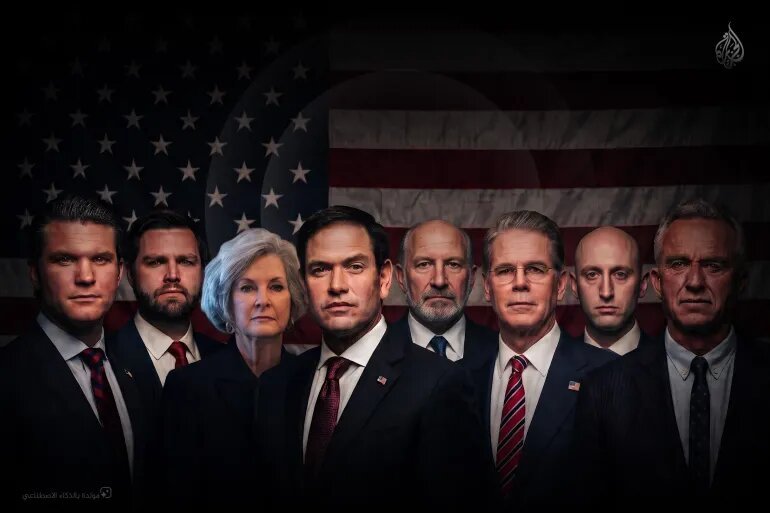
According to the International Desk of Webangah News Agency, the Republican Party’s significant setback in the U.S. midterm congressional elections has placed President Donald Trump‘s future at risk, setting the stage for potential shifts among top White House and administration figures. This assessment comes from The Financial Times.
The Daily Beast, citing Michael Wolff, reports that the severe defeat of the Republican Party has led to a scramble for positions within the White House, with Wolff predicting that many of the President’s senior aides could soon be dismissed from their posts.
The Financial Times notes that it remains unclear how Trump will apportion responsibility for this major loss among his cabinet. However, the newspaper suggests that personnel changes have become a likely option, with some officials potentially facing dismissal, others resigning voluntarily, and some retaining their positions.
Key American officials whose resignations or dismissals are being discussed include:
Pete Hegseth, U.S. Secretary of Defense: A prominent figure in the conflict against Iran, a war identified as a primary reason for the Republican Party’s election defeat. Hegseth’s appointment was controversial from the outset; he implemented extensive changes in military command, restricted journalists’ access to the Pentagon, and sought to consolidate opposing factions within the armed forces. The Financial Times adds that Hegseth’s restructuring of the Defense Department has dissatisfied many members of Congress, including some Republicans. The newspaper, referencing the possibility of Hegseth’s dismissal or resignation, indicates he may face pressure from General Dan Caine, Chairman of the Joint Chiefs of Staff, and General Brad Cooper, Commander of U.S. Central Command (CENTCOM), due to the conflict’s repercussions. The Washington Post also reported that Hegseth, Caine, and Cooper are among the officials potentially facing dismissal, noting that these three provided Trump with “overly optimistic assessments” of military operations at various stages without sufficiently detailing the risks and costs America might incur.
Susie Wiles, Former White House Chief of Staff: Architect of Trump’s political comeback in 2024, Wiles is considered the first casualty of the Republican midterm election defeat. She strived to implement many of Trump’s policies, from trade to immigration, but ultimately, like previous chiefs of staff during Trump’s first term, could not maintain her position for an extended period. The Financial Times writes that she was unable to contain the administration this year, as Trump failed to convince public opinion on the rationale for the war against Iran and did not consult Congress before its commencement. Wiles also failed to persuade him to adequately address the war’s impact on inflation. Trump had defended Wiles prior to the election, but Caroline Sunshine, his former assistant during his first term, told Fox News this week that Wiles should resign.
J.D. Vance, U.S. Vice President: Vance is among the officials who could be affected by administrative changes. His position as a potential political successor to Trump and a leading contender for the Republican Party’s nomination in the 2028 presidential election is now in question. The Financial Times recalls statements from Newt Gingrich, former Speaker of the House and a prominent Trump supporter, regarding Vance: “Vance has lost a lot of his shine.” Vance has moved quickly to distance himself from the President following the reveal of the Republican Party’s election losses. On Wednesday, he stated, “The war is the reason we lost,” attributing the electoral defeat to Trump’s national security priorities.
Marco Rubio, U.S. Secretary of State: Despite accompanying Trump on some campaign trips and endorsing his policies, including the war against Iran, Rubio is considered closer to traditional Republicans than Vance and could be a potential rival for the Republican presidential nomination in 2028. Following the Republican defeat, speculation in Washington political circles arose about Rubio’s potential resignation to prepare for presidential aspirations. However, the U.S. Department of State has dismissed these reports as “false and baseless.” Rubio told The New York Times that his plan from the outset was to remain in his position until the end of Trump’s presidential term.
Howard Lutnick, U.S. Secretary of Commerce: Lutnick faces pressure due to his extensive associations with the deceased sex offender Jeffrey Epstein. This matter could subject him to increased scrutiny by the new Congress. The newspaper suggests that if Trump aims to mitigate public anger over this case, the Secretary of Commerce could become a target for accountability. Furthermore, his support for tariffs, which faced widespread criticism during the election campaign and was blamed for increased inflation, could also cause him problems.
Scott Bessent, U.S. Secretary of the Treasury: Bessent is one of the closest administration members to Trump. However, a majority of voters have expressed dissatisfaction with the Trump administration’s economic performance, an area for which Bessent holds primary management responsibility. Despite continued economic growth, a resilient labor market, and a rising stock market during his tenure, Bessent failed to reduce inflation to the levels Trump promised in his 2024 campaign. Bessent also oversaw an increase in borrowing costs this year, coinciding with a decline in U.S. Treasury bond prices and a rise in mortgage interest rates.
Robert F. Kennedy Jr., U.S. Secretary of Health: Kennedy joined the Trump camp during the 2024 general election. This alliance linked a president seeking to attract dissatisfied Democratic voters with a controversial figure looking for a new political footing. However, following the Republican defeat, this coalition may have reached its end. Kennedy had previously, in May, dismissed the idea of running for president again in 2028, but speculation in Washington about a potential change of stance persists.