Spanish Workers Stage First General Strike in 14 Years Amid Housing Crisis
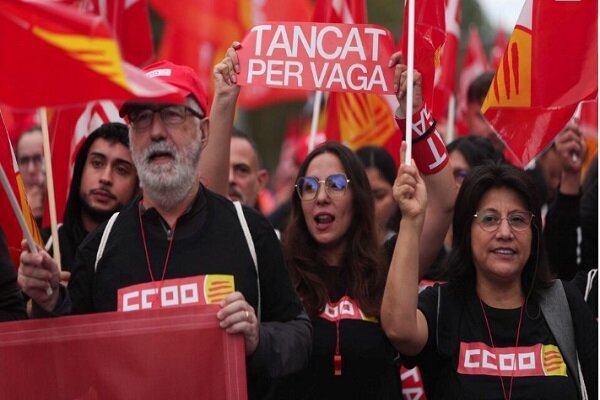
According to the International Desk of Webangah News Agency, Spanish workers have launched a nationwide 24-hour general strike, marking the first such industrial action in 14 years, to protest the escalating housing crisis and its impact on their purchasing power.
The strike is backed by two prominent Spanish labor unions, UGT and CCOO, alongside tenant associations, who are advocating for wage hikes to match the rising cost of housing and for easier access to affordable homes. Central to the protests is the demand for the government to address the critical shortage of affordable housing and to control soaring rental prices.
Data from the Bank of Spain reveals a deficit of approximately 750,000 housing units, a figure projected to exceed one million by 2028. Compounding the issue, the average monthly rent has reached €1,176, which is equivalent to about 98.7 percent of the average monthly income for young Spaniards, making homeownership and even stable rental arrangements increasingly unattainable for many.
Labor unions reported initial participation rates of up to 90 percent in ports and the automotive sector, leading to the complete cessation of operations at some Volkswagen and SEAT factories. The meat industry saw 85 percent participation, waste collection 82 percent, and the energy sector 75 percent, underscoring the widespread impact of the strike across crucial economic areas.
Early in the strike, clashes erupted between police and protesters at the Mercamadrid wholesale market, resulting in one arrest and requiring medical attention for thirteen individuals. These confrontations highlight the tension and frustration associated with the ongoing protests.
The strike follows weeks of demonstrations against the housing crisis, notably including the forced eviction of an 87-year-old woman in Madrid. Government proposals aimed at limiting tenant evictions and curbing rental increases have been rejected, further fueling public discontent.
As Spain approaches snap elections on November 29, the government of Pedro Sánchez has attributed the rising rents and housing shortages to its right-wing opposition. However, protesters and labor unions also hold the central government responsible for its role in exacerbating the crisis.