
Global Media Highlight Strategic Failures in War Against Iran
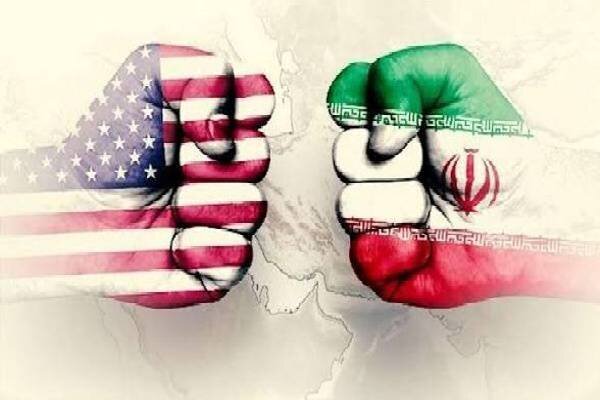
According to the International Desk of Webangah News Agency, since the commencement of the military aggression by the United States and the Zionist regime against Iran, the stated aims of the operation have remained unfulfilled. Western officials and American media have acknowledged a strategic stalemate and battlefield and political defeats for the aggressors. This war, which began with extensive attacks and civilian casualties, has had far-reaching humanitarian, security, and economic dimensions, eliciting diverse reactions in international media.
Global media, each with its own specific approach, has attempted to shape the narrative of this war. An examination of these reflections can provide a clearer picture of the war’s actual status and its prospects.
English Media:
Axios reported that U.S. Secretary of State Antony Blinken informed his counterparts at a G7 foreign ministers meeting in Paris that Donald Trump had considered two options: resuming the war with Iran or reaching an agreement. However, he opted for a third option: exerting pressure on Iran. According to the outlet, the war with Iran has become a political burden in Trump’s second term, imposing a heavy cost on Republicans in the midterm elections. Trump had oscillated for months between threatening to destroy Iran and predicting Tehran’s surrender.
This divergence led to tensions among senior government factions, with Israel supporting new attacks and most Persian Gulf countries opposing them. Following Trump’s meeting with the Prime Minister of Qatar, he described new attacks as “completely unlikely” and “unnecessary,” stating a preference for continued economic pressure, maritime blockade, and “Operation Iron Gate” to cut off land routes for weapons and technology transfer. Blinken reportedly told the closed session that Washington would not make a “stupid” deal and that the third option was to continue the current situation without an end date. Axios added that Blinken, along with Scott Bassinet, John Ratcliffe, and Jared Kushner, supported this strategy and opposed resuming the war. On the other hand, Ayatollah Mojtaba Khamenei ordered an end to the “neither war nor agreement” status; a civilian interpretation of this order implied authorization for negotiations, but the continuation of the stalemate could push the Islamic Revolutionary Guard Corps towards more aggressive attacks.
Dany Sitrinowicz warned that Iran would not accept this situation indefinitely and that there is a risk of a new military conflict that neither side desires. The Prime Minister of Qatar stated that there is more room for diplomacy and called for the presence of China and European countries as guarantors to resolve Iran’s skepticism.
MSNBC, in an opinion piece by Peter Joel, wrote that Democrats, after their substantial victory in the midterm elections, have promised to end the war with Iran by cutting its funding. The author suggests this approach is reminiscent of the Democrats’ promise in 2006 to end the Iraq War. According to the outlet, Congress was unable to stop the war at that time, and George W. Bush even increased troop numbers. Today, the author believes, cutting funding without a negotiated agreement with Tehran is no guarantee of ending the war and could hand control of the Strait of Hormuz to Iran, undermining the principle of freedom of the seas. The article adds that it is unclear whether U.S. forces would be allowed to defend themselves if funding were cut, or if they must leave the region, and what would happen if Iran imposed tolls on ships.
Furthermore, Trump would likely veto any restrictions, and Democrats do not have a two-thirds majority to override a veto. The author warns that if Democrats accept responsibility for the outcome, they might share some of Trump’s blame, allowing Republicans to construct a narrative of a “stolen victory.” In their view, Democrats should focus on congressional oversight, reviewing U.S. Central Command’s actions, and impeaching Pete Hegseth, rather than accepting this responsibility. The piece concludes that the main problem is that the Trump administration has entangled the U.S. in a war where victory is impossible, yet defeat is also unbearable, and Congress cannot simply legislate an end to it.
A report by the Center for Strategic and International Studies, authored by Mark F. Cancian and Chris H. Park and published on November 10, 2026, stated that the United States has sufficient ammunition to resume war with Iran, but there are serious concerns regarding China. According to the report, during the 39-day campaign until the April 8 ceasefire and subsequent operations, the U.S. consumed between one-third and two-thirds of its key ammunition reserves. Approximately two-thirds of pre-war Patriot interceptor reserves, about half of THAAD, roughly one-third of Tomahawks, and about one-third of JASSMs were used. Rebuilding most of this ammunition, after funding is secured, will take two to four years. Patriot production has increased from about 600 units per year to a target of 2,000 by 2030, and Tomahawk production is also aiming for 1,000 units annually. Large bunker-buster bombs are limited; the “mother of all bombs” inventory is around 10 units, and the number of massive penetration bombs is less than 10. Anti-ship munitions played a minor role after the Iran war but are vital for confronting China.
The report notes that ammunition shortages are a result of rational past decisions: the post-Cold War strategy anticipated short regional wars and considered surge production capacity an extra cost. The authors call for a long-term commitment, a mix of expensive and inexpensive munitions, and funding for 2027 and beyond.
Reuters, in a report examining the human cost of the Iran war at sea, wrote that families of missing sailors still have no information about their fate. According to the report, the International Maritime Organization has confirmed 130 “incidents,” mostly attacks, in the region since the war began on February 28, with at least 25 sailors killed. Navin Kumar, a 23-year-old Indian sailor, was among the six crew members of two Iran-linked cargo ships, “Bridge 1” and “Bridge 2,” last seen on May 9, approximately 8 nautical miles from Kish Island, Iran.
Three Iraqi, one Pakistani, and another Indian crew member are also missing. Kumar’s family took out a loan of about 1.5 million rupees for his maritime training, and his mother says every moment is agony for him. An official from the Basra Maritime Foundation stated that contact with a representative in Iran was fruitless, and Iranian searches yielded nothing. The family of a 22-year-old Iraqi sailor also traveled to Iran, but the shipowner said he had no information. According to the report, the Indian Seafarers’ Recruitment Agency revoked the license of the intermediary company “Laskar Marine” due to its inability to repatriate crew members and pay wages. Reuters adds that after the war, the cost of hiring sailors has tripled, with many undertaking only one voyage.
Newsweek, in an analysis, wrote that Donald Trump announced on Monday that the war with Iran is “militarily over” and that the U.S. will maintain the “status quo.” According to the magazine, the status quo from Washington’s perspective includes severe restrictions on traffic in the Strait of Hormuz, sporadic attacks on oil tankers, an unlimited presence of American warships in the region, and a naval blockade of Iranian ports. Based on the report, commercial traffic in Hormuz is about 65 percent lower than before the war, and the prices of gasoline and diesel in the U.S. have increased by approximately 30 percent and 65 percent, respectively, compared to the previous year. The International Energy Agency has called this war the largest oil supply disruption in history and has estimated Europe’s gas import costs to be an additional 18 to 33 billion euros. The renewed attack on Saudi Arabia’s East-West pipeline and the interception of missiles from Yemen over Riyadh indicate that the infrastructure in the Persian Gulf remains vulnerable.
Mohsen Rezaei, Secretary of Iran’s Supreme National Security Council, reiterated that Washington must accept Tehran’s seven conditions, including the lifting of sanctions, the end of the blockade, the release of assets, and the withdrawal of forces. The cost of the war for the U.S. was estimated at $47.1 billion by mid-October, with two aircraft carriers and about 17 warships deployed in the region. The transfer of the USS Theodore Roosevelt from the Western Pacific to the Middle East has reduced the U.S. Navy’s presence in the face of China. The midterm elections also resulted in Republican losses, with J.D. Vance citing the war as the reason. The author concludes that a return to the pre-war situation is impossible, and the current status quo is unsustainable.
Fox News, in a report by Morgan Phillips, wrote that Donald Trump has stepped back from the pressure campaign, despite the Iran war being cited as a factor in the Republicans’ heavy losses in the midterm elections. By launching “Operation Iron Gate,” he aims to block the land routes and the Caspian Sea routes that Tehran relies on for rebuilding its military capabilities and importing goods, dual-use technologies, and sanctioned materials. According to Fox News, this force consists of about 20 personnel stationed at U.S. Central Command headquarters in Tampa. Marco Rubio stated that if economic pressure achieves its goal, military attacks will not be necessary.
According to a Fox News poll, the Iran war was vital for 34 percent of voters in the House vote, and about six out of ten considered the attack a mistake. Sixty-eight percent also considered preventing a prolonged conflict very important, and 61 percent preferred ending military intervention to reduce gas prices over resuming attacks.
According to CBC News, U.S. President Donald Trump announced that following requests from regional countries, including the Prime Minister of Qatar during a White House meeting, he would refrain from further military attacks on Iran for now, but would continue the naval blockade of the Strait of Hormuz. Trump stated that the U.S. is “fully prepared and armed” but considered the likelihood of using equipment to be low, and said he was acting at the request of Qatar, Saudi Arabia, the UAE, Bahrain, Kuwait, and others.
Sheikh Mohammed bin Abdulrahman Al Thani, Prime Minister and Minister of Foreign Affairs of Qatar, described his discussions with Trump and J.D. Vance as positive following his trip to Tehran. Mohsen Rezaei, Secretary of Iran’s Supreme National Security Council, called on Washington to abandon “fake news about imaginary negotiations” and adhere to Iran’s seven conditions. Iran’s proposal includes an end to the blockade of ports, the lifting of some sanctions, and a halt to bombing in exchange for an end to the Hormuz blockade, with nuclear negotiations to follow later. Marco Rubio called these conditions “unrealistic,” while Esmail Baghaei deemed them the most reasonable proposal available. Simultaneously, retaliatory attacks continue: Iranian media reported a U.S. attack on Qeshm Island, with an Iranian source stating the targets included air defense and navigation radars, missile launch sites, and mine-laying facilities. Attacks on oil tankers are also continuing at their highest level since the war began.
Arabic Media:
Al Jazeera, in an article, discusses the deep rift within the U.S. Democratic Party following the party’s victory in the November 3, 2026, midterm elections. The central issue of this rift is the future of the party’s leadership and the nature of Washington’s relationship with Israel and the pro-Israel lobby, particularly AIPAC.
In the House of Representatives, Hakeem Jeffries faces pressure from the progressive wing due to his close ties with Israel supporters and his opposition to halting offensive U.S. military aid to Tel Aviv. Figures like Rashida Tlaib and Alexandria Ocasio-Cortez are calling for a change in the party’s approach and an end to arming Israel.
In the Senate, Chuck Schumer, a staunch supporter of Israel, is facing opposition from a new generation of Democrats. Chris Van Hollen and Chris Murphy are considered potential successors.
The victory of Abd al-Rahman al-Siddiq in Michigan indicates that criticizing Israel and defending Palestinian rights is no longer necessarily an obstacle to electoral success in the U.S.
Al-Rai al-Youm, in an article, wrote that there are differences in the methods and speed of implementing policies between Netanyahu’s and Gadi Eisenkot’s approaches to the Palestinian issue, not in their strategic goals. Netanyahu seeks to accelerate settlement construction, alter the geography of the West Bank, weaken the Palestinian Authority, and advance annexation and the displacement of Palestinians. However, Eisenkot prefers to pursue these same goals with more controlled management and less political and security cost.
He opposes full annexation and the unregulated expansion of settlements but does not support the establishment of an independent Palestinian state, preferring to maintain a form of limited self-rule. He also seeks to revive Israel’s international relations, expand normalization with Arab countries, and create a regional security mechanism involving Israel.
The author emphasizes that slowing down Israel’s policies could be an opportunity for Palestinian reconstruction and unity, and for increasing the political and diplomatic power of Arab nations. However, this opportunity will not materialize automatically, as Eisenkot could also use this time to restore international legitimacy and strengthen Israeli dominance. Therefore, the main issue is not a change of leadership, but how to seize the opportunity to shift the balance of power.
Al Mayadeen, in an article, wrote that the wars waged by the U.S. and the Zionist regime no longer solely impose costs on the targeted nations; their consequences have also returned to Western societies. The killing of Palestinians in Gaza has severely damaged the ethical credibility of the Zionist regime and the human rights claims of the West, sparking a wave of public protests, particularly among youth and university students.
On the other hand, Iran’s resistance against U.S. and Israeli military aggression has increased the economic and political costs of the war, exacerbating domestic dissatisfaction in the U.S. and Europe by affecting energy and transportation markets. The results of the U.S. midterm elections and the increased Palestinian participation in Knesset elections are signs of the war’s consequences returning to the domestic political arena. The author believes that the continuation of this trend weakens the legitimacy of the hegemonic system and reduces governments’ ability to wage war without incurring political and social costs.


