Trump Weighs Military Threat Against Diplomacy as Iran Insists on Terms
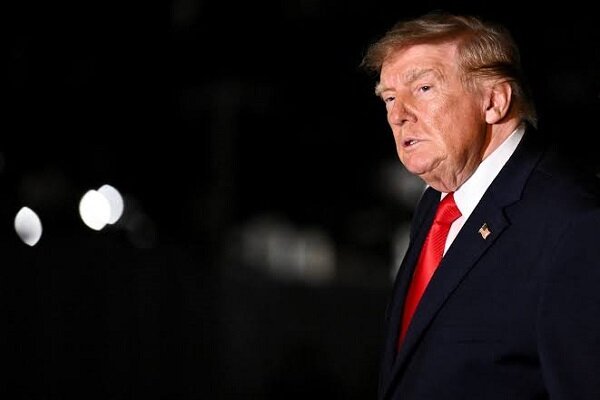
According to the International Desk of Webangah News Agency, Donald Trump, the President of the United States, continues to speak from a position of military strength against the Islamic Republic of Iran. However, recent months’ developments have shown that Washington’s policy of threats, economic pressure, and military actions has not achieved the country’s declared goals. The U.S. administration, which entered a new phase of confrontation with the expectation of imposing its will on Tehran, is now facing a set of political, security, and geopolitical realities that challenge its initial calculations.
Trump’s contradictory behavior towards Iran, which includes threats of military force on one hand and expressions of willingness for agreements and negotiations on the other, most clearly indicates Washington’s difficulty in finding an effective strategy to confront the Islamic Republic. The White House seeks to force Iran into concessions through displays of power and pressure, while simultaneously pursuing diplomatic avenues to achieve objectives it has been unable to attain through pressure and threats.
In this context, Tehran’s firm stance on the conditions for any agreement and its emphasis on preserving national rights demonstrate that the Islamic Republic of Iran does not intend to overlook past experiences and the repeated breaches of commitment by the United States. Washington’s current challenge is not merely reaching an agreement with Iran but accepting the reality of a country that does not make its political independence and national security a subject of negotiation.
For decades, U.S. policy toward the Islamic Republic of Iran has been shaped by economic pressure, military threats, and efforts to limit Tehran’s regional and international power. The Trump administration, relying on this approach, believed that increased pressure could compel Iran to accept Washington’s unilateral demands. However, past experiences of confrontation have shown that the Islamic Republic has not only refused to retreat from its principled positions but has also emphasized strengthening its defensive capabilities and maintaining decision-making independence. Extensive economic sanctions, repeated threats, and even military actions have failed to resolve the Iran issue according to U.S. desires.
Trump’s recent behavior also exposes the contradictions in this strategy. The U.S. President speaks of his country’s military might while simultaneously pursuing diplomatic channels and welcoming the mediation role of regional countries. Qatar’s diplomatic initiatives and its consultations to bridge the positions of Tehran and Washington are also assessable within this framework. However, Iranian officials’ positions indicate that Tehran is unwilling to let negotiations become a tool for legitimizing U.S. pressure. Mohsen Rezaei, Secretary of Iran’s Supreme National Security Council, has recently emphasized that no negotiations are currently underway between Iran and the U.S., and Washington must provide clear answers to Iran’s conditions. This stance signifies that the Islamic Republic, contrary to the White House’s pressure-centric approach, views diplomacy as actionable only within the framework of safeguarding national rights and interests.
One of America’s strategic mistakes in confronting the Islamic Republic of Iran is reducing security equations to arms superiority and operational capacity. Washington, relying on its vast military equipment and numerous bases in the region, attempts to project an image of absolute power. However, the reality is that military strength alone does not guarantee the achievement of political objectives. Due to its geographical location, vast territory, defensive capabilities, and decades of experience confronting external threats, Iran possesses numerous components to defend its national security and interests. This reality means that any military calculation against Iran would face a range of potential consequences and regional costs. The experience of U.S. wars and military interventions in West Asia has shown that the use of military power without understanding the region’s political and social realities can lead to prolonged and costly crises. While Washington speaks of the necessity of ensuring regional security, its military presence and interventions have, at many junctures, become a factor in escalating tensions and instability.
In such circumstances, the Islamic Republic of Iran’s emphasis on defensive readiness and a firm response to any aggression is part of the country’s deterrence strategy. Tehran has repeatedly stated that its national security and territorial integrity are red lines and that it will use its legal and defensive capacities against any threat. Therefore, Washington’s calculations cannot be solely based on U.S. military capability, as any military action against Iran would lead to consequences that could extend beyond the geographical scope of an operation.
The Strait of Hormuz is one of the world’s most critical energy transit points, and its strategic importance has made Iran a key player in the security and economic equations of the Persian Gulf. This waterway is vital not only for regional countries but also for major global economies and international energy markets. America’s attempt to disregard Iran’s role and rights in regional security arrangements is inconsistent with the region’s geographical and political realities. No stable arrangements for the security of regional waterways can be formed without considering the interests and rights of the littoral states, especially the Islamic Republic of Iran. Recent positions of Iranian officials regarding the Strait of Hormuz indicate that Tehran does not view this merely as a technical or maritime issue but as part of the country’s overall national security calculations and economic interests.
Regional countries are well aware that an escalation of confrontation between Iran and the U.S. could have far-reaching consequences for their energy security, maritime trade, and economic stability. For this reason, the mediation efforts of some regional governments can be seen as a sign of concern over the consequences of Washington’s continued tension-provoking policies. The reality is that Persian Gulf security is not guaranteed by the presence and intervention of trans-regional powers. The Islamic Republic of Iran has consistently emphasized that lasting regional security must be achieved through the participation of regional countries and based on respect for national sovereignty and mutual interests. From this perspective, the Strait of Hormuz is not just a geographical location but one of the most significant factors influencing America’s political and economic calculations in its engagement with Iran.
The Islamic Republic of Iran emphasizes the potential for diplomatic engagement, but the experience of past agreements and the U.S.’s unilateral withdrawal from the JCPOA have made the necessity of real and enforceable guarantees even more apparent. In 2018, Washington withdrew from the nuclear deal under President Trump’s decision and reinstated extensive sanctions against Iran, an action that severely impacted Tehran’s trust in the U.S. approach, despite Iran’s compliance with its nuclear commitments at the time. This history shows that Iran cannot be expected to unilaterally undertake commitments again without receiving clear guarantees.
Currently, Tehran insists on a set of specific conditions, including an end to hostilities, the lifting of sanctions, the release of blocked assets, guarantees against the recurrence of aggression, and compensation for damages. These conditions essentially form a framework for transforming any potential agreement into practical and measurable commitments. The fundamental difference between Iran’s and the U.S.’s approaches is evident at this point: Washington still seeks to negotiate from a position of pressure and present unilateral demands, while Tehran insists that a lasting agreement is only possible if mutual rights are respected and genuine commitments are accepted. Ultimately, recent developments indicate that the policy of pressure and threat cannot substitute for an understanding of regional political and security realities. The Islamic Republic of Iran, relying on its political independence, defensive capabilities, and diplomatic potential, is pursuing the path of national interest and is unwilling to trade its security and rights for unsubstantiated promises. It is now up to Washington to decide between continuing failed pressure policies and accepting new regional realities—realities that show the era of imposing unilateral will on the Iranian nation has encountered serious limitations.