Global Media Assess Strategic Failure of US-Led War Against Iran
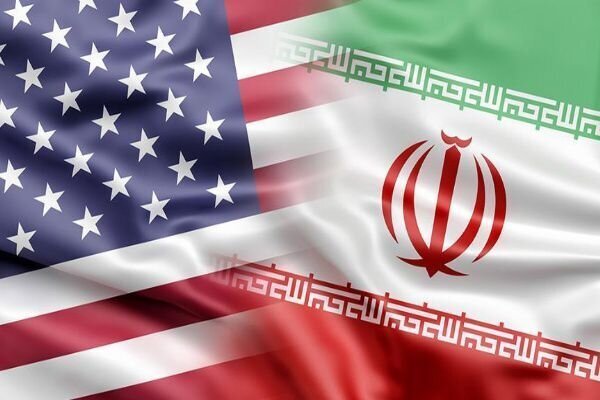
According to the International Desk of Webangah News Agency, the military operations launched by the United States and the Zionist regime against Iran have not only failed to achieve their declared goals but have also resulted in a strategic deadlock and significant field and political defeats for the aggressors, as admitted by Western officials and American media. This conflict, which began with extensive attacks and civilian casualties, has escalated to encompass broad humanitarian, security, and economic dimensions, eliciting diverse reactions across international media landscapes.
Global media, each with its distinct approach, has sought to frame the narrative of this conflict. An examination of these reflections can offer a clearer perspective on the war’s actual state and its future trajectory.
English Media Perspectives:
The Wall Street Journal, in an op-ed by retired U.S. Army General David H. Petraeus, stated that while all parties desire an end to the war with Iran, the manner of its conclusion is critical. Petraeus outlined three primary U.S. objectives: restoring freedom of navigation in the Persian Gulf and the Strait of Hormuz, accounting for and neutralizing approximately 972 pounds of uranium enriched to 60 percent, and imposing enforceable restrictions on nuclear enrichment. He emphasized that none of these objectives necessitate a change of government, occupation, or unlimited warfare. Petraeus advocated for an asymmetric approach, enhanced maritime protection, mine clearance, and the utilization of alternative routes, stipulating that any de-escalation would be contingent on verification and reversibility.
In The Hill’s opinion section, contributor Brahma Chellaney analyzed the position of Donald Trump regarding the ongoing, unresolved war with Iran, which commenced on February 28. Chellaney described the conflict as costly, unpopular, and lacking a clear outlook, contributing to Republican electoral defeats. He cautioned that a renewed or expanded war after the midterm elections would hold the global economy hostage and further alienate war-weary voters. Chellaney added that despite dissatisfaction with oil prices, Trump does not regret initiating the war, and his national security team is divided on whether to pursue relentless military pressure for Iran’s complete capitulation, expand regional conflict, disrupt energy markets, or engage in an endless war.
An article in Foreign Policy suggests that the war with Iran has been strategically detrimental to the United States, weakening its power, benefiting China, and eroding American international credibility. Persian Gulf littoral states are reportedly re-evaluating their positions and seeking de-escalation. With the immediate threat of war temporarily receding, the focus has shifted to the fate and control of the Strait of Hormuz. Prior to the war’s commencement in February, 20 percent of the world’s seaborne oil exports transited this strait. While oil flow has now returned to pre-war averages and global oil prices have dropped from $114 to approximately $90 per barrel, shipping rates remain several times higher than before the conflict, with Iran continuing to target oil tankers. The article references James Kraska, a professor of maritime law, who raises the possibility of a ‘neither war nor peace’ scenario and temporary crisis management.
Arab Media Perspectives:
Lebanon’s Al-Modon newspaper reported that Qatar’s new initiative to de-escalate tensions between Iran and the United States is more than a transient diplomatic effort, revealing the deep divergence between the two sides on how to manage the conflict. This initiative aims to create conditions for military de-escalation and reopen maritime routes without expecting a comprehensive agreement. Iran, conversely, views negotiations as part of conflict management, emphasizing the need for guaranteed commitment implementation and clarity on who should make the first concession.
Al-Sharq newspaper reported that U.S. Secretary of State Marco Rubio stated that Donald Trump has decided to continue a policy of economic pressure and maritime blockade instead of resuming hostilities or signing an agreement, a strategy presented as the ‘third option.’ This policy is intended to intensify pressure on Iran’s economy. However, the continuation of the blockade and economic pressure could increase the risk of renewed conflict escalation, with some experts believing Iran might impose greater security and economic costs to alter Washington’s calculations. Qatar is reportedly working with China and European countries to establish international guarantees for a potential agreement.
Al-Bina newspaper wrote that the U.S. confrontation with Iran has reached a stage where Washington must decide between continuing economic pressure, resuming military operations, or moving towards a political agreement. Trump apparently believes that by maintaining the maritime blockade and sanctions, he can compel Tehran to accept U.S. terms, but this strategy faces significant obstacles. Iran also possesses tools to increase the economic and security costs for the United States, and continued confrontation could have repercussions beyond the two countries’ borders. A return to military conflict would also not be without cost for Washington. The author suggests that the continuation of a ‘neither war nor peace’ state is not a sustainable solution and that achieving a political agreement based on mutual commitments is the only way to prevent the ongoing crisis.
Russian and Chinese Media Perspectives:
In a report by RT, the visit of Iran’s Supreme National Security Council Secretary, Mohsen Rezaei, to Moscow and his meeting with Vladimir Putin were presented as a sign of strengthened strategic cooperation between Tehran and Moscow. This meeting, held on November 5, underscored the security dimensions of the negotiations. The author posits that Iran, distrustful of Washington, is seeking political and security support from Moscow. Russia, by maintaining communication with both Tehran and Washington, could potentially play a mediating role in resolving the crisis. Moscow’s mediation could lead to an agreement that preserves Iran’s interests while allowing Trump to claim a diplomatic achievement.
China’s CGTN reported that Xie Jun, China’s special envoy for Middle East affairs, emphasized the necessity of achieving a political solution to restore stability in the region during his visit to Tehran. Ismail Baghaei, spokesperson for Iran’s Ministry of Foreign Affairs, in response to criticism from U.S. Secretary of State Marco Rubio regarding Tehran’s demands, asserted that Iran’s demands are neither unreasonable nor illegal. Baghaei, referencing Iran’s two-day proposal for resolving the Strait of Hormuz crisis, stated that if Washington accepts Tehran’s demands, security in the waterway could be restored within two days. He welcomed China’s positive role in de-escalating tensions, but the CGTN report indicates that fundamental differences between Tehran and Washington persist, and the possibility of renewed military confrontation remains a significant concern in the region.